Nurs 611-Patho Exam 4 “We Are Out The Door”
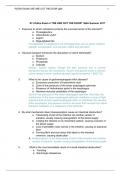
1. Exposure to which substance protects the mucosal barrier of the stomach? a. Prostaglandins b. Helicobacter pylori c. Aspirin d. Regu rgitated bile 2. Glucose transport enhances the absorption of which electrolyte? a. Sodium b. Potassium c. Phosphate d. Chloride 3. What is the cause of gastroesophageal reflux disease? a. Excessive production of hydrochloric acid b. Zone of low pressure of the lower esophageal sphincter c. Presence of Helicobacter pylori in the esophagus d. Reverse muscular peristalsis of the esophagus 4. By what mechanism does intussusception cause an intestinal obstruction? a. Telescoping of part of the intestine into another section of intestine, usually causing strangulation of the blood supply b. Twisting the intestine on its mesenteric pedicle, causing occlusion of the blood supply c. Loss of peristaltic motor activity in the intestine, causing an adynamic ileus d. Forming fibrin and scar tissue that attach to the intestinal omentum, causing obstruction 5. What is the most immediate result of a small intestinal obstruction? a. Vomiting b. Electrolyte imbalances c. Dehydration d. Distention 6. An intestinal obstruction at the pylorus or high in the small intestine causes metabolic alkalosis by causing which outcome? a. Gain of bicarbonate from pancreatic secretions that cannot be absorbed b. Excessive loss of hydrogen ions normally absorbed from gastric juices c. Excessive loss of potassium, promoting atony of the intestinal wall d. Loss of bile acid secretions that cannot be absorbed 7. What are the cardinal symptoms of small intestinal obstruction? a. Constant, dull pain in the lower abdomen relieved by defecation b. Acute, intermittent pain 30 minutes to 2 hours after eating c. Colicky pain caused by distention, followed by vomiting d. Excruciating pain in the hypogastric area caused by ischemia
Document information
- Uploaded on
- June 22, 2023
- Number of pages
- 34
- Written in
- 2022/2023
- Type
- Exam (elaborations)
- Contains
- Questions & answers