

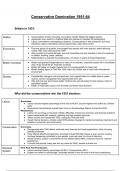
Conservative Domination 1951-64
Britain in 1951:
Politics ● Conservatives (Under Churchill), and Labour (Under Attlee) the biggest parties
● Agreement over need for a Welfare State and policies to maintain full employment
● Labour committed to nationalising industries, Conservatives to free enterprise, but most
industries Labour nationalised Conservatives kept under state-control
Economics ● Post-war period of austerity, encouraged less imports and more exports, petrol rationing
ended 1950, food rationing ends 1954
● War resulted in physical damage, war and immediate post-war resulted in loss of investment
in utilities, housing, roads, railways
● Determination to maintain full employment, not return to years of Great Depression
Britain Overseas ● Britain had granted independence to many of its colonies, important basses still in SouthEast
Asia, Suez Canal still an important routeway
● Britain still relied on foreign imports from it’s commonwealth for basic diet
● Britain leading figure in Cold War, USA major ally, Britain saw a future with international
involvement
Society ● Considerable change in war and post-war, more opportunities for middle-class in public
sectors, women had gained more opportunities from war
● War and post-war period seen better medical care and education for the masses, boom in
population growth
● Death of Imperialist culture, less formality and fewer class divisions
Why did the conservatives win the 1951 election:
Labour -Successes
● Labour secured highest percentage of the vote at 48.8%, at point highest ever polled by a British
party
● Government had achieved a great deal, focus on the Beveridge Report, formed the NHS
-Weaknesses
● Labour not as strong as had been initially, difficulties of post-war economic and financial problems
● Labour associated with austerity, rationing and high taxation post-war
● Taken country into Korean War 1950, unpopular, financial strain
● Faced internal divisions, divided under NHS policies (charges for dental and optician treatment) and
divided on economic and social policy
Conservative -Successes
● Reorganised after 1945 defeat, reformed party finances and local organisation, influx of young
talented politicians
● Party offered attractive programme, promised to build 300,000 houses a year, serious housing
shortage happening, promised to give people ‘more red meat’ in a time of rationing
● Would continue Labour’s commitment to the Welfare State (NHS, national insurance, national
assistance)
● Churchill still popular, many saw him as a hero for WW2, wanted to thank him
Electoral -First-Past-The-Post System
System ● Labour secured majority percentage (48.8%), Conservatives (48%)
● System not reliant on percentage, candidate elected if won the most in the local constituency
, ● Conservatives won many marginal seats (321 seats to Labour’s 295)
-Decline in Liberal Party
● Massively declined, had 2.5% of the vote
● Many ex-liberal voters turned to the conservatives
Conservative economic and social policies:
Successes Failures
Wages and Living -Continuous rise in living standards and economic -Continuous rise guaranteed regardless
Standards growth -Economy grew less than European powers
-Wages increased faster than prices, £10 over 13 yrs (France, Italy and Germany) all war affected
-Income tax cut, increased purchasing power -1957 Rent Act, houses became more
-500% increase in car ownership, 4% in TV ownership expensive adding pressure to lower classes
-1957 Rent Act abolished rent controls, more houses
available for the middle classes, policy of ownership
Economic Policy -Butskellism policy, continued Labour policy, mixed -Stop-Go-Policy, no vision, responded to
economy of private and public ownership,included economic developments
de-nationalisation of steel 1953 -Natural post-war recovery, not due to policies
-Increased spending on Welfare State, 3.2% increase -Stagflation, declining industry and rising price
-Failed to invest in industry
Social Policy -Educational reforms, reduced class division by
introducing comprehensive schools and abolished the
11-Plus exams (determined type of school they could
go to)
-1957 homicide act, accelerated the end of the death
penalty, very popular
Conservative Leadership:
Successes Failures
Churchill 51-55 -Figurehead, won the 1951 election -Aging, 77 years old, suffered series of strokes
-Moved Conservative party into modern thinking, -Maintained power due to reputation
pushed mixed-economy Butskellism in 1947 -Butler (Chancellor) was the main policy maker,
-Gained widespread appeal in middle-ground politics held a more significant role than Churchill
Eden 55-57 -Called for election in 1955, increased Conservative -Butler responsible for economic and domestic
majority, had personal appeal to women affairs, more experienced
-Focused on foreign policy and US relations -Suez Crisis 1956:
● 1954 Nasser (Egypt president) determined
to remove British influence
● Nasser took over the Canal after US and
UK pulled out money
● Eden responded by an invasion, failed
● Embarrassing, Eden stood down 3 months
later
Macmillan -Personal appeal and televised appearances, growth -1961/62 saw trade deficit (importing more than
57-63 in support exporting) and rising unemployment
-Growing prosperity and affluence in country -’Night of the Long Knives’ 1962 cabinet reshuffle
Britain in 1951:
Politics ● Conservatives (Under Churchill), and Labour (Under Attlee) the biggest parties
● Agreement over need for a Welfare State and policies to maintain full employment
● Labour committed to nationalising industries, Conservatives to free enterprise, but most
industries Labour nationalised Conservatives kept under state-control
Economics ● Post-war period of austerity, encouraged less imports and more exports, petrol rationing
ended 1950, food rationing ends 1954
● War resulted in physical damage, war and immediate post-war resulted in loss of investment
in utilities, housing, roads, railways
● Determination to maintain full employment, not return to years of Great Depression
Britain Overseas ● Britain had granted independence to many of its colonies, important basses still in SouthEast
Asia, Suez Canal still an important routeway
● Britain still relied on foreign imports from it’s commonwealth for basic diet
● Britain leading figure in Cold War, USA major ally, Britain saw a future with international
involvement
Society ● Considerable change in war and post-war, more opportunities for middle-class in public
sectors, women had gained more opportunities from war
● War and post-war period seen better medical care and education for the masses, boom in
population growth
● Death of Imperialist culture, less formality and fewer class divisions
Why did the conservatives win the 1951 election:
Labour -Successes
● Labour secured highest percentage of the vote at 48.8%, at point highest ever polled by a British
party
● Government had achieved a great deal, focus on the Beveridge Report, formed the NHS
-Weaknesses
● Labour not as strong as had been initially, difficulties of post-war economic and financial problems
● Labour associated with austerity, rationing and high taxation post-war
● Taken country into Korean War 1950, unpopular, financial strain
● Faced internal divisions, divided under NHS policies (charges for dental and optician treatment) and
divided on economic and social policy
Conservative -Successes
● Reorganised after 1945 defeat, reformed party finances and local organisation, influx of young
talented politicians
● Party offered attractive programme, promised to build 300,000 houses a year, serious housing
shortage happening, promised to give people ‘more red meat’ in a time of rationing
● Would continue Labour’s commitment to the Welfare State (NHS, national insurance, national
assistance)
● Churchill still popular, many saw him as a hero for WW2, wanted to thank him
Electoral -First-Past-The-Post System
System ● Labour secured majority percentage (48.8%), Conservatives (48%)
● System not reliant on percentage, candidate elected if won the most in the local constituency
, ● Conservatives won many marginal seats (321 seats to Labour’s 295)
-Decline in Liberal Party
● Massively declined, had 2.5% of the vote
● Many ex-liberal voters turned to the conservatives
Conservative economic and social policies:
Successes Failures
Wages and Living -Continuous rise in living standards and economic -Continuous rise guaranteed regardless
Standards growth -Economy grew less than European powers
-Wages increased faster than prices, £10 over 13 yrs (France, Italy and Germany) all war affected
-Income tax cut, increased purchasing power -1957 Rent Act, houses became more
-500% increase in car ownership, 4% in TV ownership expensive adding pressure to lower classes
-1957 Rent Act abolished rent controls, more houses
available for the middle classes, policy of ownership
Economic Policy -Butskellism policy, continued Labour policy, mixed -Stop-Go-Policy, no vision, responded to
economy of private and public ownership,included economic developments
de-nationalisation of steel 1953 -Natural post-war recovery, not due to policies
-Increased spending on Welfare State, 3.2% increase -Stagflation, declining industry and rising price
-Failed to invest in industry
Social Policy -Educational reforms, reduced class division by
introducing comprehensive schools and abolished the
11-Plus exams (determined type of school they could
go to)
-1957 homicide act, accelerated the end of the death
penalty, very popular
Conservative Leadership:
Successes Failures
Churchill 51-55 -Figurehead, won the 1951 election -Aging, 77 years old, suffered series of strokes
-Moved Conservative party into modern thinking, -Maintained power due to reputation
pushed mixed-economy Butskellism in 1947 -Butler (Chancellor) was the main policy maker,
-Gained widespread appeal in middle-ground politics held a more significant role than Churchill
Eden 55-57 -Called for election in 1955, increased Conservative -Butler responsible for economic and domestic
majority, had personal appeal to women affairs, more experienced
-Focused on foreign policy and US relations -Suez Crisis 1956:
● 1954 Nasser (Egypt president) determined
to remove British influence
● Nasser took over the Canal after US and
UK pulled out money
● Eden responded by an invasion, failed
● Embarrassing, Eden stood down 3 months
later
Macmillan -Personal appeal and televised appearances, growth -1961/62 saw trade deficit (importing more than
57-63 in support exporting) and rising unemployment
-Growing prosperity and affluence in country -’Night of the Long Knives’ 1962 cabinet reshuffle


