

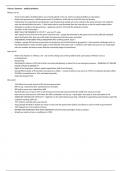
Theme 1 Germany – political problems
Weimar 19-29
- Treaty of Versailles, demilitarisation, loss of lands gained in the war, had to pay back 6.6billion in reparations.
- Democratic government, coalition government (9 coalitions), article 48 was used 105 times by Bruning.
- Voting done via proportional representation, bad thing because people were only voting for the party and were not voting for
who was elected within the party – if that leader died or was dismissed then the next person on the list would replace them.
- Attempts to overthrow the government – Sparticast revolt in 1919 with the friekorps in berlin.
- Socialists' vs the Communists
- EBERT WAS THE PRESIDENT IN 1919!!!!! won by 277 votes.
- TofV signed in June 1919 led to the stab in the back myth – people felt betrayed by the government as they officially admitted
defeat and before this, they were still under the impression that they were successful.
- HINDENBURG AFTER EBERT WHILE STRESEMAN WAS CHANCELLOR IN 1923!!!
- Collapse = people did not have a good view on democracy and so felt inclined to go against it + the economic challenges such as
the hyperinflation in 1923 and then again in 1929 with the wall street crash + coalitions were failure because no one could agree
with one another and hence meant that they eventually began to break down.
Nazis 30-45
- Hitler wins elections in 1930 by a far - due to him solving many of the problems that came about in Weimar such as
unemployment.
- Dictatorship
- Reichstag fire February 1933 led to Hitler convincing Hindenburg to allow him to use emergency powers – ENABLING ACT ENALED
HITLER TO RULE BY DECREE!!!!!
- Night of the long knives' violence against oppositions with SS and Gestapo
- During WW2 number of SS members increased to a million – council of defence was set up in 1939 to coordinate domestic affairs.
- STUPIDLY invaded Russia in 1941 and failed miserably.
- Hitler kills himself 1945.
FRG 45-89
- 1945 Allies forces took control of the German government.
- KPD set up a stated that they wanted German socialism.
- SPD polices were more radical than KPD.
- Marshall plan was set up in 1947 to aid Germany economically and prevented the UUSR from trying to invade.
- Basic law was announced in 1949 when the FRG constitution was set up – equal rights, free speech, state education for all.
- ADENAUER CHANCELLOR 1949-63!!!!! objections to his authoritarian governing, criticised for appointing weak ministers, kept FRG
coalitions working until 1957.
- 1957 extreme socialist party was banned.
- Young people felt that he had let too many ex nazis into the government (article 131 allows ex nazis to work in government)
- 1959 support for a free market economy.
- ERHARD AND KIESINGER CAME AFTER ADENAUER, Erhard introduced budget of heavy taxation.
- Brandt was voted out via no confidence in 1982.
Weimar 19-29
- Treaty of Versailles, demilitarisation, loss of lands gained in the war, had to pay back 6.6billion in reparations.
- Democratic government, coalition government (9 coalitions), article 48 was used 105 times by Bruning.
- Voting done via proportional representation, bad thing because people were only voting for the party and were not voting for
who was elected within the party – if that leader died or was dismissed then the next person on the list would replace them.
- Attempts to overthrow the government – Sparticast revolt in 1919 with the friekorps in berlin.
- Socialists' vs the Communists
- EBERT WAS THE PRESIDENT IN 1919!!!!! won by 277 votes.
- TofV signed in June 1919 led to the stab in the back myth – people felt betrayed by the government as they officially admitted
defeat and before this, they were still under the impression that they were successful.
- HINDENBURG AFTER EBERT WHILE STRESEMAN WAS CHANCELLOR IN 1923!!!
- Collapse = people did not have a good view on democracy and so felt inclined to go against it + the economic challenges such as
the hyperinflation in 1923 and then again in 1929 with the wall street crash + coalitions were failure because no one could agree
with one another and hence meant that they eventually began to break down.
Nazis 30-45
- Hitler wins elections in 1930 by a far - due to him solving many of the problems that came about in Weimar such as
unemployment.
- Dictatorship
- Reichstag fire February 1933 led to Hitler convincing Hindenburg to allow him to use emergency powers – ENABLING ACT ENALED
HITLER TO RULE BY DECREE!!!!!
- Night of the long knives' violence against oppositions with SS and Gestapo
- During WW2 number of SS members increased to a million – council of defence was set up in 1939 to coordinate domestic affairs.
- STUPIDLY invaded Russia in 1941 and failed miserably.
- Hitler kills himself 1945.
FRG 45-89
- 1945 Allies forces took control of the German government.
- KPD set up a stated that they wanted German socialism.
- SPD polices were more radical than KPD.
- Marshall plan was set up in 1947 to aid Germany economically and prevented the UUSR from trying to invade.
- Basic law was announced in 1949 when the FRG constitution was set up – equal rights, free speech, state education for all.
- ADENAUER CHANCELLOR 1949-63!!!!! objections to his authoritarian governing, criticised for appointing weak ministers, kept FRG
coalitions working until 1957.
- 1957 extreme socialist party was banned.
- Young people felt that he had let too many ex nazis into the government (article 131 allows ex nazis to work in government)
- 1959 support for a free market economy.
- ERHARD AND KIESINGER CAME AFTER ADENAUER, Erhard introduced budget of heavy taxation.
- Brandt was voted out via no confidence in 1982.


