
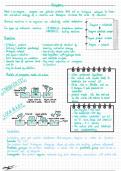
F-nzigme.sn
What that act as
is an
enzyme : enzymes are globular proteins biological catalysts to lower
the activation energy of a reaction and therefore increase the rate of reaction .
I
chemical reactions
1
collectively called metabolism
,
in
|
an
organism are .
.
Enzyme + substrate
Two types of metabolic reaction: CATABOLIC breakdown reactions -
.
ANABOLIC build " reactions -
.
Enzyme substrate 0m$"
'
frothing Enzyme product complex
-
Globular proteins increases rate of reaction by Enzyme +
product
Tertiary sometimes quartenery lowering activation energy .
Biological catalyst specifically shaped active site .
not used in reaction held together with hydrogen bonds
form temporary es complexes . and disulfide bridges .
operate best ab optimum temp May need cofactors or coenzymes
and Ph . to function
maybe slowed by inhibitors .
f f f f f f f f
Mnodedsnofnenzynmesmodeotactionm often preferred hypothesis
the active site moulds itself to
substrate for correct fit .
INDUCED Products
Active site is flexible and as
it it
substrate
i enzyme
"
Hi
;Nµ changes put's pressure on
•
^^ Substrate
Active
site
9% ,
product made fits less well and
so the active site returns to normal
,
active site Enzyme active site
enzyme
moulds itself to substrate returns to normal .
Shape
µµÑÑÑ
oooo oooo
The lock the
enzyme
=
Products
The substrate the
key
-
Active site
enzyme substrate
-
µ complex
11111
,
,
a
silly,
only certain substrate can fit
4/4/11
"
substrate
¥ enzyme product complex
it's shape and chemical
-
,
as size ,
¥%i % 4,44 -
"
-
%
enzyme
nature it is specific .
The active site and substrate
Cofactorsmmm
are complementary .
Cofactors are non protein " "
substances that
enzymes require in order to function .
Examples Mg Ca:
Non proteins bond to enzyme changing shape of active site enabling optimum attachment .
Prosthetic groups : protein no substance in active site ie
prosthetic group tend to be a
permanent part of enzyme
Non protein organic with active site
may form temporary associations
Coenzymes : molecules
demented
, Factors affectinyratemnmmmm
wmmnjjméiectionnnnnmm
Temperaturemmmm
Initially at low temperature when temp is increased , rate of reaction increases since kinetic
energy is increased in substrate and enzyme causing more collisions forming more es complexes .
Activity is maximum at optimum temperature .
At higher temperature bonds
maintaining the tertiary structure are broken and the active
site looses it's shape This means the substrate can not fit causing
.
decrease a in rate of
reaction and
leading the enzyme to be denatured
Mammals optimum temperature is about 40K
i§¥
.
Optimum temp
at 60° the
enzyme will be denatured ( irreversible change ) .
denaturation
§ Increased temp outweighs kinetic
OF -
- incresead kinetic
energy increase
☒ = more collisions
Temperature
Phtevelmnm
Ph
Activity maximum at
optimum .
An increase or decrease in Ph will decrease rate of reaction .
ph affects enzyme as it affects ionic bonds which maintain
active site shape Ionic bond
Ph change break bonds changing active site
may alter
j§É
or ionic . inactive
different optimum stomach phof 2 small site
Each has
enzyme Altered
intensive will be more alkaline .
*
o optimum optimum
I temp temp
c
Sunbsknrnakensenncentrationmnmm
m
rate of reaction increases as substrate concentration
increases
more substrates active sites causing es
occupy more
complexes to be formed .
levels of due to all active sites being occupied
The
limiting factor is
enzyme concentration
c
Enzymeconcentrationmmnmmmmmmn
mmmmmm
rate of reaction is increased as
enzyme concentration
is increased .
more active sites become available allowing for more
opportunities for es complex formation .
enzyme activity levels of due to
not substrate
enough
being available to fill the active sites .
substrate concentration is the limiting factor
What that act as
is an
enzyme : enzymes are globular proteins biological catalysts to lower
the activation energy of a reaction and therefore increase the rate of reaction .
I
chemical reactions
1
collectively called metabolism
,
in
|
an
organism are .
.
Enzyme + substrate
Two types of metabolic reaction: CATABOLIC breakdown reactions -
.
ANABOLIC build " reactions -
.
Enzyme substrate 0m$"
'
frothing Enzyme product complex
-
Globular proteins increases rate of reaction by Enzyme +
product
Tertiary sometimes quartenery lowering activation energy .
Biological catalyst specifically shaped active site .
not used in reaction held together with hydrogen bonds
form temporary es complexes . and disulfide bridges .
operate best ab optimum temp May need cofactors or coenzymes
and Ph . to function
maybe slowed by inhibitors .
f f f f f f f f
Mnodedsnofnenzynmesmodeotactionm often preferred hypothesis
the active site moulds itself to
substrate for correct fit .
INDUCED Products
Active site is flexible and as
it it
substrate
i enzyme
"
Hi
;Nµ changes put's pressure on
•
^^ Substrate
Active
site
9% ,
product made fits less well and
so the active site returns to normal
,
active site Enzyme active site
enzyme
moulds itself to substrate returns to normal .
Shape
µµÑÑÑ
oooo oooo
The lock the
enzyme
=
Products
The substrate the
key
-
Active site
enzyme substrate
-
µ complex
11111
,
,
a
silly,
only certain substrate can fit
4/4/11
"
substrate
¥ enzyme product complex
it's shape and chemical
-
,
as size ,
¥%i % 4,44 -
"
-
%
enzyme
nature it is specific .
The active site and substrate
Cofactorsmmm
are complementary .
Cofactors are non protein " "
substances that
enzymes require in order to function .
Examples Mg Ca:
Non proteins bond to enzyme changing shape of active site enabling optimum attachment .
Prosthetic groups : protein no substance in active site ie
prosthetic group tend to be a
permanent part of enzyme
Non protein organic with active site
may form temporary associations
Coenzymes : molecules
demented
, Factors affectinyratemnmmmm
wmmnjjméiectionnnnnmm
Temperaturemmmm
Initially at low temperature when temp is increased , rate of reaction increases since kinetic
energy is increased in substrate and enzyme causing more collisions forming more es complexes .
Activity is maximum at optimum temperature .
At higher temperature bonds
maintaining the tertiary structure are broken and the active
site looses it's shape This means the substrate can not fit causing
.
decrease a in rate of
reaction and
leading the enzyme to be denatured
Mammals optimum temperature is about 40K
i§¥
.
Optimum temp
at 60° the
enzyme will be denatured ( irreversible change ) .
denaturation
§ Increased temp outweighs kinetic
OF -
- incresead kinetic
energy increase
☒ = more collisions
Temperature
Phtevelmnm
Ph
Activity maximum at
optimum .
An increase or decrease in Ph will decrease rate of reaction .
ph affects enzyme as it affects ionic bonds which maintain
active site shape Ionic bond
Ph change break bonds changing active site
may alter
j§É
or ionic . inactive
different optimum stomach phof 2 small site
Each has
enzyme Altered
intensive will be more alkaline .
*
o optimum optimum
I temp temp
c
Sunbsknrnakensenncentrationmnmm
m
rate of reaction increases as substrate concentration
increases
more substrates active sites causing es
occupy more
complexes to be formed .
levels of due to all active sites being occupied
The
limiting factor is
enzyme concentration
c
Enzymeconcentrationmmnmmmmmmn
mmmmmm
rate of reaction is increased as
enzyme concentration
is increased .
more active sites become available allowing for more
opportunities for es complex formation .
enzyme activity levels of due to
not substrate
enough
being available to fill the active sites .
substrate concentration is the limiting factor


