Note: Hi everyone, I hope studying is going well! Just a heads-up that I won’t be giving editing access,
but you are free to make a copy and edit that :))
good luck guys!
Woo good job to everyone :) regardless of how it went, be proud of your hard work!
If you’re on the doc like me studying for your final good luck
● <3
Get some sleep! My test is in 2 hours LMAO
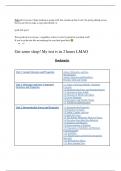
Bookmarks
Unit 1: Atomic Structure and Properties Atoms, Molecules, and Ions
Stoichiometry
Atomic Structure and Periodicity
Periodic Table and Trends
Unit 2: Molecular and Ionic Compound 2.1 Types of Chemical Bonds + Bonding
Structure and Properties Concepts
2.2 Intramolecular Force and Potential Energy
2.3 Structure of Ionic Solids
2.4 Structure of Metals and Alloys
2.5 Lewis Diagrams
2.6 Resonance and Formal Charge
2.7 VSEPR and Hybridization
Unit 3: Intermolecular Forces and Properties 3.1 Intermolecular Properties
3.2 Properties of Solids
3.3 Solids, Liquids, and Gas
3.4 Ideal Gas Laws
3.5 The Kinetic Molecular Theory of Gases
3.6 Deviation from Ideal Gas Behavior
3.7 Solutions and Mixtures
3.8 Representation of Solution
3.9 Separation of Solubility and Mixtures
Chromatography
3.10 Solubility
3.11 Spectroscopy and the Electromagnetic
Spectrum
3.12 Photoelectric Effect
3.13 Beer-Lambert Law
,Unit 4 Chemical Reactions 4.2 Net-Ionic Equations
4.3 Representations of Reactions
4.4 Physical and Chemical Changes
4.5 Stoichiometry
4.6 Introduction to Titrations
4.7 Types of Chemical Reactions
4.8 Introduction to Acid-Base Reactions
4.9 Oxidation-Reduction Rates
Unit 5 Kinetics 5.1 Reaction Rates
5.2 Rate Laws: An Introduction
5.3 Concentration Changes Over Time
5.4 Elementary Reactions
5.5 Collision Model
5.6 Reaction Profiles
5.8 Reaction Mechanism and Rate Law
5.9 Steady State Approximation
5.10 Multistep Reaction Energy Profiles
5.11 Catalysis
Unit 6 Thermodynamics 6.1 Endothermic and Exothermic Processes
6.2 Energy Diagrams
6.3 Heat Transfer and Thermal Equilibrium
6.4 Heat Capacity and Calorimetry
6.5 Energy of Phase Changes
6.6 Introduction to Enthalpy of Reaction
6.7 Bond Enthalpies (Energies)
6.8 Enthalpies of Formation
6.9 Hess’s Law
Unit 7: Chemical Equilibrium 7.1 Introduction to Equilibrium
7.2 Direction of Reversible Reactions
7.3 Reaction Quotient and Equilibrium Constant
7.4 Calculating the Equilibrium Constant
7.5 Magnitude of the Equilibrium Constant
7.6 Properties of the Equilibrium Constant
7.7 Calculating Equilibrium Concentrations
7.8 Representations of Equilibrium
7.9 Introduction to Le Chatelier’s Principle
7.10 Reaction Quotient and Le Chatelier's
Principle
7.11 Introduction to Solubility Equilibria
7.12 Common-Ion Effect
7.13 pH and Solubility
Unit 8 Acids and Bases 8.1 Introduction to Acids and Bases
8.2 pH and pOH of Strong Acids and Bases
8.3 Weak Acid and Base Equilibria
8.4 Acid-Base Reactions and Buffers
8.5 Acid-Base Titrations
, 8.6 Molecular Structure of Acids and Bases
8.7 pH and pKa
8.8 Properties of Buffers
8.9 Henderson-Hasselbalch Equation
8.10 Buffer Capacity
Unit 9: Applications of Thermodynamics 9.1 Introduction to Entropy
9.2 Absolute Entropy and Entropy Changes
9.3 Gibbs Free Energy and Thermodynamic
Favorability
9.4 Thermodynamic and Kinetic Control
9.5 Free Energy and Equilibrium
9.6 Coupled Reactions
9.7 Galvanic (Voltaic) Cells
9.8 Cell Potential and Free Energy
9.9 Cell Potential Under Nonstandard Conditions
9.10 Electrolysis and Faraday’s Law
Practice problems:
● My Own Doc:
https://docs.google.com/docent/d/1zsktf6qLAVc3GcRdFIVgF2FYUsqO0izB9xw13FfOHbY/edit
● Official Exam Description (go to pg 216): https://apcentral.collegeboard.org/media/pdf/ap-
chemistry-course-and-exam-description.pdf
● https://www.iitianacademy.com/ap-chemistry-mcqs-and-free-response-exam-style-practice-
question-and-answer/
● Official Practice Test:
○ 2018 AP exam:
https://m.shsbnu.net/pluginfile.php/38738/mod_resource/content/1/%5B2018-Official-
AP%20Practice%20Exam%5D%20%28With%20Answers%29.pdf
○ 2002 AP Exam (MCQ Only):
https://d3jc3ahdjad7x7.cloudfront.net/AM1KZFTbEebGfJ2J3HXxDhCYXGD662CahQr
wlCE05C9foVx0.pdf
○ 2008 AP Exam:
https://cdn2.hubspot.net/hubfs/360031/2008%20AP%20Chemistry%20Practice%20Test.
pdf
○ Another one:
http://haverfordalchemy.pbworks.com/w/file/fetch/75135557/Audit%20Practice%20AP
%20Exam.pdf
Official FRQs: https://apcentral.collegeboard.org/courses/ap-chemistry/exam/past-exam-questions
AP Chemistry Study Guide
, Unit 1: Atomic Structure and Properties
Matter:
● Matter is made up of tiny particles called atoms; anything that has mass and takes up space
● Atom: smallest part of a chemical element that retains the property of the element
● Elements: substances that cannot be broken into simpler substances by chemical or physical means
○ Is made up of one type of atom
● Molecule: two or more atoms joined → one unit
○ Can be the same or different atoms
● Compound: a substance with constant composition that can be broken down into elements by chemical
processes.
○ Is made up of different elements/atoms → all compounds are molecules, but not all
molecules are compounds
● Diatomic (two atom) molecules
○ Ex: oxygen, hydrogen, nitrogen, chlorine, fluorine, bromine, iodine,
Units of Measurement,
Volume
● Not a fundamental SI Unit → derived from length
○ 1 L = 1000 cm^3 = 1000 mL
■ 1 cm^3 = 1 milliliter (mL)
● Mass is the amount of matter in an object
● Weight: the force that gravity exerts on an object
General Notes
● Qualitative Observations: descriptive
● Quantitative Observations: are numerical
○ A measuring system and units must be used
● A law summarizes what happens
● A theory (model) is an attempt to explain why it happens.
Uh
Uncertainty in Precision
● Report a measurement by recording all the certain digits plus the first uncertain digit.
but you are free to make a copy and edit that :))
good luck guys!
Woo good job to everyone :) regardless of how it went, be proud of your hard work!
If you’re on the doc like me studying for your final good luck
● <3
Get some sleep! My test is in 2 hours LMAO
Bookmarks
Unit 1: Atomic Structure and Properties Atoms, Molecules, and Ions
Stoichiometry
Atomic Structure and Periodicity
Periodic Table and Trends
Unit 2: Molecular and Ionic Compound 2.1 Types of Chemical Bonds + Bonding
Structure and Properties Concepts
2.2 Intramolecular Force and Potential Energy
2.3 Structure of Ionic Solids
2.4 Structure of Metals and Alloys
2.5 Lewis Diagrams
2.6 Resonance and Formal Charge
2.7 VSEPR and Hybridization
Unit 3: Intermolecular Forces and Properties 3.1 Intermolecular Properties
3.2 Properties of Solids
3.3 Solids, Liquids, and Gas
3.4 Ideal Gas Laws
3.5 The Kinetic Molecular Theory of Gases
3.6 Deviation from Ideal Gas Behavior
3.7 Solutions and Mixtures
3.8 Representation of Solution
3.9 Separation of Solubility and Mixtures
Chromatography
3.10 Solubility
3.11 Spectroscopy and the Electromagnetic
Spectrum
3.12 Photoelectric Effect
3.13 Beer-Lambert Law
,Unit 4 Chemical Reactions 4.2 Net-Ionic Equations
4.3 Representations of Reactions
4.4 Physical and Chemical Changes
4.5 Stoichiometry
4.6 Introduction to Titrations
4.7 Types of Chemical Reactions
4.8 Introduction to Acid-Base Reactions
4.9 Oxidation-Reduction Rates
Unit 5 Kinetics 5.1 Reaction Rates
5.2 Rate Laws: An Introduction
5.3 Concentration Changes Over Time
5.4 Elementary Reactions
5.5 Collision Model
5.6 Reaction Profiles
5.8 Reaction Mechanism and Rate Law
5.9 Steady State Approximation
5.10 Multistep Reaction Energy Profiles
5.11 Catalysis
Unit 6 Thermodynamics 6.1 Endothermic and Exothermic Processes
6.2 Energy Diagrams
6.3 Heat Transfer and Thermal Equilibrium
6.4 Heat Capacity and Calorimetry
6.5 Energy of Phase Changes
6.6 Introduction to Enthalpy of Reaction
6.7 Bond Enthalpies (Energies)
6.8 Enthalpies of Formation
6.9 Hess’s Law
Unit 7: Chemical Equilibrium 7.1 Introduction to Equilibrium
7.2 Direction of Reversible Reactions
7.3 Reaction Quotient and Equilibrium Constant
7.4 Calculating the Equilibrium Constant
7.5 Magnitude of the Equilibrium Constant
7.6 Properties of the Equilibrium Constant
7.7 Calculating Equilibrium Concentrations
7.8 Representations of Equilibrium
7.9 Introduction to Le Chatelier’s Principle
7.10 Reaction Quotient and Le Chatelier's
Principle
7.11 Introduction to Solubility Equilibria
7.12 Common-Ion Effect
7.13 pH and Solubility
Unit 8 Acids and Bases 8.1 Introduction to Acids and Bases
8.2 pH and pOH of Strong Acids and Bases
8.3 Weak Acid and Base Equilibria
8.4 Acid-Base Reactions and Buffers
8.5 Acid-Base Titrations
, 8.6 Molecular Structure of Acids and Bases
8.7 pH and pKa
8.8 Properties of Buffers
8.9 Henderson-Hasselbalch Equation
8.10 Buffer Capacity
Unit 9: Applications of Thermodynamics 9.1 Introduction to Entropy
9.2 Absolute Entropy and Entropy Changes
9.3 Gibbs Free Energy and Thermodynamic
Favorability
9.4 Thermodynamic and Kinetic Control
9.5 Free Energy and Equilibrium
9.6 Coupled Reactions
9.7 Galvanic (Voltaic) Cells
9.8 Cell Potential and Free Energy
9.9 Cell Potential Under Nonstandard Conditions
9.10 Electrolysis and Faraday’s Law
Practice problems:
● My Own Doc:
https://docs.google.com/docent/d/1zsktf6qLAVc3GcRdFIVgF2FYUsqO0izB9xw13FfOHbY/edit
● Official Exam Description (go to pg 216): https://apcentral.collegeboard.org/media/pdf/ap-
chemistry-course-and-exam-description.pdf
● https://www.iitianacademy.com/ap-chemistry-mcqs-and-free-response-exam-style-practice-
question-and-answer/
● Official Practice Test:
○ 2018 AP exam:
https://m.shsbnu.net/pluginfile.php/38738/mod_resource/content/1/%5B2018-Official-
AP%20Practice%20Exam%5D%20%28With%20Answers%29.pdf
○ 2002 AP Exam (MCQ Only):
https://d3jc3ahdjad7x7.cloudfront.net/AM1KZFTbEebGfJ2J3HXxDhCYXGD662CahQr
wlCE05C9foVx0.pdf
○ 2008 AP Exam:
https://cdn2.hubspot.net/hubfs/360031/2008%20AP%20Chemistry%20Practice%20Test.
○ Another one:
http://haverfordalchemy.pbworks.com/w/file/fetch/75135557/Audit%20Practice%20AP
%20Exam.pdf
Official FRQs: https://apcentral.collegeboard.org/courses/ap-chemistry/exam/past-exam-questions
AP Chemistry Study Guide
, Unit 1: Atomic Structure and Properties
Matter:
● Matter is made up of tiny particles called atoms; anything that has mass and takes up space
● Atom: smallest part of a chemical element that retains the property of the element
● Elements: substances that cannot be broken into simpler substances by chemical or physical means
○ Is made up of one type of atom
● Molecule: two or more atoms joined → one unit
○ Can be the same or different atoms
● Compound: a substance with constant composition that can be broken down into elements by chemical
processes.
○ Is made up of different elements/atoms → all compounds are molecules, but not all
molecules are compounds
● Diatomic (two atom) molecules
○ Ex: oxygen, hydrogen, nitrogen, chlorine, fluorine, bromine, iodine,
Units of Measurement,
Volume
● Not a fundamental SI Unit → derived from length
○ 1 L = 1000 cm^3 = 1000 mL
■ 1 cm^3 = 1 milliliter (mL)
● Mass is the amount of matter in an object
● Weight: the force that gravity exerts on an object
General Notes
● Qualitative Observations: descriptive
● Quantitative Observations: are numerical
○ A measuring system and units must be used
● A law summarizes what happens
● A theory (model) is an attempt to explain why it happens.
Uh
Uncertainty in Precision
● Report a measurement by recording all the certain digits plus the first uncertain digit.