D4 - Evaluate the challenges to organisations in making available large volumes of scientific
information:
The most typical advantage of exchanging information inside a Workplace Laboratory is that
there is more data to compare. This allows the experts to collect a wide variety of data.
Furthermore, because they can store enormous volumes of data, specialists working in
separate departments may draw far more dependable and complex predictions and
inferences from their data samples.
On the contrary, one of the problems of sharing information within a Workplace Laboratory is
that hackers may occasionally download private data about specific persons. For example,
hackers may extract individual people's genetic data from HGP ('Human Genome Project')
samples online. This collected data can be abused in a variety of ways, including posting to
third-party websites. Another difficulty with knowledge sharing is that various organisations
may use different methodologies to conduct research on different sorts of samples. This
causes a lot of uncertainty and anguish since certain processes may require particular
equipment and apparatus that aren't always available in workplace laboratories. This created
delays in the research and the sample testing.
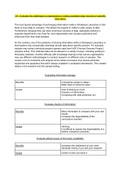
Evaluating information storage:
Benefits: It should be simple to obtain.
Refer back to historical notes
Issues: Cost of storing so much
Freedom of information
Complying with data protection act
Evaluate sharing of information:
Benefits More information to compare with your own
results
Increases the dependability of the
conclusions reached
Issues Hacking
It is difficult to assess the dependability of a
distinct company's practices.
Evaluate ethical issues of third party availability:
Benefits Increases the usefulness of your work
Generate money if you sell your research
Issues Control of who can have it
, Control of what they 3rd party do with it
Healthcare Informatics:
Medical (health) informatics is the intersection of information science, computer
science, and health care. This field deals with the resources, devices, and methods
required to optimise the acquisition, storage, retrieval, and use of information in
health and biomedicine.
What is the main purpose of healthcare informatics:
Health informaticians assess communication systems linked to patient information
and continuously improve and develop the healthcare experience. This strengthens
external relationships and trust between the patient and the service provider.
What are the different types of Health Informatics?
● Medical informatics.
● Clinical informatics.
● Pharmacy informatics.
● Public health informatics.
● Biomedical informatics.
● Bioinformatics.
Medical informatics:
Medical informatics is the study and application of methods to improve the
management of patient data, clinical knowledge, population data, and other
information relevant to patient care and community health. It is a young science,
which emerged in the decades after the invention of the digital computer in the
1940s.
Clinical informatics:
Clinical informatics involves the capture, communication and use of data and clinical
knowledge to support health professionals. Their role is to ensure that the IT system
works reliably and is compliant with national information governance regulations.
Pharmacy informatics:
Pharmacy informatics is defined by HIMSS as “The scientific field that focuses on
medication-related data and knowledge within the continuum of healthcare
systems—including its acquisition, storage, analysis, use and dissemination—in the
delivery of optimal medication-related patient care and health outcomes.
Public health informatics:
Public health informatics is defined as the use of computers, clinical guidelines,
communication and information systems, which apply to the vast majority of public
information:
The most typical advantage of exchanging information inside a Workplace Laboratory is that
there is more data to compare. This allows the experts to collect a wide variety of data.
Furthermore, because they can store enormous volumes of data, specialists working in
separate departments may draw far more dependable and complex predictions and
inferences from their data samples.
On the contrary, one of the problems of sharing information within a Workplace Laboratory is
that hackers may occasionally download private data about specific persons. For example,
hackers may extract individual people's genetic data from HGP ('Human Genome Project')
samples online. This collected data can be abused in a variety of ways, including posting to
third-party websites. Another difficulty with knowledge sharing is that various organisations
may use different methodologies to conduct research on different sorts of samples. This
causes a lot of uncertainty and anguish since certain processes may require particular
equipment and apparatus that aren't always available in workplace laboratories. This created
delays in the research and the sample testing.
Evaluating information storage:
Benefits: It should be simple to obtain.
Refer back to historical notes
Issues: Cost of storing so much
Freedom of information
Complying with data protection act
Evaluate sharing of information:
Benefits More information to compare with your own
results
Increases the dependability of the
conclusions reached
Issues Hacking
It is difficult to assess the dependability of a
distinct company's practices.
Evaluate ethical issues of third party availability:
Benefits Increases the usefulness of your work
Generate money if you sell your research
Issues Control of who can have it
, Control of what they 3rd party do with it
Healthcare Informatics:
Medical (health) informatics is the intersection of information science, computer
science, and health care. This field deals with the resources, devices, and methods
required to optimise the acquisition, storage, retrieval, and use of information in
health and biomedicine.
What is the main purpose of healthcare informatics:
Health informaticians assess communication systems linked to patient information
and continuously improve and develop the healthcare experience. This strengthens
external relationships and trust between the patient and the service provider.
What are the different types of Health Informatics?
● Medical informatics.
● Clinical informatics.
● Pharmacy informatics.
● Public health informatics.
● Biomedical informatics.
● Bioinformatics.
Medical informatics:
Medical informatics is the study and application of methods to improve the
management of patient data, clinical knowledge, population data, and other
information relevant to patient care and community health. It is a young science,
which emerged in the decades after the invention of the digital computer in the
1940s.
Clinical informatics:
Clinical informatics involves the capture, communication and use of data and clinical
knowledge to support health professionals. Their role is to ensure that the IT system
works reliably and is compliant with national information governance regulations.
Pharmacy informatics:
Pharmacy informatics is defined by HIMSS as “The scientific field that focuses on
medication-related data and knowledge within the continuum of healthcare
systems—including its acquisition, storage, analysis, use and dissemination—in the
delivery of optimal medication-related patient care and health outcomes.
Public health informatics:
Public health informatics is defined as the use of computers, clinical guidelines,
communication and information systems, which apply to the vast majority of public