Civil Rights in the USA 1865-1992
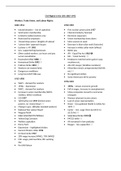
Workers, Trade Union, and Labour Rights:
1865-1914 1950-1969
Industrialisation – rise of capitalists First nuclear power plant 1957
Small union membership Chemical industry boomed
Limited to skilled workers only Electronic expansion
Restricted by employers Union membership slows down
‘Closed shop unions’ (Knights of Labour) More women in work
‘Laissez-faire’ approach by gov. Decrease in blue collar work (factories)
Lochner v. NY 1905 Increase in white collar work (offices)
Gov. supported big businesses Better pay
Often sacked workers, cut hours and pay JFK – Equal Pay Act 1963 😊
w/out consultation LBJ – ‘Great Society’ 😊
Haymarket Affair 1886 ☹ Employers matched union gains in pay,
Homestead Strike 1892 ☹ vacations etc.
Pullman Strike 1894 ☹ AFL-CIO merge (16million members)
Workers not treated fairly Minorities remain unrepresented (AA/NA
Dangerous conditions etc) ☹
Long hours BUT little pay No significant strikes
Some Americans still in poverty
1915-1950
1970-1992
WW1 – demand for workers
1930s – depression 1970s – slower economic growth
WW2 – demand for workers Fall in wages, increase in unemployment
Increase in union membership (WW1- Many companies moved to rural areas
5million, WW2-15million) (cheaper)
CIO 1937 Women reluctant to join unions
Taft Hartley Act 1947 (limited union Lack of union representation
powers, no ‘closed shop’) ☹ Nixon – Occupational Health & Safety Act
Change in gov. attitudes (needed workers) 1970 😊
National War Labour Board Carter – min. wage (from $2.65/hr to
Wagner/NLRA $3.35/hr) 😊
NIRA (UNCONSTITUTIONAL) Salad Bowl Strike 1970 😊
Yellow Dog Contracts PATCO strike ☹
Welfare capitalism AA remained in low-paid jobs
Henry Ford Reagan – less supportive ☹
Depression – highlighted divides
General Motors strike 1936
US Steel strike 1937
20% wage increase (WW1), 70% (WW2)
Min. wage, paid overtime, 8hr working
day
No child labour
Workers, Trade Union, and Labour Rights:
1865-1914 1950-1969
Industrialisation – rise of capitalists First nuclear power plant 1957
Small union membership Chemical industry boomed
Limited to skilled workers only Electronic expansion
Restricted by employers Union membership slows down
‘Closed shop unions’ (Knights of Labour) More women in work
‘Laissez-faire’ approach by gov. Decrease in blue collar work (factories)
Lochner v. NY 1905 Increase in white collar work (offices)
Gov. supported big businesses Better pay
Often sacked workers, cut hours and pay JFK – Equal Pay Act 1963 😊
w/out consultation LBJ – ‘Great Society’ 😊
Haymarket Affair 1886 ☹ Employers matched union gains in pay,
Homestead Strike 1892 ☹ vacations etc.
Pullman Strike 1894 ☹ AFL-CIO merge (16million members)
Workers not treated fairly Minorities remain unrepresented (AA/NA
Dangerous conditions etc) ☹
Long hours BUT little pay No significant strikes
Some Americans still in poverty
1915-1950
1970-1992
WW1 – demand for workers
1930s – depression 1970s – slower economic growth
WW2 – demand for workers Fall in wages, increase in unemployment
Increase in union membership (WW1- Many companies moved to rural areas
5million, WW2-15million) (cheaper)
CIO 1937 Women reluctant to join unions
Taft Hartley Act 1947 (limited union Lack of union representation
powers, no ‘closed shop’) ☹ Nixon – Occupational Health & Safety Act
Change in gov. attitudes (needed workers) 1970 😊
National War Labour Board Carter – min. wage (from $2.65/hr to
Wagner/NLRA $3.35/hr) 😊
NIRA (UNCONSTITUTIONAL) Salad Bowl Strike 1970 😊
Yellow Dog Contracts PATCO strike ☹
Welfare capitalism AA remained in low-paid jobs
Henry Ford Reagan – less supportive ☹
Depression – highlighted divides
General Motors strike 1936
US Steel strike 1937
20% wage increase (WW1), 70% (WW2)
Min. wage, paid overtime, 8hr working
day
No child labour