Spanish History
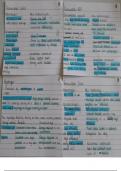
PHILLIP II MOCK
NOTES
Contains; Religion and Religious policy, Philip II and
the government of Spain and Spanish finances and
the economy.
, Religion-
Religion and Religious Policies in Spain- Motivations
Philip’s personal piety was never in doubt. The debate is over the extent to which P.II was driven
by religious motivation in governmental affairs.
• ‘There was not a corner Philip’s bedroom where one did not see a pious image of some St
or crucifix’ according to his valet. Escorial, his primary residence, included a Jeronomite
monastery and a seminary.
• St Teresa of Avila remarked that ‘Philip is very well disposed to religious (monks and nuns)
who are known to keep their Rule and will always help them.’
• He heard mass daily and went into retreat at a monastery each Holy Week.
• That he was devout, is not debated by historians. Question; whether his domestic/foreign
policies were driven by religion, or more secular concerns.
• He inherited control of church appointments and revenue and control of the Spanish
Inquisition. Trevor Davies calls him an ‘Erastian’ monarch as much as Henry VIII was in
England.
Heresy and the Inquisition
• Council of Inquisition based in Madrid with 15 tribunals each with about 3 inquisitors so not massive
numerically. Hernando de Valdes IG from 1547 to 1566.
• Inquisition was harsh in the early years of his reign, Protestant were found in 1557-58 and 1559-62 in
Burgos, Valladolid, Salamanca and Seville. Valladolid held 2 auto-de-fe’s (condemning heretics). In 1557
a group of 130 found in Seville, both groups eliminated.
• In total 6 autos de fe took place in Seville and Valladolid between 1559 and 1562 at which 278
persecuted and 77 put to death and by 1562 ‘Protestantism in Spain had been effectively eradicated.’
A great success for Phillip. Maybe not all protestants some mystics but those who were, died.
(possibility that Valdes was a career hungry man and Castilians were trying to hurry Phillip back from
NL so these protestants cells could have done this)
• Philip worried by Calvinism in France. 1560 he ordered the viceroy of Catalonia tighten boarders and
in 1564 ordered to improve the frontier fortifications. 1565 his French ambassador warned him that
Calvinist Geneva was planning to flood Spain with heretical books and in 1570 a large Catalan force
drove back a Huguenot attack on Perpignan.
• Much attention paid to stopping book circulation. September 1558 royal edict decreed that
importing books without a licence punishable by death.
• 1559 first Spanish Index of books, prior ones were Dutch based, 670 works banned, only of which
170 written in Castilian. Included 14 editions of the Bible. Inquisition checked ports and bookshops.
Included works by Erasmus, John of Avila, Sir Thomas More.
• List regularly updated and extended, mainly by IG Gaspar de Quiroga in 1583-4 who quintupled the
number of books banned. 2500 books eventually banned. Prohibited titles including Savonarola,
Machiavelli and Dante.
• BUT given the Inquisition’s limited resources prohibited books still continued to reach Spain from
Europe, Don Jose de Salas, a Castilian noble, managed to collect 250 banned books.
• 1559 ban on students at foreign universities not strong and in the second half of the 16th century
Spaniards still at universities in Italy and the Low Countries.
• Inquisition’s work increasingly dealt with Old Christians’ morality, social behaviour and spiritual
education, rather than focusing on heresy.
• Inquisition held great influence in the centres in which it operated, but less in more remote regions of
Spain often due to limited resources it possessed.
• The Inquisition was allowed to continue its jurisdiction across all the territories of Philip’s Spanish
lands: P.II even used it as a political tool on occasions, e.g. in the Perez Affair when Perez fled to
Aragon. But was it as effective across all the territories; in short no.
PHILLIP II MOCK
NOTES
Contains; Religion and Religious policy, Philip II and
the government of Spain and Spanish finances and
the economy.
, Religion-
Religion and Religious Policies in Spain- Motivations
Philip’s personal piety was never in doubt. The debate is over the extent to which P.II was driven
by religious motivation in governmental affairs.
• ‘There was not a corner Philip’s bedroom where one did not see a pious image of some St
or crucifix’ according to his valet. Escorial, his primary residence, included a Jeronomite
monastery and a seminary.
• St Teresa of Avila remarked that ‘Philip is very well disposed to religious (monks and nuns)
who are known to keep their Rule and will always help them.’
• He heard mass daily and went into retreat at a monastery each Holy Week.
• That he was devout, is not debated by historians. Question; whether his domestic/foreign
policies were driven by religion, or more secular concerns.
• He inherited control of church appointments and revenue and control of the Spanish
Inquisition. Trevor Davies calls him an ‘Erastian’ monarch as much as Henry VIII was in
England.
Heresy and the Inquisition
• Council of Inquisition based in Madrid with 15 tribunals each with about 3 inquisitors so not massive
numerically. Hernando de Valdes IG from 1547 to 1566.
• Inquisition was harsh in the early years of his reign, Protestant were found in 1557-58 and 1559-62 in
Burgos, Valladolid, Salamanca and Seville. Valladolid held 2 auto-de-fe’s (condemning heretics). In 1557
a group of 130 found in Seville, both groups eliminated.
• In total 6 autos de fe took place in Seville and Valladolid between 1559 and 1562 at which 278
persecuted and 77 put to death and by 1562 ‘Protestantism in Spain had been effectively eradicated.’
A great success for Phillip. Maybe not all protestants some mystics but those who were, died.
(possibility that Valdes was a career hungry man and Castilians were trying to hurry Phillip back from
NL so these protestants cells could have done this)
• Philip worried by Calvinism in France. 1560 he ordered the viceroy of Catalonia tighten boarders and
in 1564 ordered to improve the frontier fortifications. 1565 his French ambassador warned him that
Calvinist Geneva was planning to flood Spain with heretical books and in 1570 a large Catalan force
drove back a Huguenot attack on Perpignan.
• Much attention paid to stopping book circulation. September 1558 royal edict decreed that
importing books without a licence punishable by death.
• 1559 first Spanish Index of books, prior ones were Dutch based, 670 works banned, only of which
170 written in Castilian. Included 14 editions of the Bible. Inquisition checked ports and bookshops.
Included works by Erasmus, John of Avila, Sir Thomas More.
• List regularly updated and extended, mainly by IG Gaspar de Quiroga in 1583-4 who quintupled the
number of books banned. 2500 books eventually banned. Prohibited titles including Savonarola,
Machiavelli and Dante.
• BUT given the Inquisition’s limited resources prohibited books still continued to reach Spain from
Europe, Don Jose de Salas, a Castilian noble, managed to collect 250 banned books.
• 1559 ban on students at foreign universities not strong and in the second half of the 16th century
Spaniards still at universities in Italy and the Low Countries.
• Inquisition’s work increasingly dealt with Old Christians’ morality, social behaviour and spiritual
education, rather than focusing on heresy.
• Inquisition held great influence in the centres in which it operated, but less in more remote regions of
Spain often due to limited resources it possessed.
• The Inquisition was allowed to continue its jurisdiction across all the territories of Philip’s Spanish
lands: P.II even used it as a political tool on occasions, e.g. in the Perez Affair when Perez fled to
Aragon. But was it as effective across all the territories; in short no.