
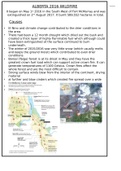
ALBERTA 2016 WILDFIRE
It began on May 1st 2016 in the South West of Fort McMurray and was
extinguished on 2nd August 2017. It burnt 589,552 hectares in total.
Causes
• El Nino and climate change contributed to the drier conditions in
the area.
• There had been a 12 month drought which dried out the bush and
created a thick layer of highly flammable fuel which although could
have been extinguished at the surface continued to burn
underneath.
• The winter of 2015/2016 saw very little snow (which usually melts
and keeps the ground moist) which contributed to even drier
conditions.
• Boreal (Taiga) forest is at its driest in May and they have the
greatest crown fuel load which can support active crown fire. It can
generate temperatures of 1100 Celsius. Crown fires affect the
whole forest and are the most difficult to contain.
• Strong surface winds blew from the interior of the continent, drying
material
• al further and blow cinders which created fire spread over a wide
area.
• On May 3rd temperatures reached 38.2ºc and winds were 72 km/h
• This all created a ‘perfect storm’ of conditions
It began on May 1st 2016 in the South West of Fort McMurray and was
extinguished on 2nd August 2017. It burnt 589,552 hectares in total.
Causes
• El Nino and climate change contributed to the drier conditions in
the area.
• There had been a 12 month drought which dried out the bush and
created a thick layer of highly flammable fuel which although could
have been extinguished at the surface continued to burn
underneath.
• The winter of 2015/2016 saw very little snow (which usually melts
and keeps the ground moist) which contributed to even drier
conditions.
• Boreal (Taiga) forest is at its driest in May and they have the
greatest crown fuel load which can support active crown fire. It can
generate temperatures of 1100 Celsius. Crown fires affect the
whole forest and are the most difficult to contain.
• Strong surface winds blew from the interior of the continent, drying
material
• al further and blow cinders which created fire spread over a wide
area.
• On May 3rd temperatures reached 38.2ºc and winds were 72 km/h
• This all created a ‘perfect storm’ of conditions


