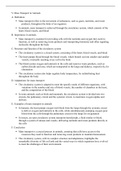
V. Mass Transport in Animals
A. Definition
· Mass transport refers to the movement of substances, such as gases, nutrients, and waste
products, throughout the body of an organism
· In animals, mass transport is achieved through the circulatory system, which consists of the
heart, blood vessels, and blood
B. Importance in animals
· Mass transport is essential for providing cells with the nutrients and oxygen they need to
function, as well as removing waste products and transporting hormones and other signaling
molecules throughout the body
C. Structure and function of the circulatory system
· The circulatory system is a closed system, consisting of the heart, blood vessels, and blood
· The heart pumps blood through the blood vessels, which branch out into smaller and smaller
vessels, eventually reaching every cell in the body
· The blood carries oxygen and nutrients to the cells and removes waste products, such as
carbon dioxide and urea, which are transported to the lungs and kidneys, respectively, for
elimination
· The circulatory system also helps regulate body temperature, by redistributing heat
throughout the body
D. Adaptations for mass transport
· The circulatory system is adapted to meet the specific needs of different organisms, with
variations in the number and size of blood vessels, the number of chambers in the heart,
and the composition of the blood
· In some animals, such as birds and mammals, the circulatory system is divided into two
circuits, the pulmonary circuit and the systemic circuit, to maximize oxygen uptake and
delivery
E. Examples of mass transport in animals
· In humans, the heart pumps oxygen-rich blood from the lungs through the systemic circuit
to deliver oxygen and nutrients to the cells, while simultaneously pumping oxygen-poor
blood from the cells through the pulmonary circuit to the lungs for oxygenation
· In insects, an open circulatory system transports hemolymph, a fluid similar to blood,
through a system of sinuses and vessels, delivering nutrients and waste products directly to
the cells
F. Conclusion
· Mass transport is a crucial process in animals, ensuring that cells have access to the
resources they need to function and removing waste products to maintain homeostasis
· The circulatory system, with its complex structure and adaptations, highlights the
remarkable diversity of life on Earth and the varied ways in which organisms have evolved
to meet the challenges of their environment.
, I.Introduction
II.A. Importance of understanding the exchange of substances between organisms and their
environment
III.B. Overview of the main topics to be covered
IV. Surface Area to Volume Ratio
V.A. Definition and importance of surface area to volume ratio in living organisms
VI.B. How surface area to volume ratio affects the exchange of substances with the environment C.
Examples of surface area to volume ratio in living organisms
VII. Gas Exchange
VIII.A. Overview of the importance of gas exchange in living organisms
IX.B. Mechanisms of gas exchange, including diffusion, active transport and bulk transport
X.C. Examples of gas exchange in different organisms
XI.Digestion and Absorption
XII.A. Overview of the importance of digestion and absorption in living organisms
XIII.B. Mechanisms of digestion and absorption in different organisms, including enzyme activity
and transport proteins
XIV.C. Examples of digestion and absorption in living organisms
XV.Mass Transport in Animals
XVI.A. Overview of the importance of mass transport in animals
XVII.B. Types of mass transport, including circulatory systems and gas transport
XVIII.C. Examples of mass transport in different animals
XIX. Mass Transport in Plants
XX.A. Overview of the importance of mass transport in plants
XXI.B. Types of mass transport, including transpiration and translocation
XXII.C. Examples of mass transport in different plants
XXIII.Importance of Exchange in Homeostasis
XXIV.A. Overview of homeostasis and its importance in biological systems
XXV.B. Role of exchange of substances in maintaining homeostasis
XXVI.C. Examples of exchange in homeostatic mechanisms
XXVII.Conclusion and Overview
XXVIII.A. Recap of key concepts covered in the lecture
XXIX.B. Significance of exchange of substances in living organisms
XXX.C. Areas of future research in the field
A. Definition
· Mass transport refers to the movement of substances, such as gases, nutrients, and waste
products, throughout the body of an organism
· In animals, mass transport is achieved through the circulatory system, which consists of the
heart, blood vessels, and blood
B. Importance in animals
· Mass transport is essential for providing cells with the nutrients and oxygen they need to
function, as well as removing waste products and transporting hormones and other signaling
molecules throughout the body
C. Structure and function of the circulatory system
· The circulatory system is a closed system, consisting of the heart, blood vessels, and blood
· The heart pumps blood through the blood vessels, which branch out into smaller and smaller
vessels, eventually reaching every cell in the body
· The blood carries oxygen and nutrients to the cells and removes waste products, such as
carbon dioxide and urea, which are transported to the lungs and kidneys, respectively, for
elimination
· The circulatory system also helps regulate body temperature, by redistributing heat
throughout the body
D. Adaptations for mass transport
· The circulatory system is adapted to meet the specific needs of different organisms, with
variations in the number and size of blood vessels, the number of chambers in the heart,
and the composition of the blood
· In some animals, such as birds and mammals, the circulatory system is divided into two
circuits, the pulmonary circuit and the systemic circuit, to maximize oxygen uptake and
delivery
E. Examples of mass transport in animals
· In humans, the heart pumps oxygen-rich blood from the lungs through the systemic circuit
to deliver oxygen and nutrients to the cells, while simultaneously pumping oxygen-poor
blood from the cells through the pulmonary circuit to the lungs for oxygenation
· In insects, an open circulatory system transports hemolymph, a fluid similar to blood,
through a system of sinuses and vessels, delivering nutrients and waste products directly to
the cells
F. Conclusion
· Mass transport is a crucial process in animals, ensuring that cells have access to the
resources they need to function and removing waste products to maintain homeostasis
· The circulatory system, with its complex structure and adaptations, highlights the
remarkable diversity of life on Earth and the varied ways in which organisms have evolved
to meet the challenges of their environment.
, I.Introduction
II.A. Importance of understanding the exchange of substances between organisms and their
environment
III.B. Overview of the main topics to be covered
IV. Surface Area to Volume Ratio
V.A. Definition and importance of surface area to volume ratio in living organisms
VI.B. How surface area to volume ratio affects the exchange of substances with the environment C.
Examples of surface area to volume ratio in living organisms
VII. Gas Exchange
VIII.A. Overview of the importance of gas exchange in living organisms
IX.B. Mechanisms of gas exchange, including diffusion, active transport and bulk transport
X.C. Examples of gas exchange in different organisms
XI.Digestion and Absorption
XII.A. Overview of the importance of digestion and absorption in living organisms
XIII.B. Mechanisms of digestion and absorption in different organisms, including enzyme activity
and transport proteins
XIV.C. Examples of digestion and absorption in living organisms
XV.Mass Transport in Animals
XVI.A. Overview of the importance of mass transport in animals
XVII.B. Types of mass transport, including circulatory systems and gas transport
XVIII.C. Examples of mass transport in different animals
XIX. Mass Transport in Plants
XX.A. Overview of the importance of mass transport in plants
XXI.B. Types of mass transport, including transpiration and translocation
XXII.C. Examples of mass transport in different plants
XXIII.Importance of Exchange in Homeostasis
XXIV.A. Overview of homeostasis and its importance in biological systems
XXV.B. Role of exchange of substances in maintaining homeostasis
XXVI.C. Examples of exchange in homeostatic mechanisms
XXVII.Conclusion and Overview
XXVIII.A. Recap of key concepts covered in the lecture
XXIX.B. Significance of exchange of substances in living organisms
XXX.C. Areas of future research in the field