Communication between equines
Task:
Create a picture chart of horse body language
Horses use a variety of visual communication through body language using their facial expressions,
body posture and body language; the ears play a big part in communication, with the ability to
rotate up to 180-degrees.
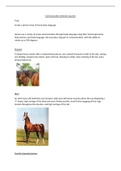
Relaxed
A relaxed horse stands with a relaxed body posture, ears relaxed forwards or held to the side, resting
one hindleg, relaxed oval nostrils, open soft eyes showing no white, slow swishing of the tail, and a
droopy bottom lip.
Alert
An alert horse will hold their ears forward, wide eyes with tense muscles above the eye displaying a
‘V’ shape, high carriage of the head and neck, flaring nostrils, stood firmly engaging all four legs,
tension throughout the top-line, and high carriage of the tail.
Fearful/stressed/anxious
Task:
Create a picture chart of horse body language
Horses use a variety of visual communication through body language using their facial expressions,
body posture and body language; the ears play a big part in communication, with the ability to
rotate up to 180-degrees.
Relaxed
A relaxed horse stands with a relaxed body posture, ears relaxed forwards or held to the side, resting
one hindleg, relaxed oval nostrils, open soft eyes showing no white, slow swishing of the tail, and a
droopy bottom lip.
Alert
An alert horse will hold their ears forward, wide eyes with tense muscles above the eye displaying a
‘V’ shape, high carriage of the head and neck, flaring nostrils, stood firmly engaging all four legs,
tension throughout the top-line, and high carriage of the tail.
Fearful/stressed/anxious