Media CSP: Music Videos - ‘Ghost Town’ - Revision Document
‘Ghost Town’ - The Specials
Context
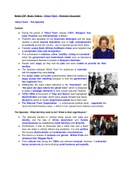
● During the period of ‘Ghost Town’ release (1981), Margaret ‘Iron
Lady’ Thatcher was Primeminister of Britain
● Thatcher was reputable for her draconian ideologies and her reign
marked a period beyond desolation due to high unemployment
and poverty across the country - due to imposed government policy
● Typically young black African-Caribbean males were targeted due
to xenophobic links and immigration
● This culminated in violence, crime, hostility, rioting and protests -
which the government and mainstream media such as televisions
and newspapers blamed on people of diasporic identities
● People were angry as they had no jobs and were unable to provide for their
families
● The Specials released ‘Ghost Town’ for audiences to resonate
with the issues they were facing
● The music video and lyrics predominantly re ect the feeling of
angry young men rebelling because of how the government
has neglected them
● Additionally, the lyrics make reference to the “boomtown” and
“the good old days before the ghost town” which is designed
to make a nostalgic reference to how London was pre-Thatcher
● 1970s-1980s enforcement of ‘Stop and Search’ laws highlighted
discrimination and race, which many people thought was being
abused by police to merely target black people due to their race
● The National Front Organisation - a controversial political party - supported the
racist and discriminatory views → which in turn caused more violence and protests
The Specials - What did they want to do? What is their signi cance?
● The Specials wanted to combat these issues with race and
identity, and the idea of ‘ethnic absolutism’ and ‘double
consciousness’ by establishing racial harmony and diversity
● Furthermore, it was to showcase that a white man and a black
man can share a vehicle without any problems, it is only politics
that causes disorientation and problematic circumstances
● The band is a mixture of cultures and genres - British Punk and
Jamaican Ska (Reggae-Rock)
● Their cultural mix during the 1980s was deemed unusual, however, it subverted
binary constructs by demonstrating racial harmony and equality
‘Ghost Town’ - The Specials
Context
● During the period of ‘Ghost Town’ release (1981), Margaret ‘Iron
Lady’ Thatcher was Primeminister of Britain
● Thatcher was reputable for her draconian ideologies and her reign
marked a period beyond desolation due to high unemployment
and poverty across the country - due to imposed government policy
● Typically young black African-Caribbean males were targeted due
to xenophobic links and immigration
● This culminated in violence, crime, hostility, rioting and protests -
which the government and mainstream media such as televisions
and newspapers blamed on people of diasporic identities
● People were angry as they had no jobs and were unable to provide for their
families
● The Specials released ‘Ghost Town’ for audiences to resonate
with the issues they were facing
● The music video and lyrics predominantly re ect the feeling of
angry young men rebelling because of how the government
has neglected them
● Additionally, the lyrics make reference to the “boomtown” and
“the good old days before the ghost town” which is designed
to make a nostalgic reference to how London was pre-Thatcher
● 1970s-1980s enforcement of ‘Stop and Search’ laws highlighted
discrimination and race, which many people thought was being
abused by police to merely target black people due to their race
● The National Front Organisation - a controversial political party - supported the
racist and discriminatory views → which in turn caused more violence and protests
The Specials - What did they want to do? What is their signi cance?
● The Specials wanted to combat these issues with race and
identity, and the idea of ‘ethnic absolutism’ and ‘double
consciousness’ by establishing racial harmony and diversity
● Furthermore, it was to showcase that a white man and a black
man can share a vehicle without any problems, it is only politics
that causes disorientation and problematic circumstances
● The band is a mixture of cultures and genres - British Punk and
Jamaican Ska (Reggae-Rock)
● Their cultural mix during the 1980s was deemed unusual, however, it subverted
binary constructs by demonstrating racial harmony and equality