Fatima Abdallah
Unit 15 C
opposing direction. DC devices function at lower voltages (around 24V) than the AC supplies which
is around 100-200V.
Using AC and DC electricity in industry
In 1989/1990, regulations were enforced to protect us by guiding us with technical and legal
guidance when working with electricity, to prevent death or injury to anyone.
Regulation 3 focuses on the people who hold responsibility of working with electrical equipment and
how “it shall be the duty of every employee whole at work” to co operate with co workers and to
follow the regulations as far as they have the power to do so. In other words, it states that every
person who works with electrical systems must follow these health and safety laws.
Regulation 4 mentions how to take precautions through work activities and protective equipment.
This regulation encourages workers to use tools and equipment that do not conduct electricity such
as nonconducting handles on equipment or insulating gloves, this is necessary when working with
live electrical equipment. There are three requirements for the protective equipment: satisfactory
for use, retained in a suitable condition and must be handled with properly. This regulation also
states that before handling electrical systems, they must be disconnected from all sources of supple
and isolated. This is to minimise risk of contact with electricity.
Regulation 15 raises the importance of satisfactory working environment to be able to deal with
injury or risk of injury without any obstacles. Measures taken include providing a clear work space
that allows one to move freely away from hazard and to avoid over crowding to allow people to pass
with ease. Another principle for a safe work space is to try and replace artificial light with natural
light (unless it is not possible) to prevent hazards. The guide goes into further details of regulations
and expands on sections that can be vague such as definitions to be further defined.
In conclusion, these legalisations all come together to create a safe working environment for
everyone.
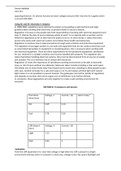
SECTION D- Transducers and Sensors
Thermistor Voltage, V Current, I (3) Ask for help *
(draw here)
Hot 0.49 0.10
Cool 2.78 0.26
LDR (draw it Voltage, V Current, I (3)
here )
Light 1.12 3
Dark 0.04 3
Evaluation
From the LDR experiment it is clear that voltage is high when the LDR is placed in a bright
environment whereas when it is placed in a dark area, voltage is low. We used a flashlight and
, Fatima Abdallah
Unit 15 C
directed it at the LDR to get these results. The results also show that the current is kept at a constant
of 3A which means that it is not a variable and light does not affect current in this experiment. Next
time, I would repeat the experiment a few times and maybe use different equipment just in case
there’s a malfunction and to produce a average for reliable results.
From the thermistor experiment, we can come to the conclusion that placing the thermistor in warm
water will leave us with a low voltage whereas cold water leaves us with a high voltage. The
temperature alSo affects current by a small amount, warm water gave us a lower current. This is
because … *
Thermocouples calibration
Thermocouples can read temperature with more accuracy than a normal thermometer as it records
the slightest of changes on a digital scale. The thermocouple is made rugged and robust to withstand
a vast variety of different temperatures, it also has two different wires held at both ends and when
temperature change is detected, voltage is produced. This creates a potential difference at the
junction which is measured and correlated with temperature. Since the measurement of
temperature is dependant upon voltage and after constant usage, the thermocouples needs to be
calibrated often to keep giving accurate readings.
There are three calibration methods: Thermodynamic fixed point calibration, stirred bath or furnace
method and the dry block method. However, the most explicit method is the thermodynamic fixed
point calibration. This method of calibration of the thermocouples requires comparison against a
known standard reference that is: globally accepted, has fixed temperature points of common
elements and have compounds with their physical states changed. For instance, Take the freezing
point of metal tin which is 231.93° as per the ‘international Temperature Scale’ created in 1990.
While leaving the reference junction at a constant of 0°, the thermal electromotive force (EMF) is
measured from the thermocouple during the fixed point transition which is the transition of metals
from a solid to liquid. The EMF is placed against standard measurement charts to determine the
thermocouples measurement accuracy. To reference measurements, we abide by international
standards to be able to rely on a reliable results. The more common are: ISO and NIST.
Unit 15 C
opposing direction. DC devices function at lower voltages (around 24V) than the AC supplies which
is around 100-200V.
Using AC and DC electricity in industry
In 1989/1990, regulations were enforced to protect us by guiding us with technical and legal
guidance when working with electricity, to prevent death or injury to anyone.
Regulation 3 focuses on the people who hold responsibility of working with electrical equipment and
how “it shall be the duty of every employee whole at work” to co operate with co workers and to
follow the regulations as far as they have the power to do so. In other words, it states that every
person who works with electrical systems must follow these health and safety laws.
Regulation 4 mentions how to take precautions through work activities and protective equipment.
This regulation encourages workers to use tools and equipment that do not conduct electricity such
as nonconducting handles on equipment or insulating gloves, this is necessary when working with
live electrical equipment. There are three requirements for the protective equipment: satisfactory
for use, retained in a suitable condition and must be handled with properly. This regulation also
states that before handling electrical systems, they must be disconnected from all sources of supple
and isolated. This is to minimise risk of contact with electricity.
Regulation 15 raises the importance of satisfactory working environment to be able to deal with
injury or risk of injury without any obstacles. Measures taken include providing a clear work space
that allows one to move freely away from hazard and to avoid over crowding to allow people to pass
with ease. Another principle for a safe work space is to try and replace artificial light with natural
light (unless it is not possible) to prevent hazards. The guide goes into further details of regulations
and expands on sections that can be vague such as definitions to be further defined.
In conclusion, these legalisations all come together to create a safe working environment for
everyone.
SECTION D- Transducers and Sensors
Thermistor Voltage, V Current, I (3) Ask for help *
(draw here)
Hot 0.49 0.10
Cool 2.78 0.26
LDR (draw it Voltage, V Current, I (3)
here )
Light 1.12 3
Dark 0.04 3
Evaluation
From the LDR experiment it is clear that voltage is high when the LDR is placed in a bright
environment whereas when it is placed in a dark area, voltage is low. We used a flashlight and
, Fatima Abdallah
Unit 15 C
directed it at the LDR to get these results. The results also show that the current is kept at a constant
of 3A which means that it is not a variable and light does not affect current in this experiment. Next
time, I would repeat the experiment a few times and maybe use different equipment just in case
there’s a malfunction and to produce a average for reliable results.
From the thermistor experiment, we can come to the conclusion that placing the thermistor in warm
water will leave us with a low voltage whereas cold water leaves us with a high voltage. The
temperature alSo affects current by a small amount, warm water gave us a lower current. This is
because … *
Thermocouples calibration
Thermocouples can read temperature with more accuracy than a normal thermometer as it records
the slightest of changes on a digital scale. The thermocouple is made rugged and robust to withstand
a vast variety of different temperatures, it also has two different wires held at both ends and when
temperature change is detected, voltage is produced. This creates a potential difference at the
junction which is measured and correlated with temperature. Since the measurement of
temperature is dependant upon voltage and after constant usage, the thermocouples needs to be
calibrated often to keep giving accurate readings.
There are three calibration methods: Thermodynamic fixed point calibration, stirred bath or furnace
method and the dry block method. However, the most explicit method is the thermodynamic fixed
point calibration. This method of calibration of the thermocouples requires comparison against a
known standard reference that is: globally accepted, has fixed temperature points of common
elements and have compounds with their physical states changed. For instance, Take the freezing
point of metal tin which is 231.93° as per the ‘international Temperature Scale’ created in 1990.
While leaving the reference junction at a constant of 0°, the thermal electromotive force (EMF) is
measured from the thermocouple during the fixed point transition which is the transition of metals
from a solid to liquid. The EMF is placed against standard measurement charts to determine the
thermocouples measurement accuracy. To reference measurements, we abide by international
standards to be able to rely on a reliable results. The more common are: ISO and NIST.