Fatima Abdallah
Unit 15 C
Electrical Safety Awareness
AC and DC current
Alternating Current Direct Current
AC can be safely transfers across further a distance while DC cannot travel far as It dissipates
carrying electric current. electric power overtime.
The direction the electricity changed due to the rotating DC flows in a single direction because
of its steady magnetism
Depending on the country, The frequency of AC will vary DC cannot have 0 frequency
however, usually,, the frequency around 50 Hz
The direction of the flow of current may change from time to Steadily flows in a single direction
time
Electrons in AC go backward and forward Electrons only move forward.
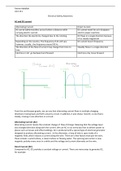
From the oscilloscope graphs, we can see that alternating current flows in multiple changing
directions moving back and forth around a circuit. In addition, it also shows how DC, is one that is
steady, moving in one direction in a circuit..
Alternating Current (AC)
Alternating current means the constant change of flow of charge. Meaning that the voltage level
also changed direction along with the current. We use AC in our every day lives to deliver power to
places such as houses and office buildings. AC is produced with a special type of electrical generator
designed to produce alternating current. .In the alternator, a loop of wire is spun inside of a
magnetic field, which induces a current along the wire. There are a few factors that spin the wire,
these include: a wind turbine, a steam turbine or flowing water. The spinning wire enters a new
magnetic polarity every once in a while and the voltage and current alternates on the wire.
Direct Current (DC)
Compared to AC, DC provides a constant voltage or current. There are many ways to generate DC,
for example:
, Fatima Abdallah
Unit 15 C
Using an AC generator connected to a commutator can produce direct current is one way. Another
way is using a rectifier that converters alternating current into direct current. Batteries can also start
a chemical reaction instead them to produce DC.
Effects of AC and DC electricity on the human physiology
The consequences of AC is dependant on frequency, low frequency is more threatening than high
frequency. AC with the same amperage and voltage as DC is more dangerous due to its affects to the
human body. This is because the low frequency AC stimulates muscle contraction leads freezing the
muscles of the hand to paralyse the body from any movement. This is due to the flexors of the hand
that are much stronger compared to the extensors, which results in an external electrical stimulation
application, meaning the flexors outdo the extensors. Furthermore, AC is more common to generate
heart fibrillation but DC makes the heart pause. In summary, defibrillation equipment is DC as it
stops the heart so it has a chance to allow recovery.
Fleming’s Left Hand Rule (FLH) in electric motors allows us finding the direction of the force, or
direction of rotation of a DC motor:
A wire with an electric current is key to a magnetic field perpendicular to the wire. This interaction
causes force that moves the wire. Since there are many wires fixed on an anchor or rotor, rotating
part of the motor), the anchor moves and the motor is working.
The forefinger is connected with magnetic field lines heading north to south, while the second finger
is tells us the current lines, pointing positive to negative.
The thumb points in the direction of the motor's effect force on the current-carrying conductor.
Application of Fleming’s Right Hand Rule (FRH) is for AC generators and Fleming left hand rule is for
determine the direction of force/motion of the conductor in an electric motor.
FRH helps to find the direction of the current in the wire that moves relative to the field.
The National Grid
Unit 15 C
Electrical Safety Awareness
AC and DC current
Alternating Current Direct Current
AC can be safely transfers across further a distance while DC cannot travel far as It dissipates
carrying electric current. electric power overtime.
The direction the electricity changed due to the rotating DC flows in a single direction because
of its steady magnetism
Depending on the country, The frequency of AC will vary DC cannot have 0 frequency
however, usually,, the frequency around 50 Hz
The direction of the flow of current may change from time to Steadily flows in a single direction
time
Electrons in AC go backward and forward Electrons only move forward.
From the oscilloscope graphs, we can see that alternating current flows in multiple changing
directions moving back and forth around a circuit. In addition, it also shows how DC, is one that is
steady, moving in one direction in a circuit..
Alternating Current (AC)
Alternating current means the constant change of flow of charge. Meaning that the voltage level
also changed direction along with the current. We use AC in our every day lives to deliver power to
places such as houses and office buildings. AC is produced with a special type of electrical generator
designed to produce alternating current. .In the alternator, a loop of wire is spun inside of a
magnetic field, which induces a current along the wire. There are a few factors that spin the wire,
these include: a wind turbine, a steam turbine or flowing water. The spinning wire enters a new
magnetic polarity every once in a while and the voltage and current alternates on the wire.
Direct Current (DC)
Compared to AC, DC provides a constant voltage or current. There are many ways to generate DC,
for example:
, Fatima Abdallah
Unit 15 C
Using an AC generator connected to a commutator can produce direct current is one way. Another
way is using a rectifier that converters alternating current into direct current. Batteries can also start
a chemical reaction instead them to produce DC.
Effects of AC and DC electricity on the human physiology
The consequences of AC is dependant on frequency, low frequency is more threatening than high
frequency. AC with the same amperage and voltage as DC is more dangerous due to its affects to the
human body. This is because the low frequency AC stimulates muscle contraction leads freezing the
muscles of the hand to paralyse the body from any movement. This is due to the flexors of the hand
that are much stronger compared to the extensors, which results in an external electrical stimulation
application, meaning the flexors outdo the extensors. Furthermore, AC is more common to generate
heart fibrillation but DC makes the heart pause. In summary, defibrillation equipment is DC as it
stops the heart so it has a chance to allow recovery.
Fleming’s Left Hand Rule (FLH) in electric motors allows us finding the direction of the force, or
direction of rotation of a DC motor:
A wire with an electric current is key to a magnetic field perpendicular to the wire. This interaction
causes force that moves the wire. Since there are many wires fixed on an anchor or rotor, rotating
part of the motor), the anchor moves and the motor is working.
The forefinger is connected with magnetic field lines heading north to south, while the second finger
is tells us the current lines, pointing positive to negative.
The thumb points in the direction of the motor's effect force on the current-carrying conductor.
Application of Fleming’s Right Hand Rule (FRH) is for AC generators and Fleming left hand rule is for
determine the direction of force/motion of the conductor in an electric motor.
FRH helps to find the direction of the current in the wire that moves relative to the field.
The National Grid