Caregiver -
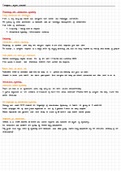
infant interacts
Reciprocity and interactional
synchrony
Early interactions are
meaningful
From babies interactions
a
very early age and
caregivers have intense and
meaningful .
The quality of interactions associated with attachments
these is the
successful development of
Two kinds of interactions :
1.
reciprocity -
taking turns to
respond
2. interactional simultaneous imitation
sychrony
-
Reciprocity
Interactions involve reciprocity
Reciprocity is achieved when baby and
caregiver respond
to and elicit
responses from each other .
For example smite making
,
a
caregiver responds to a
babys by saying something ,
and then the baby responds by some sounds
of pleasure
Abert times interaction
phases are
for
Mothers 213 the time C Feldman Eictelman 2007)
successfully respond around
Of and
From around 3 months this interaction becomes more intense and
reciprocal
Babies have an active role
Traditional views
of childhood the baby relieving
have seen in a
passive role care
from an adult .
,
interactions
However it seems that babies are active
participants . Both
caregiver and baby can imitate and take turns to do so .
Interactional
synchrony
Interactions involve
synchrony
People are said to be
sycnronised When
they carry out the same actions simultaneously
behaviour C Feldman 2007)
'
micro
formal definition
A is '
temporal ordination of level
caregiver
social and each
the co
eg : baby mirror
- -
others behaviour .
The international
beginnings of synchrony
Metzogg and Moore Clan) observed the
beginnings of interactional
synchrony in babies as
young
as 2 weeks old
Adult
displayed one
of three
facial expressions or one
of 3
gestures
.
Filmed the baby response
Babies expression and likely to the adults would
predict
gestures were more mirror
of than chance .
Importance for attachment
Isabella C 1989)
et at observed 30 months and babies
together and assessed the
degree of synchrony
the researchers also assessed the quality of mother -
baby attachment .
They found that
high levels
of synchrony were associated with better
quality mother -
baby attachment
leg : the emotional intensity of the
relationship)
infant interacts
Reciprocity and interactional
synchrony
Early interactions are
meaningful
From babies interactions
a
very early age and
caregivers have intense and
meaningful .
The quality of interactions associated with attachments
these is the
successful development of
Two kinds of interactions :
1.
reciprocity -
taking turns to
respond
2. interactional simultaneous imitation
sychrony
-
Reciprocity
Interactions involve reciprocity
Reciprocity is achieved when baby and
caregiver respond
to and elicit
responses from each other .
For example smite making
,
a
caregiver responds to a
babys by saying something ,
and then the baby responds by some sounds
of pleasure
Abert times interaction
phases are
for
Mothers 213 the time C Feldman Eictelman 2007)
successfully respond around
Of and
From around 3 months this interaction becomes more intense and
reciprocal
Babies have an active role
Traditional views
of childhood the baby relieving
have seen in a
passive role care
from an adult .
,
interactions
However it seems that babies are active
participants . Both
caregiver and baby can imitate and take turns to do so .
Interactional
synchrony
Interactions involve
synchrony
People are said to be
sycnronised When
they carry out the same actions simultaneously
behaviour C Feldman 2007)
'
micro
formal definition
A is '
temporal ordination of level
caregiver
social and each
the co
eg : baby mirror
- -
others behaviour .
The international
beginnings of synchrony
Metzogg and Moore Clan) observed the
beginnings of interactional
synchrony in babies as
young
as 2 weeks old
Adult
displayed one
of three
facial expressions or one
of 3
gestures
.
Filmed the baby response
Babies expression and likely to the adults would
predict
gestures were more mirror
of than chance .
Importance for attachment
Isabella C 1989)
et at observed 30 months and babies
together and assessed the
degree of synchrony
the researchers also assessed the quality of mother -
baby attachment .
They found that
high levels
of synchrony were associated with better
quality mother -
baby attachment
leg : the emotional intensity of the
relationship)