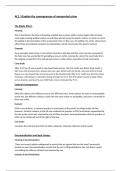
Bowlby s theory of maternal deprivation
Bowlby ( 19517 Theory maternal deprivation
of
continued emotional care is essential
continuous emotional ( maternal care mother mother substitute is necessary normal emotional and intellectual
from
a or
for
-
development .
Separation may lead to maternal deprivation
Bowlby believed that mother -
love in
infancy is '
as important
for
mental health as are vitamins and
proteins for physical health .
'
separation is
different from deprivation
separation in
'
child not the
means the
being physically the
presence of primary attachment
figure
.
Deprivation separation
•
means
loosing emotional care as a result
of
the .
Deprivation can be avoided
if alternative emotional care is
offered , thus separation doesn't always cause deprivation .
Critical period of 2.5 years
If child is separated from their mother Ciuithout substitute emotional care) external time during the 2.5 then
a
for an
first years ,
psychological damage is inevitable There is a
continuing risk
up to the
age of 5
.
.
Intellectual development : lower IQ
If a child is deprived of maternal care
for too long during the critical
period this
may
lead to mental retardation .
Goldfarb C 19477
lower IQ 's children children
found in
from institutions compared to
fostered
.
Emotional development :
affection less psychopathy
Lack affection less inability to
of emotional care
may also lead to
psychopathy the
experience guilt or
strong emotion towards others
-
.
This prevents the
person developing normal relationships and is associated with criminality
.
Bowlby ( 19447 44 thieves
study
Procedure
The
sample in this sway was 44
delinquent teenagers accused
of stealing .
'
All '
thieves were interviewed
for signs of affectionless psychopathy : characterised
by a lack
of affection ,
guilt and
empathy
.
interviewed
Families were also to establish any prolonged separations from mothers .
Findings and conclusions
14 44 12
of the thieves could be described as affection less psychopaths
.
Of these had experienced prolonged separation from
their
mothers in the 2 their lives
first years of
.
remaining early separation / deprivation
5 had
'
In 30 separations This
contrast the
experienced suggests prolonged
' thieves
only of
.
caused
affection less
psychopathy
-
Bowlby ( 19517 Theory maternal deprivation
of
continued emotional care is essential
continuous emotional ( maternal care mother mother substitute is necessary normal emotional and intellectual
from
a or
for
-
development .
Separation may lead to maternal deprivation
Bowlby believed that mother -
love in
infancy is '
as important
for
mental health as are vitamins and
proteins for physical health .
'
separation is
different from deprivation
separation in
'
child not the
means the
being physically the
presence of primary attachment
figure
.
Deprivation separation
•
means
loosing emotional care as a result
of
the .
Deprivation can be avoided
if alternative emotional care is
offered , thus separation doesn't always cause deprivation .
Critical period of 2.5 years
If child is separated from their mother Ciuithout substitute emotional care) external time during the 2.5 then
a
for an
first years ,
psychological damage is inevitable There is a
continuing risk
up to the
age of 5
.
.
Intellectual development : lower IQ
If a child is deprived of maternal care
for too long during the critical
period this
may
lead to mental retardation .
Goldfarb C 19477
lower IQ 's children children
found in
from institutions compared to
fostered
.
Emotional development :
affection less psychopathy
Lack affection less inability to
of emotional care
may also lead to
psychopathy the
experience guilt or
strong emotion towards others
-
.
This prevents the
person developing normal relationships and is associated with criminality
.
Bowlby ( 19447 44 thieves
study
Procedure
The
sample in this sway was 44
delinquent teenagers accused
of stealing .
'
All '
thieves were interviewed
for signs of affectionless psychopathy : characterised
by a lack
of affection ,
guilt and
empathy
.
interviewed
Families were also to establish any prolonged separations from mothers .
Findings and conclusions
14 44 12
of the thieves could be described as affection less psychopaths
.
Of these had experienced prolonged separation from
their
mothers in the 2 their lives
first years of
.
remaining early separation / deprivation
5 had
'
In 30 separations This
contrast the
experienced suggests prolonged
' thieves
only of
.
caused
affection less
psychopathy
-