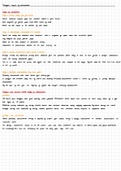
Scnafgers stages of attachment
stages of attachment
stage 1 :
asocial stage cgirst few weeks)
Babies behaviour towards and iriairnate objects is
quite similar
people
some C more easily )
preference for familiar by
calmed
people them
Babies are also
happier in the
presence of other
people
stage 2 : indiscriminate attachment C2 -7 months)
Babies display observable social behaviour with a rather than inanimate objects
now more
preference for people
.
,
They recognise and
prefer familiar people
.
Babies do not show stranger or separation anxiety
.
Attachment is indiscriminate because its the same towards all .
Stage 3 '
.
specific attachment Cgrom around 7 months
stranger anxiety separation anxiety separated particular Baby is said to
specific
formed
and when person have attachment
from one .
a
with primary attachment
the
figure .
This interaction '
signals
'
with the C
is in most cases the
person who
offers the most and responds to the
babys most still the mother
in 65.1 .
Of cases )
stage 4 :
multiple attachments C.
by one
year)
secondary attachments with other adults
form shortly after
.
In
Schaffer and Emerson's study 29-1
of babies had secondary C multiple) attachments within a month
of forming
a
primary Cspecigic)
.
,
attachment .
By the
age of one
year the majority of infants had
muetip: le
secondary attachments .
Schaffer and Emerson 019647
stages of attachment
procedure
60
from working
Researchers
babies
from Glasgow most class
families visited babies and mothers at home
every month
for a
year
- .
,
18
and
again at months
separation anxiety measured
by asking mothers about their Childrens behaviour during everyday separations Ceg : adult
leaving the room)
stranger anxiety was measured
by asking mothers questions about their Childrens anxiety response to
unfamiliar adults .
conclusions
findings and
Babies stages attachment to multiple
developed attachments
through a
sequence of from asocial
through
a
specific attachments as
-
,
outlined above .
The
specific attachment tended to be the person who was most interactive and sensitive to babies
signals and
facial expressions
Cie : reciprocity) This was not necessarily the person the baby spent most time with .
stages of attachment
stage 1 :
asocial stage cgirst few weeks)
Babies behaviour towards and iriairnate objects is
quite similar
people
some C more easily )
preference for familiar by
calmed
people them
Babies are also
happier in the
presence of other
people
stage 2 : indiscriminate attachment C2 -7 months)
Babies display observable social behaviour with a rather than inanimate objects
now more
preference for people
.
,
They recognise and
prefer familiar people
.
Babies do not show stranger or separation anxiety
.
Attachment is indiscriminate because its the same towards all .
Stage 3 '
.
specific attachment Cgrom around 7 months
stranger anxiety separation anxiety separated particular Baby is said to
specific
formed
and when person have attachment
from one .
a
with primary attachment
the
figure .
This interaction '
signals
'
with the C
is in most cases the
person who
offers the most and responds to the
babys most still the mother
in 65.1 .
Of cases )
stage 4 :
multiple attachments C.
by one
year)
secondary attachments with other adults
form shortly after
.
In
Schaffer and Emerson's study 29-1
of babies had secondary C multiple) attachments within a month
of forming
a
primary Cspecigic)
.
,
attachment .
By the
age of one
year the majority of infants had
muetip: le
secondary attachments .
Schaffer and Emerson 019647
stages of attachment
procedure
60
from working
Researchers
babies
from Glasgow most class
families visited babies and mothers at home
every month
for a
year
- .
,
18
and
again at months
separation anxiety measured
by asking mothers about their Childrens behaviour during everyday separations Ceg : adult
leaving the room)
stranger anxiety was measured
by asking mothers questions about their Childrens anxiety response to
unfamiliar adults .
conclusions
findings and
Babies stages attachment to multiple
developed attachments
through a
sequence of from asocial
through
a
specific attachments as
-
,
outlined above .
The
specific attachment tended to be the person who was most interactive and sensitive to babies
signals and
facial expressions
Cie : reciprocity) This was not necessarily the person the baby spent most time with .