

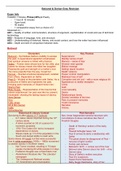
Beloved & Dorian Gray Revision
Exam Info
3 exams -> Drama, Prose (20%) & Poetry
- 1 hour & 15 minutes
- Open book
- 40 marks
- 1 comparative essay from a choice of 2
Assessed on…
AO1 – Quality of written communication, structure of argument, sophistication of vocab and use of technical
terminology
AO2 – Analysis of language, form, and structure
AO3 – Understanding of historical, literary, and social context, and how the writer has been influenced
AO4 – Depth and skill of comparison between texts
Beloved
Characters Key Themes
Beloved – Symbolises Sethe’s inability to escape Supernatural
the past. A supernatural apparition emphasises Identity/ sense of self
that spiritual universe is linked with physical. Menace – sense of fear
Sethe – Former slave whose love for her child, plus Women/ men/ gender
hatred for slavery meant she killed her daughter. Malice/ revenge
Represents guilt and strength of a mother’s love Setting/ place/ location
‘No more powerful than the way I loved her’. Death/ violence
Denver – Stunted emotional development, isolated Power/ control/ manipulation
from others. Dependent on Sethe. Madness/ loss of self
Paul D – Worked at the plantation with Sethe. He is Corruption and sin/ evil – with a more religious tilt
protective of Sethe and represents her past, Appearance vs reality/ deception
bringing pack memories of ‘Sweet Home men’. Crime
Stamp Paid Guilt
Baby Suggs – Representation of the trauma that Love/ sexuality
slaves experienced ‘her past was like her present, Desire
intolerable’ showing the lasting impact of slavery. Relationships/ family
Amy Denver Society/ anxieties of the time
Sixo Past vs present/ memories
Lady Jones Youth/ innocence
Mr & Mrs Garner Narration
Halle Victims
Schoolteacher
Historical & Literary Context Plot/ Narrative
Set during & after slavery (17th century). Non- linear fragmented narrative structure with
- 6-7 million slaves imported during the 18th connotations to slave narratives like that of
century alone Fredrich Douglas
- A slave counted as 3/5 of a person for
economic purposes - Death of Hereboy/ actions of the baby
- 1793 ‘The Cotton Gin’ led to increased ghost
dependence on slaves - Howard & Buglar leave 124
- Slaves made up 1/3 of the population in the - Paul D arrives & starts a relationship with
South and denied ability to read/ write Sethe
Some slaves did revolt, but few were successful - The ghost shows its disapproval of Paul –
due to white supremacy. 1830s – 1860s movement red pool of light/ conflict
to abolish slavery in Northern states. - Family visit carnival
- Nat Turner revolted, resulting in 75 black - Beloved’s ‘birth’ -> comes out of the river
people murdering 60 white people in 2 days - Beloved asks Denver about her birth – Amy
- Frederick Douglas was a freed black man Denver story
- Abolishment literature like ‘The Liberator’ - Story of Sethe’s mother execution
newspaper - Paul D’s suspicions
- The Underground Railroad society - Sweet Home flashbacks
- 13th Amendment and emancipation - Baby Suggs flashbacks, story of her
, The Civil War & Aftermath in the 1860s (Abraham removal from community
Lincoln) - Visit the clearing
- Did not aim to abolish slavery completely - Story of Halle
- Slaves were recruited into the Union Side to - Paul D’s story with Chain Gang and rooster
help fight in the costliest American war - Paul D’s rape
The Civil Rights Movement 1960s - Flashback to the murder
Slave Narratives - Paul D forced to leave
- Autobiographical memoirs documenting the - Sethe’s increased isolation, fired from job,
horrors of slavery experienced by ex- shuts self in house, illness, family go ice
slaves skating
- First appeared in the US in 1703 but most - Stamp Paid visits 124 and hears odd
were not published until 1831 onwards sounds
- ‘I was born…’ followed by no birth date, but - Denver leaves and finds Lady Jones –
instead just place of birth seeking help
- Primary aim was sympathy - Community come to 124 to pray, Sethe
- Douglas ‘near’, ‘about’ and ‘no accurate tries to kill Mr Bodwin with an ice pick
knowledge of my age’ -> lack of certainty - Paul D returns to start a new life with Sethe
Margaret Garner
- Enslaved African- American, notorious for
killing her own daughter
- Fugitive Slave Act 1850
- Court case became famous as they
debated whether she should be tried as a
human or as an object
Roman 9:25
- Reference to Garner’s husband who took in
her children
- Highlights Morrison’s affiliation with history
- Shows the collectivism of slaves through
shared hardships
The 19th Century Supernatural
- ‘Spirit photographs’ were clever fakes that
photographers (Mumler) profited off
- Lincoln’s wife Mary interest in spiritualism
which gained popular interest
Roots by Alex Haley
- Fictional, part autobiographical slave
narrative from 1976
- Fictionalised history of Kunta Kinte
captured in Africa
- Story of his family tree including ‘Chicken
George’ and how his children became free
Lady Button Eyes by Eugene Field
- Embedded in the narrative
Sojourner Truth
- Closely aligned with Baby Suggs
- American abolitionist and women’s rights
activist
- Born into slavery in New York, escaped with
her infant daughter to freedom in 1826
- First black woman to win a case against a
white man
Morrison is writing in the 1980s during a time when
racism was still a big issue
- Her own personal experiences of her house
burning down and her dad experiencing two
black boys being lynched
Exam Info
3 exams -> Drama, Prose (20%) & Poetry
- 1 hour & 15 minutes
- Open book
- 40 marks
- 1 comparative essay from a choice of 2
Assessed on…
AO1 – Quality of written communication, structure of argument, sophistication of vocab and use of technical
terminology
AO2 – Analysis of language, form, and structure
AO3 – Understanding of historical, literary, and social context, and how the writer has been influenced
AO4 – Depth and skill of comparison between texts
Beloved
Characters Key Themes
Beloved – Symbolises Sethe’s inability to escape Supernatural
the past. A supernatural apparition emphasises Identity/ sense of self
that spiritual universe is linked with physical. Menace – sense of fear
Sethe – Former slave whose love for her child, plus Women/ men/ gender
hatred for slavery meant she killed her daughter. Malice/ revenge
Represents guilt and strength of a mother’s love Setting/ place/ location
‘No more powerful than the way I loved her’. Death/ violence
Denver – Stunted emotional development, isolated Power/ control/ manipulation
from others. Dependent on Sethe. Madness/ loss of self
Paul D – Worked at the plantation with Sethe. He is Corruption and sin/ evil – with a more religious tilt
protective of Sethe and represents her past, Appearance vs reality/ deception
bringing pack memories of ‘Sweet Home men’. Crime
Stamp Paid Guilt
Baby Suggs – Representation of the trauma that Love/ sexuality
slaves experienced ‘her past was like her present, Desire
intolerable’ showing the lasting impact of slavery. Relationships/ family
Amy Denver Society/ anxieties of the time
Sixo Past vs present/ memories
Lady Jones Youth/ innocence
Mr & Mrs Garner Narration
Halle Victims
Schoolteacher
Historical & Literary Context Plot/ Narrative
Set during & after slavery (17th century). Non- linear fragmented narrative structure with
- 6-7 million slaves imported during the 18th connotations to slave narratives like that of
century alone Fredrich Douglas
- A slave counted as 3/5 of a person for
economic purposes - Death of Hereboy/ actions of the baby
- 1793 ‘The Cotton Gin’ led to increased ghost
dependence on slaves - Howard & Buglar leave 124
- Slaves made up 1/3 of the population in the - Paul D arrives & starts a relationship with
South and denied ability to read/ write Sethe
Some slaves did revolt, but few were successful - The ghost shows its disapproval of Paul –
due to white supremacy. 1830s – 1860s movement red pool of light/ conflict
to abolish slavery in Northern states. - Family visit carnival
- Nat Turner revolted, resulting in 75 black - Beloved’s ‘birth’ -> comes out of the river
people murdering 60 white people in 2 days - Beloved asks Denver about her birth – Amy
- Frederick Douglas was a freed black man Denver story
- Abolishment literature like ‘The Liberator’ - Story of Sethe’s mother execution
newspaper - Paul D’s suspicions
- The Underground Railroad society - Sweet Home flashbacks
- 13th Amendment and emancipation - Baby Suggs flashbacks, story of her
, The Civil War & Aftermath in the 1860s (Abraham removal from community
Lincoln) - Visit the clearing
- Did not aim to abolish slavery completely - Story of Halle
- Slaves were recruited into the Union Side to - Paul D’s story with Chain Gang and rooster
help fight in the costliest American war - Paul D’s rape
The Civil Rights Movement 1960s - Flashback to the murder
Slave Narratives - Paul D forced to leave
- Autobiographical memoirs documenting the - Sethe’s increased isolation, fired from job,
horrors of slavery experienced by ex- shuts self in house, illness, family go ice
slaves skating
- First appeared in the US in 1703 but most - Stamp Paid visits 124 and hears odd
were not published until 1831 onwards sounds
- ‘I was born…’ followed by no birth date, but - Denver leaves and finds Lady Jones –
instead just place of birth seeking help
- Primary aim was sympathy - Community come to 124 to pray, Sethe
- Douglas ‘near’, ‘about’ and ‘no accurate tries to kill Mr Bodwin with an ice pick
knowledge of my age’ -> lack of certainty - Paul D returns to start a new life with Sethe
Margaret Garner
- Enslaved African- American, notorious for
killing her own daughter
- Fugitive Slave Act 1850
- Court case became famous as they
debated whether she should be tried as a
human or as an object
Roman 9:25
- Reference to Garner’s husband who took in
her children
- Highlights Morrison’s affiliation with history
- Shows the collectivism of slaves through
shared hardships
The 19th Century Supernatural
- ‘Spirit photographs’ were clever fakes that
photographers (Mumler) profited off
- Lincoln’s wife Mary interest in spiritualism
which gained popular interest
Roots by Alex Haley
- Fictional, part autobiographical slave
narrative from 1976
- Fictionalised history of Kunta Kinte
captured in Africa
- Story of his family tree including ‘Chicken
George’ and how his children became free
Lady Button Eyes by Eugene Field
- Embedded in the narrative
Sojourner Truth
- Closely aligned with Baby Suggs
- American abolitionist and women’s rights
activist
- Born into slavery in New York, escaped with
her infant daughter to freedom in 1826
- First black woman to win a case against a
white man
Morrison is writing in the 1980s during a time when
racism was still a big issue
- Her own personal experiences of her house
burning down and her dad experiencing two
black boys being lynched


