Criminal Law Revision Notes
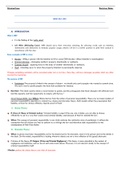
MENS REA (MR)
_______________________________________________________________________________________________
A) INTRODUCTION
What is MR?
→ It is the finding of the ‘guilty mind’.
→ A.R White (Misleading Cases): MRR should carry their everyday meaning. By allowing words such as intention,
recklessness and dishonesty to embody popular usage, citizens will be in a better position to pitch their conduct in
accordance with the rules
Some examples of MR in crime:
→ Murder - killing a person with the intention to kill or cause GBH (murder without intention is manslaughter)
→ Criminal damage - damaging another's property intentionally or recklessly
→ Common Assault - applying force to the body of another intentionally or recklessly.
→ Theft - Intending never to return the property/Intention to permanently deprive)
! People committing accidents will be convicted under tort or civil law. Here they will have damages payable which are often
covered by insurances.
The purpose of MR
→ Punishment: The purpose is linked to the concept of desert - we should only convict people who wanted to commit crime.
We don’t want to punish people who have had accidents for instance.
HLA Hart: “The State society needs a moral licence to punish, and this presupposes that those charged with offences have
had the capacity and fair opportunity to comply with the law.”
Moral Responsibility (per Wilson): Blame derives from the notion of personal responsibility. There are two basic models of
personal responsibility operative in criminal law: choice and character theory. Both models reflect the presumption that
liability, at least for serious offences, requires proof of fault.
1) Choice Theory
H. Gross (A Theory of Criminal Justice): 'Criminal liability is unjust if the one who is liable was not able to choose
effectively to act in a way that would avoid criminal liability, and because of that he violated the law'.
Wilson: This concept of personal responsibility is one which achieves the retributive aims of punishment. It reflects the
assumption that all citizens are free to conform to or infringe the law and therefore take responsibility for the
consequences of their free choice.
2) Character Theory
Wilson: A person must bear responsibility not for his choices but for his character, since it is his person and not his deeds in
the dock. On this model, responsibility is lacking wherever deeds are not a true reflection of his (good) character.
Criticism of this theory [K. Huigens (Virtue and Criminal Negligence)]: This theory is more plausible in the context of
negligence and defences, such as loss of self control and duress. However, it is not relevant wholly to the concept of
criminal responsibility itself.
! Fletcher prefers the choice theory over that of character.
, Criminal Law Revision Notes
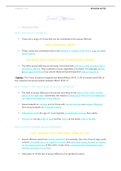
How should MR be ascertained? Through the subjective or objective test?
SUBJECTIVE TEST OBJECTIVE TEST
Basis Choice Theory: If freely choosing to do wrong is the Character Theory: If bad character is the basis for desert
basis for desert in punishment then one would expect in punishment, proof of an accompanying mental attitude
liability to be predicated upon the prosecution is not so crucial. People can show bad character through
proving the existence of some form of mental state their actions both by thinking and by not thinking of the
on the part of the wrongdoer, for example intention, wrongfulness of their action.
knowledge, or awareness, which reflects conscious
choice.This mental state or attitude accompanying
wrongdoing is termed subjective fault.
Example A shows subjective fault by directing his car at his A shows objective fault by driving his car in such a way
enemy in order to kill him. that ordinary reasonable people would realise, although
he did not, that he was subjecting other road users and
His mental state is that of intention.
pedestrians to the unjustified risk of harm.
We term this type of fault negligence. Negligent conduct
is blameworthy not on account of the actor choosing to do
wrong but on account of the fact that he fails to behave
like ordinary people
→ Consensus: It is widely accepted that criminal responsibility should depend upon proof of subjective fault. On the one
hand, it will usually be difficult to prove what was in a person’s mind at the time of acting.
→ Are there any benefits of the objective test at all? Consent in sexual offences used to be ascertained per the subjective
test, which meant that the prosecutor had to prove that the offender believed that he/she did not have the victim’s
consent; this is a massive burden. The switch to an objective test has made the job easier for prosecutors, whilst placing
a greater onus on offenders. People who do not take care to ensure on obtaining the other’s consent or harbour
unrealistic ideas about what women want, are equally blameworthy.
→ The application of these tests in practice:
EXAMPLE: Adam is observed to drive his car at full tilt towards Eve while she is crossing the road. As she moves to avoid the
impending crash, Adam is also seen to change direction. He hits and kills Eve. Adam claims that he did not intend to kill Eve
but only to frighten her. He did not even think she might get hurt.
If Adam’s claim is to be believed, he cannot be guilty of murder, which is a crime of intention (subjective fault). However, the
evidence stacks up against him; not only was he driving at full tilt towards Eve, he changed direction just before hitting her.
The prosecution might charge Adam with murder by relying on the idea that the jury will infer a subjective state of intention
(intention) from objective facts (manner of driving).
Types of MR:
1)Intention
2)Recklessness
3)Negligence
! Whether the subjective test or the objective test is applied is noted
in each section.
! Remember MR is irrelevant for crimes of strict liability (i.e driving without a seat belt).
___________________________________________________________________________________________________
MENS REA (MR)
_______________________________________________________________________________________________
A) INTRODUCTION
What is MR?
→ It is the finding of the ‘guilty mind’.
→ A.R White (Misleading Cases): MRR should carry their everyday meaning. By allowing words such as intention,
recklessness and dishonesty to embody popular usage, citizens will be in a better position to pitch their conduct in
accordance with the rules
Some examples of MR in crime:
→ Murder - killing a person with the intention to kill or cause GBH (murder without intention is manslaughter)
→ Criminal damage - damaging another's property intentionally or recklessly
→ Common Assault - applying force to the body of another intentionally or recklessly.
→ Theft - Intending never to return the property/Intention to permanently deprive)
! People committing accidents will be convicted under tort or civil law. Here they will have damages payable which are often
covered by insurances.
The purpose of MR
→ Punishment: The purpose is linked to the concept of desert - we should only convict people who wanted to commit crime.
We don’t want to punish people who have had accidents for instance.
HLA Hart: “The State society needs a moral licence to punish, and this presupposes that those charged with offences have
had the capacity and fair opportunity to comply with the law.”
Moral Responsibility (per Wilson): Blame derives from the notion of personal responsibility. There are two basic models of
personal responsibility operative in criminal law: choice and character theory. Both models reflect the presumption that
liability, at least for serious offences, requires proof of fault.
1) Choice Theory
H. Gross (A Theory of Criminal Justice): 'Criminal liability is unjust if the one who is liable was not able to choose
effectively to act in a way that would avoid criminal liability, and because of that he violated the law'.
Wilson: This concept of personal responsibility is one which achieves the retributive aims of punishment. It reflects the
assumption that all citizens are free to conform to or infringe the law and therefore take responsibility for the
consequences of their free choice.
2) Character Theory
Wilson: A person must bear responsibility not for his choices but for his character, since it is his person and not his deeds in
the dock. On this model, responsibility is lacking wherever deeds are not a true reflection of his (good) character.
Criticism of this theory [K. Huigens (Virtue and Criminal Negligence)]: This theory is more plausible in the context of
negligence and defences, such as loss of self control and duress. However, it is not relevant wholly to the concept of
criminal responsibility itself.
! Fletcher prefers the choice theory over that of character.
, Criminal Law Revision Notes
How should MR be ascertained? Through the subjective or objective test?
SUBJECTIVE TEST OBJECTIVE TEST
Basis Choice Theory: If freely choosing to do wrong is the Character Theory: If bad character is the basis for desert
basis for desert in punishment then one would expect in punishment, proof of an accompanying mental attitude
liability to be predicated upon the prosecution is not so crucial. People can show bad character through
proving the existence of some form of mental state their actions both by thinking and by not thinking of the
on the part of the wrongdoer, for example intention, wrongfulness of their action.
knowledge, or awareness, which reflects conscious
choice.This mental state or attitude accompanying
wrongdoing is termed subjective fault.
Example A shows subjective fault by directing his car at his A shows objective fault by driving his car in such a way
enemy in order to kill him. that ordinary reasonable people would realise, although
he did not, that he was subjecting other road users and
His mental state is that of intention.
pedestrians to the unjustified risk of harm.
We term this type of fault negligence. Negligent conduct
is blameworthy not on account of the actor choosing to do
wrong but on account of the fact that he fails to behave
like ordinary people
→ Consensus: It is widely accepted that criminal responsibility should depend upon proof of subjective fault. On the one
hand, it will usually be difficult to prove what was in a person’s mind at the time of acting.
→ Are there any benefits of the objective test at all? Consent in sexual offences used to be ascertained per the subjective
test, which meant that the prosecutor had to prove that the offender believed that he/she did not have the victim’s
consent; this is a massive burden. The switch to an objective test has made the job easier for prosecutors, whilst placing
a greater onus on offenders. People who do not take care to ensure on obtaining the other’s consent or harbour
unrealistic ideas about what women want, are equally blameworthy.
→ The application of these tests in practice:
EXAMPLE: Adam is observed to drive his car at full tilt towards Eve while she is crossing the road. As she moves to avoid the
impending crash, Adam is also seen to change direction. He hits and kills Eve. Adam claims that he did not intend to kill Eve
but only to frighten her. He did not even think she might get hurt.
If Adam’s claim is to be believed, he cannot be guilty of murder, which is a crime of intention (subjective fault). However, the
evidence stacks up against him; not only was he driving at full tilt towards Eve, he changed direction just before hitting her.
The prosecution might charge Adam with murder by relying on the idea that the jury will infer a subjective state of intention
(intention) from objective facts (manner of driving).
Types of MR:
1)Intention
2)Recklessness
3)Negligence
! Whether the subjective test or the objective test is applied is noted
in each section.
! Remember MR is irrelevant for crimes of strict liability (i.e driving without a seat belt).
___________________________________________________________________________________________________