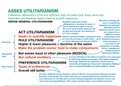
ASSES UTILITARIANISM
Preference utilitarianism is the only su cient utility focused moral theory as its non-
hedonistic and therefore doesn’t seek to quantify happiness.
Mill tries to remedy the
DEFINE GENERAL UTILITARIANISM Quantitive approach makes
issue of quantifying
utilitarianism a ‘doctrine of swine’ in
happiness by making it
that it reduces the value of human
qualitative but his
life to the same simple pleasures felt
approach doesn’t work
by pigs and animals. Our pleasure is
ACT UTILITARIANISM far more complex.
as it means it’s so
di cult to make
Seeks to quantify happiness Dignity is preferred (higher pleasures) when comparisons and
we have the privilege to prefer them - when therefore arriving at
Problems
RULE UTILITARIANISM our lower pleasures are already ful lled moral decisions. It
Higher & lower pleasures + doctrine of the swine accounts for the
complexity of morality,
Make the problem worse: hard to make comparisons but by consequence
makes practical
Substantial But solves issue of other pleasures (NOZICK) application di cult.
issue
But cultural snobbery If you’re starving on the street it would be more important
to ful l lower pleasures (hunger), than higher pleasures
(learning). Therefore his argument comes from an
PREFERENCE UTILITARIANISM extremely privileged and inaccurate standpoint. Making it
Weak issue Types of preferences have low generalisability and applicability to others.
Overall still better
It’s still a utilitarian theory, therefore aims to ful l the most personal interests possible.
However, most people don’t have antisocial or irrational preferences, therefore it’s far
more important to morality that we avoid de ning happiness and pleasure as the only
‘good’ and avoid quantifying it. This would overall creates a more ethical outcome.
ffi fi
ffi fi fi fi ffi
Preference utilitarianism is the only su cient utility focused moral theory as its non-
hedonistic and therefore doesn’t seek to quantify happiness.
Mill tries to remedy the
DEFINE GENERAL UTILITARIANISM Quantitive approach makes
issue of quantifying
utilitarianism a ‘doctrine of swine’ in
happiness by making it
that it reduces the value of human
qualitative but his
life to the same simple pleasures felt
approach doesn’t work
by pigs and animals. Our pleasure is
ACT UTILITARIANISM far more complex.
as it means it’s so
di cult to make
Seeks to quantify happiness Dignity is preferred (higher pleasures) when comparisons and
we have the privilege to prefer them - when therefore arriving at
Problems
RULE UTILITARIANISM our lower pleasures are already ful lled moral decisions. It
Higher & lower pleasures + doctrine of the swine accounts for the
complexity of morality,
Make the problem worse: hard to make comparisons but by consequence
makes practical
Substantial But solves issue of other pleasures (NOZICK) application di cult.
issue
But cultural snobbery If you’re starving on the street it would be more important
to ful l lower pleasures (hunger), than higher pleasures
(learning). Therefore his argument comes from an
PREFERENCE UTILITARIANISM extremely privileged and inaccurate standpoint. Making it
Weak issue Types of preferences have low generalisability and applicability to others.
Overall still better
It’s still a utilitarian theory, therefore aims to ful l the most personal interests possible.
However, most people don’t have antisocial or irrational preferences, therefore it’s far
more important to morality that we avoid de ning happiness and pleasure as the only
‘good’ and avoid quantifying it. This would overall creates a more ethical outcome.
ffi fi
ffi fi fi fi ffi