Psychopathology Revision Notes
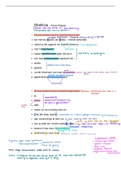
Definitions of abnormality (1)
Statistical infrequency -
- Defines abnormality by how common the behaviour is
- Useful for characteristics that can be reliably measured, for example intelligence
To be abnormal would be to have a feature that is 2 standard deviation (95%) from the norm on
the normal distribution curve. For example it would be abnormal to have an IQ of below 70 as
2.1% of the country have an IQ that low (this is known as intellectual disability disorder (IDD)).
Evaluation
Real world application - can be used as both formal diagnosis and severity of an individual
symptoms. For example a diagnosis of intellectual disability disorder requires an IQ severity of below
70 (bottom 2%). An example of statistical infrequency used in an assessment tool is the Beck
depression inventory (BDI). A score of 30+ (top 5% of respondents) is widely interpreted as
indicating severe depression. Therefore, a strength of statistical infrequency is its usefulness.
Unusual characteristics can be positive
Just as someone can have an IQ of below 70 there are the same number of people with an IQ above
130. However, we wouldn't consider someone with an IQ of 130 abnormal. Similarly, we would not
think of someone with a very low depression score on the BDI as abnormal. These examples show
that being uncommon or being at one end of a psychological spectrum does not necessarily make
someone abnormal. Meaning although statistical infrequency can form part of an assessment or
diagnosis, it is not sufficient as the sole basis for defining abnormality.
Deviation from social norms
- It offends their sense of what is ‘acceptable’ or the norm
Groups of people (hence ‘social’) choose to define behaviour as abnormal on the basis that it
offends their sense of what is acceptable or the norm. We are making collective judgement as a
society about what is right. However, those social norms may be different for each generation
and every culture, so there are relatively few behaviours that would be considered universally
abnormal on the basis that they breach social norms.
An example of its use is in the diagnosis of antisocial personality disorder (psychopath), a person
with this disorder is impulsive, aggressive and irresponsible and one important symptom of its
diagnosis is that they don't conform to our moral standards.
Evaluation
Real world application - strength is deviation from social norms usefulness
Deviation from social norms is used in clinical practice. For example, the key defining characteristic of
antisocial personality disorder is the failure to conform to culturally normal ethical behaviour i.e.
recklessness, aggression, violating the rights of others and deceitfulness. Likewise, norms play a part
in the diagnosis of schizotypal personality disorder. Showing this definition has value in psychiatry.
Cultural and situational relativism
Cultural variations - different cultures have different norms and therefore perceive different behaviour
as abnormal e.g. the experience of hearing voices is the norm in some cultures (as messages from
ancestros) but would be seen as a sign of abnormality in the UK.
Situational relativism - it depends on the context in which the behaviour is being seen e.g. aggressive
and deceitful behaviour in the context of family life is more socially unacceptable than in the context of
a corporate deal making.
Meaning it is difficult to judge deviation from social norms across different situations and cultures.
Time dependent - using this definition, is only based on the opinions and knowledge of people at the
time and therefore can change throughout time. For example being homosexual was illegal and
considerd abnormal not too long ago whereas today is is accepted in most societies.
,Failure to function adequately
- Inability to cope with demands of everyday life
Rosenham and Seligman (1989) proposed some signs that can be used to determine when
someone is not coping
- When a person no longer conforms to standard interpersonal rules e.g. respecting
personal space
- When a person experiences severe personal distress
- When a person’s behaviour becomes irrational or dangerous to themselves or others.
The Global Assessment of Functioning (GAF) Scale
A method of measuring how well individuals function in everyday life and it considers Rosenham
and Seligman’s sections plus occupational functioning
For example, to diagnose someone with intellectual disability disorder not only do they have to
have a very low IQ (statistical infrequency) but they also have to be failing to function adequately
before a diagnosis would be given.
Evaluation
Represents a threshold for help
- Mind Charity statistic: 25% of the UK experience a mental health problem in any given year.
- However, many people press on in the face of fairly severe symptoms
- It tends to be when we cease to function adequately that people notice or are noticed by
others and refer to help.
- So criterion means that treatment and services can be targeted to those who need them most
Failure to function can be normal
- People may be acting ‘abnormal’ based on this definition due to external factors in their lives
- There are circumstances where most of us fail to cope for a time e.g. bereavement
- Therefore it may be unfair to give someone a label that may cause them future problems
because of this
Counter - However the failure to function is no less real because the cause of it is known and some
people need professional help to adjust to circumstances, like in the case of bereavement.
Label non standard lifestyles choices as abnormal
- It seems unfair and unjust to suggest that/label some people as abnormal because they
choose to deviate from social norms
- For example New Age Travellers do not live in permanent accommodation and may not work
and Base jumpers take part in an extreme sport with a high mortality rate but aren't usually
considered abnormal
Deviation from ideal mental health -
- Jahoda considered normality rather than abnormalities
Marie Jahoda noted that we define physical illness by looking at the absence of signs of physical
health e.g. correct body temperature, so why not apply the same logic to mental health
She suggested we are in good mental health if we meet 6 fundamental criteria:
- Self attitudes - good self esteem
- Personal Growth and Self Actualization - strive to reach our potential
- Autonomy - being independent
- Accurate Perception of Reality and Self
- Resistance to stress
- Environmental Mastery - adjust to new situations and solve problems
Extra from book: Can successfully work, love and enjoy our leisure
Johoda: The absence of any of these criteria indicates abnormality and a potential mental
disorder
, Evaluation
Comprehensive definition
Covers a broad range of criteria for mental health, covering most of the reasons why we seek (or be
referred for) help with mental health. This in turn means that an individual’s mental health can be
discussed meaningfully with a range of professionals who might take different theoretical views e.g. a
medically trained psychiatrist might focus on symptoms whereas a humanistic counsellor might be
more interested in self actualisation. This means that ideal mental health provides a checklist against
which we can assess ourselves and others and discuss psychological issues with a range of
professionals.
Cultural relativism
It's ethnocentric, it cannot be universally applied. In particular the concept of self actualisation would
probably be dismissed as self indulgent in much of the world (especially collectivist cultures). Even
within Western Europe there is quite a bit of variation in the value placed on personal independence,
e.g. high in Germany, low in Italy. So inappropriate to apply the concept of ideal mental health from
one culture to another.
Extremely high standards
It is difficult to achieve these criteria all the time, with most of the people in the world likely failing at
least one of the criterion, making the majority of the population abnormal which seems counter
intuitive.
Counter - such a comprehensive set of criteria for mental health to work towards might be of
practical value to someone wanting to improve their mental health.
- Subjective - criterion are difficult to measure accurately
Definitions of abnormality (1)
Statistical infrequency -
- Defines abnormality by how common the behaviour is
- Useful for characteristics that can be reliably measured, for example intelligence
To be abnormal would be to have a feature that is 2 standard deviation (95%) from the norm on
the normal distribution curve. For example it would be abnormal to have an IQ of below 70 as
2.1% of the country have an IQ that low (this is known as intellectual disability disorder (IDD)).
Evaluation
Real world application - can be used as both formal diagnosis and severity of an individual
symptoms. For example a diagnosis of intellectual disability disorder requires an IQ severity of below
70 (bottom 2%). An example of statistical infrequency used in an assessment tool is the Beck
depression inventory (BDI). A score of 30+ (top 5% of respondents) is widely interpreted as
indicating severe depression. Therefore, a strength of statistical infrequency is its usefulness.
Unusual characteristics can be positive
Just as someone can have an IQ of below 70 there are the same number of people with an IQ above
130. However, we wouldn't consider someone with an IQ of 130 abnormal. Similarly, we would not
think of someone with a very low depression score on the BDI as abnormal. These examples show
that being uncommon or being at one end of a psychological spectrum does not necessarily make
someone abnormal. Meaning although statistical infrequency can form part of an assessment or
diagnosis, it is not sufficient as the sole basis for defining abnormality.
Deviation from social norms
- It offends their sense of what is ‘acceptable’ or the norm
Groups of people (hence ‘social’) choose to define behaviour as abnormal on the basis that it
offends their sense of what is acceptable or the norm. We are making collective judgement as a
society about what is right. However, those social norms may be different for each generation
and every culture, so there are relatively few behaviours that would be considered universally
abnormal on the basis that they breach social norms.
An example of its use is in the diagnosis of antisocial personality disorder (psychopath), a person
with this disorder is impulsive, aggressive and irresponsible and one important symptom of its
diagnosis is that they don't conform to our moral standards.
Evaluation
Real world application - strength is deviation from social norms usefulness
Deviation from social norms is used in clinical practice. For example, the key defining characteristic of
antisocial personality disorder is the failure to conform to culturally normal ethical behaviour i.e.
recklessness, aggression, violating the rights of others and deceitfulness. Likewise, norms play a part
in the diagnosis of schizotypal personality disorder. Showing this definition has value in psychiatry.
Cultural and situational relativism
Cultural variations - different cultures have different norms and therefore perceive different behaviour
as abnormal e.g. the experience of hearing voices is the norm in some cultures (as messages from
ancestros) but would be seen as a sign of abnormality in the UK.
Situational relativism - it depends on the context in which the behaviour is being seen e.g. aggressive
and deceitful behaviour in the context of family life is more socially unacceptable than in the context of
a corporate deal making.
Meaning it is difficult to judge deviation from social norms across different situations and cultures.
Time dependent - using this definition, is only based on the opinions and knowledge of people at the
time and therefore can change throughout time. For example being homosexual was illegal and
considerd abnormal not too long ago whereas today is is accepted in most societies.
,Failure to function adequately
- Inability to cope with demands of everyday life
Rosenham and Seligman (1989) proposed some signs that can be used to determine when
someone is not coping
- When a person no longer conforms to standard interpersonal rules e.g. respecting
personal space
- When a person experiences severe personal distress
- When a person’s behaviour becomes irrational or dangerous to themselves or others.
The Global Assessment of Functioning (GAF) Scale
A method of measuring how well individuals function in everyday life and it considers Rosenham
and Seligman’s sections plus occupational functioning
For example, to diagnose someone with intellectual disability disorder not only do they have to
have a very low IQ (statistical infrequency) but they also have to be failing to function adequately
before a diagnosis would be given.
Evaluation
Represents a threshold for help
- Mind Charity statistic: 25% of the UK experience a mental health problem in any given year.
- However, many people press on in the face of fairly severe symptoms
- It tends to be when we cease to function adequately that people notice or are noticed by
others and refer to help.
- So criterion means that treatment and services can be targeted to those who need them most
Failure to function can be normal
- People may be acting ‘abnormal’ based on this definition due to external factors in their lives
- There are circumstances where most of us fail to cope for a time e.g. bereavement
- Therefore it may be unfair to give someone a label that may cause them future problems
because of this
Counter - However the failure to function is no less real because the cause of it is known and some
people need professional help to adjust to circumstances, like in the case of bereavement.
Label non standard lifestyles choices as abnormal
- It seems unfair and unjust to suggest that/label some people as abnormal because they
choose to deviate from social norms
- For example New Age Travellers do not live in permanent accommodation and may not work
and Base jumpers take part in an extreme sport with a high mortality rate but aren't usually
considered abnormal
Deviation from ideal mental health -
- Jahoda considered normality rather than abnormalities
Marie Jahoda noted that we define physical illness by looking at the absence of signs of physical
health e.g. correct body temperature, so why not apply the same logic to mental health
She suggested we are in good mental health if we meet 6 fundamental criteria:
- Self attitudes - good self esteem
- Personal Growth and Self Actualization - strive to reach our potential
- Autonomy - being independent
- Accurate Perception of Reality and Self
- Resistance to stress
- Environmental Mastery - adjust to new situations and solve problems
Extra from book: Can successfully work, love and enjoy our leisure
Johoda: The absence of any of these criteria indicates abnormality and a potential mental
disorder
, Evaluation
Comprehensive definition
Covers a broad range of criteria for mental health, covering most of the reasons why we seek (or be
referred for) help with mental health. This in turn means that an individual’s mental health can be
discussed meaningfully with a range of professionals who might take different theoretical views e.g. a
medically trained psychiatrist might focus on symptoms whereas a humanistic counsellor might be
more interested in self actualisation. This means that ideal mental health provides a checklist against
which we can assess ourselves and others and discuss psychological issues with a range of
professionals.
Cultural relativism
It's ethnocentric, it cannot be universally applied. In particular the concept of self actualisation would
probably be dismissed as self indulgent in much of the world (especially collectivist cultures). Even
within Western Europe there is quite a bit of variation in the value placed on personal independence,
e.g. high in Germany, low in Italy. So inappropriate to apply the concept of ideal mental health from
one culture to another.
Extremely high standards
It is difficult to achieve these criteria all the time, with most of the people in the world likely failing at
least one of the criterion, making the majority of the population abnormal which seems counter
intuitive.
Counter - such a comprehensive set of criteria for mental health to work towards might be of
practical value to someone wanting to improve their mental health.
- Subjective - criterion are difficult to measure accurately