Outline and evaluate the
biological approach to treating
OCD. (16 marks)
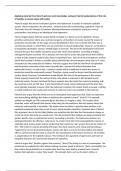
Given that neurochemical abnormalities in the brain are thought to be the root cause of
OCD, biological treatments aim to correct these imbalances. OCD is frequently treated
with antidepressant and anti-anxiety medications. For biological therapy of OCD,
selective serotonin reuptake inhibitors (SSRIs) are the drug of choice. By preventing
serotonin from being reabsorbed into the transmitting cell, SSRIs raise the amount of
serotonin that is accessible in the synapses. As a result, the concentration of serotonin
at the receptor sites on the post-synaptic neuron improves, improving the concentration
of the brain chemical, enhancing the stimulation on the receiving nerve. As a result,
SSRIs help OCD sufferers feel better mentally and have less anxiety.
The action of the neurotransmitter GABA (gamma-aminobutyric acid) is enhanced by
benzodiopines (BZs). GABA instructs the brain's neurons to "slow down" and "stop
firing." The influx of chloride ions into some neurons is increased when GABA binds to
one of their GABA receptor sites at the synapse. The chloride ions slow down the
neurological system by making it more difficult for the receiving neuron to be activated
further. This indicates that BZs have a calming effect and hence lessen anxiety, which is
felt as a result of the obsessive thoughts that are typical of OCD.
Research proving the efficacy of biological therapy for OCD is one of their advantages.
Randomized medication studies evaluate the efficacy of SSRIs in comparison to a
placebo. SSRIs were found to be considerably more effective than placebos in treating
OCD across 17 separate trials, according to a review of the literature by Soomro et al.
(2008). This supports the use of biological therapies for OCD, particularly SSRIs.
Studies like this are criticised, though, because they only draw conclusions about the
short-term efficacy of medication therapies; long-term consequences still need to be
objectively explored.
Outline and evaluate the biological approach to treating OCD. (16 marks) 1
biological approach to treating
OCD. (16 marks)
Given that neurochemical abnormalities in the brain are thought to be the root cause of
OCD, biological treatments aim to correct these imbalances. OCD is frequently treated
with antidepressant and anti-anxiety medications. For biological therapy of OCD,
selective serotonin reuptake inhibitors (SSRIs) are the drug of choice. By preventing
serotonin from being reabsorbed into the transmitting cell, SSRIs raise the amount of
serotonin that is accessible in the synapses. As a result, the concentration of serotonin
at the receptor sites on the post-synaptic neuron improves, improving the concentration
of the brain chemical, enhancing the stimulation on the receiving nerve. As a result,
SSRIs help OCD sufferers feel better mentally and have less anxiety.
The action of the neurotransmitter GABA (gamma-aminobutyric acid) is enhanced by
benzodiopines (BZs). GABA instructs the brain's neurons to "slow down" and "stop
firing." The influx of chloride ions into some neurons is increased when GABA binds to
one of their GABA receptor sites at the synapse. The chloride ions slow down the
neurological system by making it more difficult for the receiving neuron to be activated
further. This indicates that BZs have a calming effect and hence lessen anxiety, which is
felt as a result of the obsessive thoughts that are typical of OCD.
Research proving the efficacy of biological therapy for OCD is one of their advantages.
Randomized medication studies evaluate the efficacy of SSRIs in comparison to a
placebo. SSRIs were found to be considerably more effective than placebos in treating
OCD across 17 separate trials, according to a review of the literature by Soomro et al.
(2008). This supports the use of biological therapies for OCD, particularly SSRIs.
Studies like this are criticised, though, because they only draw conclusions about the
short-term efficacy of medication therapies; long-term consequences still need to be
objectively explored.
Outline and evaluate the biological approach to treating OCD. (16 marks) 1