3.9 Budgets
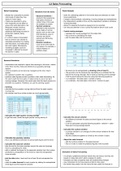
• Budget - a plan of expected income and expenditure Variances
over a period of time, used to aid in the process of
financial planning. The purpose of a budget is to • variance analysis - a tool used to compare a
outline the financial resources available for achieving business’ planned expenditure over a given time
the objectives of the business. Budgets are short-term period. This can lead to 3 possible outcomes:
(duration of a project) and coordinated (set after • favourable variance - things were better than
corporate objectives are agreed on). Budgeting could expected
involve adding a percentage on the budget from the
previous year, or zero-based budgeting ie assigning • adverse variances - things turned out worse
every pound to a cause to justify spending than expected
• no variance - things turned out as planned
• Revenue variances
• favourable - revenue is greater than budgeted
• adverse - revenue is less than budgeted
• non revenue variance - actual revenue is equal
differences between budgets and profit and loss to budgeted revenue
account • Cost variances
• favourable - costs are less than budgeted
• budgets are forecasts whereas profit and loss • adverse - costs are more than budgeted
accounts are summaries of actual figures
• no revenue variance - actual costs are equal to
• companies are legally obliged to publish profit and budgeted
loss accounts, whereas budgets are internal
documents used for planning • Profit variances
• a budget can run over different time periods specific • favourable - actual profit is greater than
to the cause whereas profit and loss accounts budgeted
record all transactions for an entire year • adverse- actual profit is less than budgeted
• no profit variance - actual profit is equal to
budgeted
Cost and Profit Centres
• profit centre - part of the business that contributes
to its overall revenue, and have both costs and The role of budget variances in strategic
revenues planning
• cost centre - part of the business that incurs costs
but does not contribute to its overall revenue • benefits of budgeting
• Using cost and profit centres • planning - refine long term plans, estimating
• ensures costs involved are in line with budgeting the financial resources that are needed to
complete a particular objective
• control - control a business’ activities and allow
for better decision making, consider impacts
before making a decision
• measuring performance - department or
manager performance can be evaluated with its
ability to stay within budget, important when
Budgets and individual departments cost control is a key target of the business
• motivation - help motivate department
• operations budgets will be sizeable in manufacturing managers to perform in line with the overall
business
business objective and stay within budget
• in a competitive market, the marketing budget will be
high • communication - use the budget to
• human resources may have expensive training communicate to different departments how
budgets and recruitment to select trained much they are expected to spend in order to
professionals achieve their objectives
• finance departments budget depends on the main • coordination - force management to make sure
objective of the firm that departmental plans are integrated
• Budget - a plan of expected income and expenditure Variances
over a period of time, used to aid in the process of
financial planning. The purpose of a budget is to • variance analysis - a tool used to compare a
outline the financial resources available for achieving business’ planned expenditure over a given time
the objectives of the business. Budgets are short-term period. This can lead to 3 possible outcomes:
(duration of a project) and coordinated (set after • favourable variance - things were better than
corporate objectives are agreed on). Budgeting could expected
involve adding a percentage on the budget from the
previous year, or zero-based budgeting ie assigning • adverse variances - things turned out worse
every pound to a cause to justify spending than expected
• no variance - things turned out as planned
• Revenue variances
• favourable - revenue is greater than budgeted
• adverse - revenue is less than budgeted
• non revenue variance - actual revenue is equal
differences between budgets and profit and loss to budgeted revenue
account • Cost variances
• favourable - costs are less than budgeted
• budgets are forecasts whereas profit and loss • adverse - costs are more than budgeted
accounts are summaries of actual figures
• no revenue variance - actual costs are equal to
• companies are legally obliged to publish profit and budgeted
loss accounts, whereas budgets are internal
documents used for planning • Profit variances
• a budget can run over different time periods specific • favourable - actual profit is greater than
to the cause whereas profit and loss accounts budgeted
record all transactions for an entire year • adverse- actual profit is less than budgeted
• no profit variance - actual profit is equal to
budgeted
Cost and Profit Centres
• profit centre - part of the business that contributes
to its overall revenue, and have both costs and The role of budget variances in strategic
revenues planning
• cost centre - part of the business that incurs costs
but does not contribute to its overall revenue • benefits of budgeting
• Using cost and profit centres • planning - refine long term plans, estimating
• ensures costs involved are in line with budgeting the financial resources that are needed to
complete a particular objective
• control - control a business’ activities and allow
for better decision making, consider impacts
before making a decision
• measuring performance - department or
manager performance can be evaluated with its
ability to stay within budget, important when
Budgets and individual departments cost control is a key target of the business
• motivation - help motivate department
• operations budgets will be sizeable in manufacturing managers to perform in line with the overall
business
business objective and stay within budget
• in a competitive market, the marketing budget will be
high • communication - use the budget to
• human resources may have expensive training communicate to different departments how
budgets and recruitment to select trained much they are expected to spend in order to
professionals achieve their objectives
• finance departments budget depends on the main • coordination - force management to make sure
objective of the firm that departmental plans are integrated