Peer Review
The Role of Peer Review
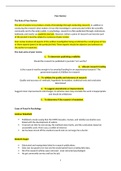
The aim of science is to produce a body of knowledge through conducting research. In addition to
conducing the research what matters is how this knowledge is communicated within the scientific
community and to the wider public. In psychology, research is often publicized through conferences,
textbooks and mostly via academic journals. However, before a piece of research can become part
of the journal is must be subject to a process of peer review.
Peer review involves all aspects of the written investigation being scrutinized by a small group of two
or three experts (peers) in the particular field. These experts should be objective and unknown to
the author or researcher.
The main aims of peer review
1. To determine publishing credibility
Should the research be published in journals? Is it worthy?
2. Allocate research funding
Is the research worthy enough to be awarded funding for an experimental research? The
government spend £5.8 billion for research
3. To validate the quality and relevance of research
Quality and accuracy of: methods, hypothesis formulation, statistical tests and conclusion
determined
4. To suggest amendments or improvements
Suggest minor improvements and changes, in extreme cases may conclude the work is inappropriate
and should be withdrawn
5. To determine if the research is fraudulent
Cases of Fraud in Psychology
Andrew Wakefield
Published a study saying that the MMR (measles, mumps, and rubella) vaccination was
linked with the development of autism.
It turned out that he was wrong–his methods were faulty, and the conclusions based on
unscientific work. There was a conflict of interest.
He has been struck off the medical council and can no longer be a doctor.
Diederik Stapel
Fabricated and manipulated data for research publications.
Data was too good to be true and he would spend hours creating fake data.
58 of his research articles were retraced - most retracted psychologist.
He got community service and lost his job.
1
The Role of Peer Review
The aim of science is to produce a body of knowledge through conducting research. In addition to
conducing the research what matters is how this knowledge is communicated within the scientific
community and to the wider public. In psychology, research is often publicized through conferences,
textbooks and mostly via academic journals. However, before a piece of research can become part
of the journal is must be subject to a process of peer review.
Peer review involves all aspects of the written investigation being scrutinized by a small group of two
or three experts (peers) in the particular field. These experts should be objective and unknown to
the author or researcher.
The main aims of peer review
1. To determine publishing credibility
Should the research be published in journals? Is it worthy?
2. Allocate research funding
Is the research worthy enough to be awarded funding for an experimental research? The
government spend £5.8 billion for research
3. To validate the quality and relevance of research
Quality and accuracy of: methods, hypothesis formulation, statistical tests and conclusion
determined
4. To suggest amendments or improvements
Suggest minor improvements and changes, in extreme cases may conclude the work is inappropriate
and should be withdrawn
5. To determine if the research is fraudulent
Cases of Fraud in Psychology
Andrew Wakefield
Published a study saying that the MMR (measles, mumps, and rubella) vaccination was
linked with the development of autism.
It turned out that he was wrong–his methods were faulty, and the conclusions based on
unscientific work. There was a conflict of interest.
He has been struck off the medical council and can no longer be a doctor.
Diederik Stapel
Fabricated and manipulated data for research publications.
Data was too good to be true and he would spend hours creating fake data.
58 of his research articles were retraced - most retracted psychologist.
He got community service and lost his job.
1