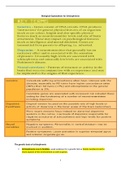
Biological Explanations for Schizophrenia
The genetic basis of schizophrenia
Schizophrenia runs in families- weak evidence for a genetic link as family members tend to
share aspects of the environment as well as genes.
1
, There have been systematic investigations of the extent to which greater genetic similarity
between family members is associated with the likelihood of both developing schizophrenia.
Strong relationship between the degree of genetic similarity and shared risk of
schizophrenia.
Findings from Irving Gottesman’s (1991) large-scale family study:
Candidate genes- polygenic because it requires a number of factors to work in combination
as a number of genes each appear to confer a small increased risk of schizophrenia.
Aetiologically heterogeneous- different candidate gene combinations and factors can lead
to condition.
Stephen Ripke et al. (2014) carried out a huge study combining all previous data from
genome-wide studies.
The genetic makeup of 37,000 people diagnosed with schizophrenia was compared to
113,000 controls; 108 genetic variations were associated with increased risk of
schizophrenia.
Genes associated with increased risk included those coding for the functioning of a number
of neurotransmitters including dopamine.
The dopamine hypothesis
Neurotransmitters- brain’s chemical messengers appear to work differently in the brain of a
person with schizophrenia. Dopamine is widely involved.
Hyperdopaminergia in the subcortex- high levels of activity of dopamine in the subcortex
(central areas of the brain).
An excess of dopamine receptors in Broca’s area (speech production) may be associated
with poverty of speech and/or the experience of auditory hallucinations.
Hypodopaminergia in the cortex- abnormal dopamine systems in the brain’s cortex.
2
The genetic basis of schizophrenia
Schizophrenia runs in families- weak evidence for a genetic link as family members tend to
share aspects of the environment as well as genes.
1
, There have been systematic investigations of the extent to which greater genetic similarity
between family members is associated with the likelihood of both developing schizophrenia.
Strong relationship between the degree of genetic similarity and shared risk of
schizophrenia.
Findings from Irving Gottesman’s (1991) large-scale family study:
Candidate genes- polygenic because it requires a number of factors to work in combination
as a number of genes each appear to confer a small increased risk of schizophrenia.
Aetiologically heterogeneous- different candidate gene combinations and factors can lead
to condition.
Stephen Ripke et al. (2014) carried out a huge study combining all previous data from
genome-wide studies.
The genetic makeup of 37,000 people diagnosed with schizophrenia was compared to
113,000 controls; 108 genetic variations were associated with increased risk of
schizophrenia.
Genes associated with increased risk included those coding for the functioning of a number
of neurotransmitters including dopamine.
The dopamine hypothesis
Neurotransmitters- brain’s chemical messengers appear to work differently in the brain of a
person with schizophrenia. Dopamine is widely involved.
Hyperdopaminergia in the subcortex- high levels of activity of dopamine in the subcortex
(central areas of the brain).
An excess of dopamine receptors in Broca’s area (speech production) may be associated
with poverty of speech and/or the experience of auditory hallucinations.
Hypodopaminergia in the cortex- abnormal dopamine systems in the brain’s cortex.
2