Respiration
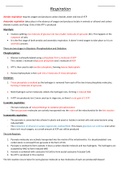
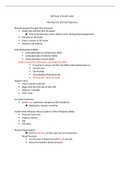
Aerobic respiration requires oxygen and produces carbon dioxide, water and lots of ATP
Anaerobic respiration takes place in the absence of oxygen and produces lactate in animals or ethanol and carbon
dioxide in plants and fungi. Only a little ATP is produced
Glycolysis:
• Involves splitting one molecule of glucose into two smaller molecules of pyruvate (3C). This happens in the
cytoplasm of cells.
• It is the first stage of both aerobic and anaerobic respiration. It doesn’t need oxygen to take place so it is an
anaerobic process
There are two stages in Glycolysis- Phosphorylation and Oxidation:
Phosphorylation:
1. Glucose is phosphorylated using a phosphate from a molecule of ATP
This creates 1 molecule of glucose phosphate and 1 molecule of ADP
2. ATP is then used to add another phosphate, forming hexose biphosphate
3. Hexose biphosphate is then split into 2 molecules of triose phosphate
Oxidation:
1. Triose phosphate is oxidised as the hydrogen is removed from each of the two triose phosphate molecules,
forming 2 molecules of pyruvate
2. NAD (hydrogen-carrier molecule) collects the hydrogen ions, forming 2 reduced NAD
3. 4 ATP are produced, but 2 were used up in stage one, so there’s a net gain of 2 ATP
In aerobic respiration:
- The two molecules of reduced NAD go to oxidative phosphorylation
- The two pyruvate molecules are actively transported into the matrix of the mitochondria for the link reaction
In anaerobic respiration:
- The pyruvate is converted into ethanol in plants and yeast or lactate in animal cells and some bacteria using
reduced NAD
- The production of ethanol or lactate regenerates oxidised NAD. This means glycolysis can continue even when
there isn’t much oxygen, so a small amount of ATP can still be produced
The Link Reaction:
1. Pyruvate molecules are actively transported into the matrix of the mitochondria. It is decarboxylated- one
carbon atom is removed from pyruvate in the form of CO2
2. Pyruvate is oxidised to form acetate. It loses a carbon dioxide molecule and two hydrogens. The hydrogens are
accepted by NAD to form reduced NAD
3. Acetate is combined with coenzyme A (CoA) to form acetyl coenzyme A (acetyl CoA)
4. No ATP is produced in this reaction
The link reaction occurs twice for every glucose molecule so two molecules of each are produced/released
Aerobic respiration requires oxygen and produces carbon dioxide, water and lots of ATP
Anaerobic respiration takes place in the absence of oxygen and produces lactate in animals or ethanol and carbon
dioxide in plants and fungi. Only a little ATP is produced
Glycolysis:
• Involves splitting one molecule of glucose into two smaller molecules of pyruvate (3C). This happens in the
cytoplasm of cells.
• It is the first stage of both aerobic and anaerobic respiration. It doesn’t need oxygen to take place so it is an
anaerobic process
There are two stages in Glycolysis- Phosphorylation and Oxidation:
Phosphorylation:
1. Glucose is phosphorylated using a phosphate from a molecule of ATP
This creates 1 molecule of glucose phosphate and 1 molecule of ADP
2. ATP is then used to add another phosphate, forming hexose biphosphate
3. Hexose biphosphate is then split into 2 molecules of triose phosphate
Oxidation:
1. Triose phosphate is oxidised as the hydrogen is removed from each of the two triose phosphate molecules,
forming 2 molecules of pyruvate
2. NAD (hydrogen-carrier molecule) collects the hydrogen ions, forming 2 reduced NAD
3. 4 ATP are produced, but 2 were used up in stage one, so there’s a net gain of 2 ATP
In aerobic respiration:
- The two molecules of reduced NAD go to oxidative phosphorylation
- The two pyruvate molecules are actively transported into the matrix of the mitochondria for the link reaction
In anaerobic respiration:
- The pyruvate is converted into ethanol in plants and yeast or lactate in animal cells and some bacteria using
reduced NAD
- The production of ethanol or lactate regenerates oxidised NAD. This means glycolysis can continue even when
there isn’t much oxygen, so a small amount of ATP can still be produced
The Link Reaction:
1. Pyruvate molecules are actively transported into the matrix of the mitochondria. It is decarboxylated- one
carbon atom is removed from pyruvate in the form of CO2
2. Pyruvate is oxidised to form acetate. It loses a carbon dioxide molecule and two hydrogens. The hydrogens are
accepted by NAD to form reduced NAD
3. Acetate is combined with coenzyme A (CoA) to form acetyl coenzyme A (acetyl CoA)
4. No ATP is produced in this reaction
The link reaction occurs twice for every glucose molecule so two molecules of each are produced/released