

BIOLOGY A2 NOTES
UNIT 4
Topic 5B: Ecology
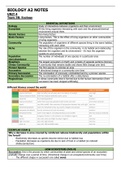
ESSENTIAL DEFINITIONS
Ecology Study of interactions between organisms and their environment
Ecosystem All the living organisms interacting with each and the physical/chemical
environment around them.
Abiotic Factors Non-living factors
Biotic Factors Living factors. This is the effect of living organisms on other communities
of living organisms
Community The population of organisms of different species living in the same habitat,
interacting with each other
Niche The role of the organism in the community, in its habitat and relationship
between the organism and its environment – it’s how the organism
exploits its environment.
Population The number of individuals of one species in a particular area
size/abundance
Biosphere The largest ecosystem on Earth and consists of separate sections (biomes)
Climax Community A community that remains stable and shows little change over time
Pioneer Species The first species to colonise an area
Succession A directional change in a community over time
Primary Succession The colonisation of previously uninhabited land by a pioneer species
Secondary Succession The re-colonisation of a habitat after a disturbance
Plagioclimax A climax community that is formed due to the human intervention (here
succession has been stopped artificially).
Different Biomes around the world
EXEMPLAR EXAM Q
Why a decrease in area covered by rainforest reduces biodiversity and populations within
the forest?
- Biodiversity decreases as species become extinct due to habitat loss
- Population decreases as organisms die due to lack of food or a habitat (so reduced
shelter/protection)
HOW ECOSYSTEMS EVOLVE
Succession: this is the process by which communities of plant and animal species of an ecosystem
gradually change over a period of time. (Directional change in an ecosystem/community over time)
- The different stages in succession are called seres.
, - Succession continues until the community reaches an equilibrium with the environment – known
as the climax community.
PRIMARY SUCCESSION
This starts with an empty inorganic surface – bare rock or a sand dune. This type of succession can be
observed after a volcanic eruption/landslide/after emergence of new volcanic island
1. The first stage is COLONISATION (species spread to new areas) and the first organisms to appear
are OPPORTUNISTS/PIONEER SPECIES. These species can include algae/mosses/fungi/lichens.
- These organisms can penetrate rock surface by dissolving rocks with acids/penetrating tiny cracks
with root hairs – all of this helps to break the rock into small grains and tap the organic material
that will break down to form humus.
2. This is the start of the formation of soil. After soil, other species such as grasses and ferns can
establish root systems. The action of roots and the humus they form when they die and decay, adds to
the soil
3. The soil layer developed and more water and nutrients are kept in the soil and become available for
plant roots, this means fewer resistant species can survive.
4. Gradually larger plants can be supported and species diversity increases. This results in an increase in
the diversity of animals.
5. Then, a CLIMAX COMMUNITY is reached. In which, the biodiversity and range of species are
generally constant. This type of community is self-sustaining and the most production group of
organisms that the environment can support. The climate is a major factor in determining the
composition of the climax community, known as climatic climax community.
Plagioclimax: a climax community that is at least in part the result of human intervention. These
are constant and self-sustaining but not truly natural. E.g., humans may have changed landscape by
clearing trees, using water of irrigation or introduce grazing animals. Grazing will prevent growth of
shrubs and trees. Mowing and use of herbicides on lawns artificially preserves grass at the expense of
other species
Such changes affect the ultimate climax community. If the limiting factors are removed (people moving
away from that area), a climatic climax community will eventually develop.
SECONDARY SUCCESSION
This is the development of an ecosystem from existing soil that is clear of vegetation
- It occurs as rivers change their course, after fires or floods or disturbances caused by humans
- Sequence of events similar to primary succession but due to presence of soil from the beginning
with seeds, roots and soil organisms, the number of plants and animals present from the
beginning are much higher.
- Many species disappear, seeds remain
- Colonisers are fast growing
The time it takes to go from bare earth to climax community varies on many factors such as
temperature, rainfall and the fertility of the soil. The climax community that is formed will depend on
climatic factors and also on the plant, animals and microorganisms that are able to colonise the area.
- This means that a secondary climax community differs from a primary climax community.
UNIT 4
Topic 5B: Ecology
ESSENTIAL DEFINITIONS
Ecology Study of interactions between organisms and their environment
Ecosystem All the living organisms interacting with each and the physical/chemical
environment around them.
Abiotic Factors Non-living factors
Biotic Factors Living factors. This is the effect of living organisms on other communities
of living organisms
Community The population of organisms of different species living in the same habitat,
interacting with each other
Niche The role of the organism in the community, in its habitat and relationship
between the organism and its environment – it’s how the organism
exploits its environment.
Population The number of individuals of one species in a particular area
size/abundance
Biosphere The largest ecosystem on Earth and consists of separate sections (biomes)
Climax Community A community that remains stable and shows little change over time
Pioneer Species The first species to colonise an area
Succession A directional change in a community over time
Primary Succession The colonisation of previously uninhabited land by a pioneer species
Secondary Succession The re-colonisation of a habitat after a disturbance
Plagioclimax A climax community that is formed due to the human intervention (here
succession has been stopped artificially).
Different Biomes around the world
EXEMPLAR EXAM Q
Why a decrease in area covered by rainforest reduces biodiversity and populations within
the forest?
- Biodiversity decreases as species become extinct due to habitat loss
- Population decreases as organisms die due to lack of food or a habitat (so reduced
shelter/protection)
HOW ECOSYSTEMS EVOLVE
Succession: this is the process by which communities of plant and animal species of an ecosystem
gradually change over a period of time. (Directional change in an ecosystem/community over time)
- The different stages in succession are called seres.
, - Succession continues until the community reaches an equilibrium with the environment – known
as the climax community.
PRIMARY SUCCESSION
This starts with an empty inorganic surface – bare rock or a sand dune. This type of succession can be
observed after a volcanic eruption/landslide/after emergence of new volcanic island
1. The first stage is COLONISATION (species spread to new areas) and the first organisms to appear
are OPPORTUNISTS/PIONEER SPECIES. These species can include algae/mosses/fungi/lichens.
- These organisms can penetrate rock surface by dissolving rocks with acids/penetrating tiny cracks
with root hairs – all of this helps to break the rock into small grains and tap the organic material
that will break down to form humus.
2. This is the start of the formation of soil. After soil, other species such as grasses and ferns can
establish root systems. The action of roots and the humus they form when they die and decay, adds to
the soil
3. The soil layer developed and more water and nutrients are kept in the soil and become available for
plant roots, this means fewer resistant species can survive.
4. Gradually larger plants can be supported and species diversity increases. This results in an increase in
the diversity of animals.
5. Then, a CLIMAX COMMUNITY is reached. In which, the biodiversity and range of species are
generally constant. This type of community is self-sustaining and the most production group of
organisms that the environment can support. The climate is a major factor in determining the
composition of the climax community, known as climatic climax community.
Plagioclimax: a climax community that is at least in part the result of human intervention. These
are constant and self-sustaining but not truly natural. E.g., humans may have changed landscape by
clearing trees, using water of irrigation or introduce grazing animals. Grazing will prevent growth of
shrubs and trees. Mowing and use of herbicides on lawns artificially preserves grass at the expense of
other species
Such changes affect the ultimate climax community. If the limiting factors are removed (people moving
away from that area), a climatic climax community will eventually develop.
SECONDARY SUCCESSION
This is the development of an ecosystem from existing soil that is clear of vegetation
- It occurs as rivers change their course, after fires or floods or disturbances caused by humans
- Sequence of events similar to primary succession but due to presence of soil from the beginning
with seeds, roots and soil organisms, the number of plants and animals present from the
beginning are much higher.
- Many species disappear, seeds remain
- Colonisers are fast growing
The time it takes to go from bare earth to climax community varies on many factors such as
temperature, rainfall and the fertility of the soil. The climax community that is formed will depend on
climatic factors and also on the plant, animals and microorganisms that are able to colonise the area.
- This means that a secondary climax community differs from a primary climax community.


