

Key Terms
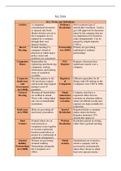
Key Terms and Definitions
Articles A companies Ordinary Most common type of
constitutional document Resolution shareholder resolution. Used to
or internal rule book. give SH approval for decisions
Model Articles set out in taken by the company that are
the Companies Act or too importance for a board to
adapted by a company make independently. Can be
through their own passed by simple majority
Special Articles. (>50%).
Board Formal meeting if a Partnership Primary act governing
Meeting company's board of Act (1890) traditional or ordinary
directors at which major partnerships.
policy issues and
problems are considered.
Companies Responsible for PSC Register of persons have
House registering and dissolving Register significant control over a
companies, storing company.
information, and making
some of it publicly
available.
Corporate Provides updates to the Registrar Official responsible for all
Insolvency UK insolvency regime of filings with CH relating to the
and and provide temp support Companies Companies Acts 1985 to 2006.
Governance during Covid-19
Act (2020) pandemic.
General Meeting all shareholders Single Company must have a
Meeting are entitled to attend. Alternative registered office but can
Those with voting rights Inspection nominate an alternate address
can vote on shareholder Location where all official records and
resolutions. registers are kept available for
inspection.
Insolvency Main act governing all Special Required before a company
Act (1986) insolvency procedures. Resolution makes major decisions.
Requires minimum 75%
shareholder approval.
Joint Formed where two or Written Resolution passed in writing
Venture more persons or Resolution rather than a general meeting.
companies come together
to execute a particular
business proposition or
project in a contractual or
corporate arrangement.
Limited Primary act governing Model Standardised set of articles,
liability Limited Liability Articles which a company will be
Partnerships Partnerships (alongside governed by automatically
Act (2000) the Companies Act unless they choose to adopt
2006). their own special articles.
, The Companies Act 2006
SECTION 7-16 SECTION 18-27 SECTION 53-69 SECTION 154, 162-
Company Registration Articles of Association Company Names 167
Register of Directors
SECTION 168-169, SECTION 170-182 SECTION 177, 182, SECTION 188-189,
288, 303-3-5, 312, Directors' Duties 145-185 228
360 Directors' Declarations of Directors' Service
Removing Directors Interest Contracts
SECTION 190- SECTION 197-207 SECTION 281-284 SECTION 288-297
196,252-255,1163 Loans to Directors Resolutions Written Resolutions
Substantial Property
Transactions
SECTION 302-312 SECTION 549-570 SECTION 658, 684-
Meeting Notice Allotment of shares and 723
disapplication of pre- Share Buy-backs
emptive rights
2
, Code of Conduct
Professional Conduct = the rules and regulations with which a solicitor must comply.
The SRA Principles
1. Uphold the rule of law and the proper administration of justice,
2. Uphold public trust and confidence in the solicitor’s profession and in legal
services,
3. With independence,
4. With honesty,
5. With integrity,
6. In a way that encourages equality, diversion, and inclusion,
7. In the best interests of each client.
Undertakings Anti-Money Laundering
An enforceable promise which may be Money laundering is the process by which
given orally or in writing. criminals seek to alter or launder their
If a solicitor breaches an undertaking, he proceeds of crime so that it appears that
may be sued personally by the recipient these funds came from a legitimate source.
for compensation for any loss caused. s.328 – Offence of arranging: you know
If a conditional undertaking is given (i.e., the client has bought a house with
contingent on some future event), and it proceeds of drug dealing and you help
becomes apparent that the event will no transfer this to his children. You would
longer take place, you must notify the need to make an authorized disclosure to
recipient immediately. your firm’s AML officer who decides
Keep a record of all undertaking given and whether to report it to the NCA.
discharged. s.330 – Failure to disclose: You know or
suspect someone is involved with money
laundering = objective test.
Conflict between Confidentiality and Make an authorised disclosure to
Disclosure – Question Structure nominated officer asap.
1. State which client you owe the s.333 – Tipping off: you know a
duty of confidentiality to. disclosure has been made and you tip off
2. State which clint a duty of the criminal by giving them information
disclosure is owed to. that is likely to prejudice the investigation.
3. Explain that confidentiality beats
disclosure (Outcome 4.3) Conflict of Interests
4. Consider whether you can act for A solicitor must not act where this is a
both clients/the new client. conflict, significant risk of a conflict,
between the interest of two or more
N.B. The duty of confidentiality takes clients, or between the interest of the client
precedence over duty of disclosure. and the solicitor.
Where there is a conflict between two or
more clients, a solicitor may act if he can
satisfy the requirements of the
substantially common interest exception or
the commercial exception.
3
, FSMA 2000
Financial Services and Markets Act 2000
Section 19: no person can carry out a regulated activity unless authorised by the FCA or
exempt.
(a) Have I got the necessary skill and knowledge?
(b) What am I permitted to do under the financial services regulations?
Breach of s.19 could be a criminal offence and could also make any agreement made
with a person who contravened s.19 unenforceable.
Are you conducting a Step One: Are you in business? If they have come to see you
regulated activity? 4 in your capacity as a solicitor, you are in business.
stage test:
(Page 186 Legal Step Two: Is a specified investment involved?
Foundations)
Investment is widely defined to include any asset, right or
If yes is answered to interest (s. 22(4)). Section 22(5) refers to specified in an order
steps 1,2 AND 3, you are made by the treasury. This means the RAO. The RAO sets out
carrying out a regulated the list of specified investments.
activity.
Specified Investment Non-Specified Investment
Shares in limited and public Interests in land
companies Article 76
Loan stock and bonds Article Some national savings
77 products
Home reversion/purchase plans E.g., Fran asks whether the
Barclays current account is
better than the NatWest
one
Debenture
Deposits Article 77
Gilts/Government securities
and bonds
Unit trusts
Insurance contracts (life, home,
legal) Article 75
Mortgages Article 88/61(3)
Step Three: Is a specified investment activity being
undertaken? Are you doing any one of the following in
relation to a specified investment?
Article 14 – Dealing as Principal: Buying or selling,
underwriting, or subscribing for specified investments on your
own behalf (includes solicitors acting as trustees).
Article 21 – Dealing as Agent: Buying or selling,
underwriting, or subscribing for specified investments for your
client as an agent (includes solicitors acting as power of
attorney).
Article 25 – Arranging deals in investment.
Article 37 – Managing: Managing Investments – Distinct
4
Key Terms and Definitions
Articles A companies Ordinary Most common type of
constitutional document Resolution shareholder resolution. Used to
or internal rule book. give SH approval for decisions
Model Articles set out in taken by the company that are
the Companies Act or too importance for a board to
adapted by a company make independently. Can be
through their own passed by simple majority
Special Articles. (>50%).
Board Formal meeting if a Partnership Primary act governing
Meeting company's board of Act (1890) traditional or ordinary
directors at which major partnerships.
policy issues and
problems are considered.
Companies Responsible for PSC Register of persons have
House registering and dissolving Register significant control over a
companies, storing company.
information, and making
some of it publicly
available.
Corporate Provides updates to the Registrar Official responsible for all
Insolvency UK insolvency regime of filings with CH relating to the
and and provide temp support Companies Companies Acts 1985 to 2006.
Governance during Covid-19
Act (2020) pandemic.
General Meeting all shareholders Single Company must have a
Meeting are entitled to attend. Alternative registered office but can
Those with voting rights Inspection nominate an alternate address
can vote on shareholder Location where all official records and
resolutions. registers are kept available for
inspection.
Insolvency Main act governing all Special Required before a company
Act (1986) insolvency procedures. Resolution makes major decisions.
Requires minimum 75%
shareholder approval.
Joint Formed where two or Written Resolution passed in writing
Venture more persons or Resolution rather than a general meeting.
companies come together
to execute a particular
business proposition or
project in a contractual or
corporate arrangement.
Limited Primary act governing Model Standardised set of articles,
liability Limited Liability Articles which a company will be
Partnerships Partnerships (alongside governed by automatically
Act (2000) the Companies Act unless they choose to adopt
2006). their own special articles.
, The Companies Act 2006
SECTION 7-16 SECTION 18-27 SECTION 53-69 SECTION 154, 162-
Company Registration Articles of Association Company Names 167
Register of Directors
SECTION 168-169, SECTION 170-182 SECTION 177, 182, SECTION 188-189,
288, 303-3-5, 312, Directors' Duties 145-185 228
360 Directors' Declarations of Directors' Service
Removing Directors Interest Contracts
SECTION 190- SECTION 197-207 SECTION 281-284 SECTION 288-297
196,252-255,1163 Loans to Directors Resolutions Written Resolutions
Substantial Property
Transactions
SECTION 302-312 SECTION 549-570 SECTION 658, 684-
Meeting Notice Allotment of shares and 723
disapplication of pre- Share Buy-backs
emptive rights
2
, Code of Conduct
Professional Conduct = the rules and regulations with which a solicitor must comply.
The SRA Principles
1. Uphold the rule of law and the proper administration of justice,
2. Uphold public trust and confidence in the solicitor’s profession and in legal
services,
3. With independence,
4. With honesty,
5. With integrity,
6. In a way that encourages equality, diversion, and inclusion,
7. In the best interests of each client.
Undertakings Anti-Money Laundering
An enforceable promise which may be Money laundering is the process by which
given orally or in writing. criminals seek to alter or launder their
If a solicitor breaches an undertaking, he proceeds of crime so that it appears that
may be sued personally by the recipient these funds came from a legitimate source.
for compensation for any loss caused. s.328 – Offence of arranging: you know
If a conditional undertaking is given (i.e., the client has bought a house with
contingent on some future event), and it proceeds of drug dealing and you help
becomes apparent that the event will no transfer this to his children. You would
longer take place, you must notify the need to make an authorized disclosure to
recipient immediately. your firm’s AML officer who decides
Keep a record of all undertaking given and whether to report it to the NCA.
discharged. s.330 – Failure to disclose: You know or
suspect someone is involved with money
laundering = objective test.
Conflict between Confidentiality and Make an authorised disclosure to
Disclosure – Question Structure nominated officer asap.
1. State which client you owe the s.333 – Tipping off: you know a
duty of confidentiality to. disclosure has been made and you tip off
2. State which clint a duty of the criminal by giving them information
disclosure is owed to. that is likely to prejudice the investigation.
3. Explain that confidentiality beats
disclosure (Outcome 4.3) Conflict of Interests
4. Consider whether you can act for A solicitor must not act where this is a
both clients/the new client. conflict, significant risk of a conflict,
between the interest of two or more
N.B. The duty of confidentiality takes clients, or between the interest of the client
precedence over duty of disclosure. and the solicitor.
Where there is a conflict between two or
more clients, a solicitor may act if he can
satisfy the requirements of the
substantially common interest exception or
the commercial exception.
3
, FSMA 2000
Financial Services and Markets Act 2000
Section 19: no person can carry out a regulated activity unless authorised by the FCA or
exempt.
(a) Have I got the necessary skill and knowledge?
(b) What am I permitted to do under the financial services regulations?
Breach of s.19 could be a criminal offence and could also make any agreement made
with a person who contravened s.19 unenforceable.
Are you conducting a Step One: Are you in business? If they have come to see you
regulated activity? 4 in your capacity as a solicitor, you are in business.
stage test:
(Page 186 Legal Step Two: Is a specified investment involved?
Foundations)
Investment is widely defined to include any asset, right or
If yes is answered to interest (s. 22(4)). Section 22(5) refers to specified in an order
steps 1,2 AND 3, you are made by the treasury. This means the RAO. The RAO sets out
carrying out a regulated the list of specified investments.
activity.
Specified Investment Non-Specified Investment
Shares in limited and public Interests in land
companies Article 76
Loan stock and bonds Article Some national savings
77 products
Home reversion/purchase plans E.g., Fran asks whether the
Barclays current account is
better than the NatWest
one
Debenture
Deposits Article 77
Gilts/Government securities
and bonds
Unit trusts
Insurance contracts (life, home,
legal) Article 75
Mortgages Article 88/61(3)
Step Three: Is a specified investment activity being
undertaken? Are you doing any one of the following in
relation to a specified investment?
Article 14 – Dealing as Principal: Buying or selling,
underwriting, or subscribing for specified investments on your
own behalf (includes solicitors acting as trustees).
Article 21 – Dealing as Agent: Buying or selling,
underwriting, or subscribing for specified investments for your
client as an agent (includes solicitors acting as power of
attorney).
Article 25 – Arranging deals in investment.
Article 37 – Managing: Managing Investments – Distinct
4


