14.1 SURVIVAL & RESPONSE
Monday, 31 January 2022
15:45
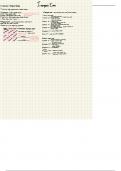
Stimulus - Detectible change in internal or external environment of an organism that
leads to a response in the organism.
By responding to stimuli, organisms increase their chance of survival.
Stimuli are detected by receptors which are specific to one type of stimuli.
A coordinator formulates a suitable response to a stimulus.
● May be at the molecular level or involve a large organ such as the brain.
A response is produced by an effector.
Taxis - A simple directional response whose direction is determined by the direction
of the stimulus.
● Towards stimulus - Positive taxis.
● Away from stimulus - Negative taxis.
Kinesis - A simple non-directional random response to a stimuli, changing its speed as
well as its rate of change of direction.
If an organism crosses a sharp line dividing favourable and an unfavourable
environment, its rate of turning increases.
● Raises chance of quick return to favourable conditions.
If an organism moves a considerable distance into an unfavourable environment,
rate of turning will decrease so that it moves in long straight lines before turning
sharply.
● More likely to bring organism into new region with favourable conditions.
, 14.2 PLANT GROWTH FACTORS
Monday, 31 January 2022
17:51
Tropism - Growth of part of a plant in response to a directional stimuli.
Plant responses to external stimuli involve plant growth factors.
● Exert influence by affecting growth and can effect the cells that release them
rather than target organs.
Indoleacetic acid (IAA) belongs to a group of substances known as auxins.
● Controls plant cell elongation.
Plant shoots grow towards light in order to photosynthesise.
● Positive phototropism.
Plant roots grow away from light.
● Negative phototropism.
The movement of shoots towards light is due to:
● Cells in tip of shoots produce IAA which is transported down the shoot.
● IAA is initially transported evenly throughout all regions as it begins to move
down the shoot.
● Light causes the movement of IAA from the light side to the shaded side of the
shoot.
● Greater concentration of IAA on shaded side than light side.
● IAA causes plant cell elongation, with more IAA on shaded side than light side.
● Shaded side of shoot elongates quicker than light side, resulting in the root tip
bending towards the light.
In the roots IAA also moves to the shaded side, however inhibits cell elongation in
roots.
● Roots bend away from light.
Plant roots grow downwards, in the direction of gravity.
● Positive geotropism.
Plant shoots grow upwards, in the opposite direction of gravity.
● Negative geotropism.
The movement of horizontally-growing roots moving downwards is due to:
● Cells in the root tip produce IAA which is then transported along the root.
● IAA is initially transported to all sides of the root.
● Gravity influences movement of IAA from the higher to the lower side of the
root.
● Greater concentration of IAA on lower side than upper side.
Monday, 31 January 2022
15:45
Stimulus - Detectible change in internal or external environment of an organism that
leads to a response in the organism.
By responding to stimuli, organisms increase their chance of survival.
Stimuli are detected by receptors which are specific to one type of stimuli.
A coordinator formulates a suitable response to a stimulus.
● May be at the molecular level or involve a large organ such as the brain.
A response is produced by an effector.
Taxis - A simple directional response whose direction is determined by the direction
of the stimulus.
● Towards stimulus - Positive taxis.
● Away from stimulus - Negative taxis.
Kinesis - A simple non-directional random response to a stimuli, changing its speed as
well as its rate of change of direction.
If an organism crosses a sharp line dividing favourable and an unfavourable
environment, its rate of turning increases.
● Raises chance of quick return to favourable conditions.
If an organism moves a considerable distance into an unfavourable environment,
rate of turning will decrease so that it moves in long straight lines before turning
sharply.
● More likely to bring organism into new region with favourable conditions.
, 14.2 PLANT GROWTH FACTORS
Monday, 31 January 2022
17:51
Tropism - Growth of part of a plant in response to a directional stimuli.
Plant responses to external stimuli involve plant growth factors.
● Exert influence by affecting growth and can effect the cells that release them
rather than target organs.
Indoleacetic acid (IAA) belongs to a group of substances known as auxins.
● Controls plant cell elongation.
Plant shoots grow towards light in order to photosynthesise.
● Positive phototropism.
Plant roots grow away from light.
● Negative phototropism.
The movement of shoots towards light is due to:
● Cells in tip of shoots produce IAA which is transported down the shoot.
● IAA is initially transported evenly throughout all regions as it begins to move
down the shoot.
● Light causes the movement of IAA from the light side to the shaded side of the
shoot.
● Greater concentration of IAA on shaded side than light side.
● IAA causes plant cell elongation, with more IAA on shaded side than light side.
● Shaded side of shoot elongates quicker than light side, resulting in the root tip
bending towards the light.
In the roots IAA also moves to the shaded side, however inhibits cell elongation in
roots.
● Roots bend away from light.
Plant roots grow downwards, in the direction of gravity.
● Positive geotropism.
Plant shoots grow upwards, in the opposite direction of gravity.
● Negative geotropism.
The movement of horizontally-growing roots moving downwards is due to:
● Cells in the root tip produce IAA which is then transported along the root.
● IAA is initially transported to all sides of the root.
● Gravity influences movement of IAA from the higher to the lower side of the
root.
● Greater concentration of IAA on lower side than upper side.