5.1 DEFENCE MECHANISMS
09 October 2020
09:53
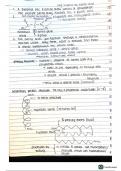
Pathogen - A microorganism which can cause disease.
● Produce toxins and destroy tissue and cells.
Immunity - Body recognises antigens on the pathogen and is able to destroy the
infection before you become ill.
Antigens - Proteins which trigger an immune response.
Some immune responses are general and immediate, like phagocytosis.
● Non-specific.
Others are specific, less rapid and longer lasting, these involve lymphocytes.
● Cell-mediated response, involving T lymphocytes.
● Humoral immune response, involving B lymphocytes.
Self antigens - Antigens produced by the organism itself.
Non-self antigens - Antigens not produced by the organisms itself.
Lymphocytes are able to distinguish between self and non-self antigens.
● Otherwise they would destroy the organisms own tissue.
There is a variety of specific 3D structures of antigens, which distinguish one cell
from another.
Antigens allow the immune system to identify:
● Pathogens
● Cells of other organisms of the same species.
● Abnormal body cells
● Toxins
, 5.2 PHAGOCYTOSIS
14 November 2020
15:19
Phagocytes are the first white blood cells to respond to an immune response.
● They carry out phagocytosis.
● This is a non-specific immune response.
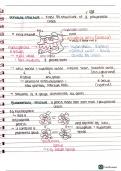
The phagocyte engulfs the pathogen through phagocytosis:
● The pathogen releases chemical products, attracting the phagocyte which
moves along a concentration gradient.
● The phagocyte has several receptors on its surface, which attach to the
antigens on the pathogen.
● The phagocyte engulfs the pathogen, to form a phagosome, which is a vesicle.
● Lysosomes in the phagocyte move towards the phagosome, and fuse with it.
● Lysozymes are released by the lysosomes, hydrolysing the pathogen and break
it down.
● The soluble products from the breakdown are absorbed into the cytoplasm of
the phagocyte.
● The antigens of the pathogen move to the cell surface membrane, where they
are presented.
- Becomes an antigen presenting cell.
09 October 2020
09:53
Pathogen - A microorganism which can cause disease.
● Produce toxins and destroy tissue and cells.
Immunity - Body recognises antigens on the pathogen and is able to destroy the
infection before you become ill.
Antigens - Proteins which trigger an immune response.
Some immune responses are general and immediate, like phagocytosis.
● Non-specific.
Others are specific, less rapid and longer lasting, these involve lymphocytes.
● Cell-mediated response, involving T lymphocytes.
● Humoral immune response, involving B lymphocytes.
Self antigens - Antigens produced by the organism itself.
Non-self antigens - Antigens not produced by the organisms itself.
Lymphocytes are able to distinguish between self and non-self antigens.
● Otherwise they would destroy the organisms own tissue.
There is a variety of specific 3D structures of antigens, which distinguish one cell
from another.
Antigens allow the immune system to identify:
● Pathogens
● Cells of other organisms of the same species.
● Abnormal body cells
● Toxins
, 5.2 PHAGOCYTOSIS
14 November 2020
15:19
Phagocytes are the first white blood cells to respond to an immune response.
● They carry out phagocytosis.
● This is a non-specific immune response.
The phagocyte engulfs the pathogen through phagocytosis:
● The pathogen releases chemical products, attracting the phagocyte which
moves along a concentration gradient.
● The phagocyte has several receptors on its surface, which attach to the
antigens on the pathogen.
● The phagocyte engulfs the pathogen, to form a phagosome, which is a vesicle.
● Lysosomes in the phagocyte move towards the phagosome, and fuse with it.
● Lysozymes are released by the lysosomes, hydrolysing the pathogen and break
it down.
● The soluble products from the breakdown are absorbed into the cytoplasm of
the phagocyte.
● The antigens of the pathogen move to the cell surface membrane, where they
are presented.
- Becomes an antigen presenting cell.