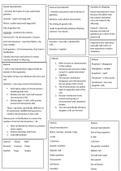
Sexual reproduction Asexual reproduction Variation in offspring
= involves the fusion of male and female = involves one parent and no fusion of Sexual reproduction= does
gametes. gametes. because the alleles that
the mother and father
Animals = sperm and egg cells. Bacteria, some plants and animals.
carry are mixed in the
Plants = pollen and ovule (egg cells). No mixing of genetic info. offspring.
Mix of genetic info. Leads to genetically identical offspring Asexual = does not
(clones) = by mitosis. because no fusion of
Gametes = produced by meiosis.
gametes just a clone of the
Normal cell = 46 chromosomes, 23 pairs. parent cell.
Each chromosome = one from father, one Gametes = sex cells, reproductive Organisms that reproduce
from mother. cells. asexually will evolve as
Each gamete = 23 chromosomes, they fuse in Gametes = haploid they experience random
fertilization. mutations.
Genetic info from each parent is mixed,
Mitosis Mitosis
causing variation in offspring.
1. DNA is found as chromosomes Prophase = disappears
Meiosis
in the nucleus.
= cells in the reproductive organs divide by 2. Chromosomes become visible Metaphase = middle
meiosis to form gametes. as each is copied and joined
Anaphase = apart
together.
Formation of four non identical cells from one
3. The nuclear membrane Telophase = 2 new nuclei
cell.
disappears and chromosomes
Cytokinesis = two new
Gametes = one copy of each chromosome. line up along centre of cell.
daughter cells.
4. The chromosomes are pulled
Cell makes copies of chromosomes = apart to opposite ends of the
double genetic info. cell.
Divides into two, each half amount 5. Nuclear membrane forms
chromosomes (46). around each group of
Divides again, 4 cells, with quarter chromosomes and cytoplasm
amount chromosomes (23). divides.
These = gametes, genetically different as 6. Two new genetically identical
chromosomes shuffled during process, daughter cells are formed.
random chromosomes in four cells.
Gametes join at fertilisation to restore the
number of normal chromosomes = 46.
Meiosis Mitosis
1. New cell divides by mitosis to produce
Sexual reproduction Asexual reproduction
many copies.
2. Embryo develops and forms. Plants, humans, animals, fungi Every living organism
3. Cells differentiate.
4 cells 2 cells
Asexual Sexual Both 2 divisions 1 division
Bacteria Humans Plants Genetic variation No genetic variation
Starfish Dogs Snakes Haploid, half Diploid, full
Makes gametes Growth and repair
Two parents One parent
Cell fusion No cell fusion
Variation Clones
, DNA Genome = all the genetic material of an organism.
= polymer made up of two strands Human genome study is important for medicine .
forming a double helix.
Why
DNA is found in chromosomes.
Locate and fix certain genes that cause diseases.
Gene = small section of DNA, Discover human migration patterns.
chromosomes that codes for a particular Treating inherited disorders.
sequence of amino acids to make a Can see what other species we are closely related to.
specific protein. Compare genetics between species.
Understand proteins that make up genes.
This protein gives unique characteristics.
Genes
Every eukaryotic cell has a nucleus
Made up of polymer, DNA
Can vary in length Inside nucleus there are chromosomes arranged in pairs (diploid).
Single chromosome can have
Each chromosome consists of many genes joined together. They carry
thousands of genes
instructions to build all living cells.
Chromosomes are made of a long molecule.DNA.
Genetic inheritance
Some characteristics are controlled by a Characteristics from a single gene
Because chromosomes separate in
single gene. Each gene may have meiosis, only one gene can be passed = animal fur, red green
different forms called alleles. down to the offspring from one colourblindness in humans.
Allele = different version of the same parent.
gene.
Phenotype = the physical characteristics Cystic fibrosis Polydactyl
of an organism. = disorder of the cell membranes. = extra fingers or toes.
Genotype = the alleles an organism Caused by a recessive allele. 1.Caused by a dominant allele.
carries. 2 copies need to be inherited
2.Only one copy needs to be
Dominant alleles = expressed if only for a person to suffer the
inherited to gain extra digits.
present on one chromosome and for the symptoms.
phenotype to be observed. (1) Both parents must be carriers 3.One parent needs to carry gene
(they are not affected) (healthy (will also have extra digits).
Recessive alleles = only expressed if dominant gene).
4.No effect on persons health and
present on both chromosomes and for Sticky mucus build up in
can be removed through surgery.
phenotype to be observed. (2) airways, intestines and
reproductive tracts.
Homozygous = both inherited alleles are Checking the DNA
the same. Symptoms
Amniotic fluid can be
Heterozygous = when one of the 1. Struggle to breath taken (containing cells).
inherited alleles is dominant the other is 2. Mucus in lungs Scrapings from placenta
recessive. 3. Digestive problems
4. Struggle to exercise = risk of miscarriage.
Chromosomes come in homologous 5. Infertility (men)
pairs. Cells taken from IVF
Punnet square developing embryos.
Screening for genetic disorders Parental cells checked to
Can predict the outcome of a calculate probability of
= difficult to cure adults for them as all their monohybrid cross. producing child with
cells contain the faulty gene.
disorder.
But embryos can be screened at early age.
= involves the fusion of male and female = involves one parent and no fusion of Sexual reproduction= does
gametes. gametes. because the alleles that
the mother and father
Animals = sperm and egg cells. Bacteria, some plants and animals.
carry are mixed in the
Plants = pollen and ovule (egg cells). No mixing of genetic info. offspring.
Mix of genetic info. Leads to genetically identical offspring Asexual = does not
(clones) = by mitosis. because no fusion of
Gametes = produced by meiosis.
gametes just a clone of the
Normal cell = 46 chromosomes, 23 pairs. parent cell.
Each chromosome = one from father, one Gametes = sex cells, reproductive Organisms that reproduce
from mother. cells. asexually will evolve as
Each gamete = 23 chromosomes, they fuse in Gametes = haploid they experience random
fertilization. mutations.
Genetic info from each parent is mixed,
Mitosis Mitosis
causing variation in offspring.
1. DNA is found as chromosomes Prophase = disappears
Meiosis
in the nucleus.
= cells in the reproductive organs divide by 2. Chromosomes become visible Metaphase = middle
meiosis to form gametes. as each is copied and joined
Anaphase = apart
together.
Formation of four non identical cells from one
3. The nuclear membrane Telophase = 2 new nuclei
cell.
disappears and chromosomes
Cytokinesis = two new
Gametes = one copy of each chromosome. line up along centre of cell.
daughter cells.
4. The chromosomes are pulled
Cell makes copies of chromosomes = apart to opposite ends of the
double genetic info. cell.
Divides into two, each half amount 5. Nuclear membrane forms
chromosomes (46). around each group of
Divides again, 4 cells, with quarter chromosomes and cytoplasm
amount chromosomes (23). divides.
These = gametes, genetically different as 6. Two new genetically identical
chromosomes shuffled during process, daughter cells are formed.
random chromosomes in four cells.
Gametes join at fertilisation to restore the
number of normal chromosomes = 46.
Meiosis Mitosis
1. New cell divides by mitosis to produce
Sexual reproduction Asexual reproduction
many copies.
2. Embryo develops and forms. Plants, humans, animals, fungi Every living organism
3. Cells differentiate.
4 cells 2 cells
Asexual Sexual Both 2 divisions 1 division
Bacteria Humans Plants Genetic variation No genetic variation
Starfish Dogs Snakes Haploid, half Diploid, full
Makes gametes Growth and repair
Two parents One parent
Cell fusion No cell fusion
Variation Clones
, DNA Genome = all the genetic material of an organism.
= polymer made up of two strands Human genome study is important for medicine .
forming a double helix.
Why
DNA is found in chromosomes.
Locate and fix certain genes that cause diseases.
Gene = small section of DNA, Discover human migration patterns.
chromosomes that codes for a particular Treating inherited disorders.
sequence of amino acids to make a Can see what other species we are closely related to.
specific protein. Compare genetics between species.
Understand proteins that make up genes.
This protein gives unique characteristics.
Genes
Every eukaryotic cell has a nucleus
Made up of polymer, DNA
Can vary in length Inside nucleus there are chromosomes arranged in pairs (diploid).
Single chromosome can have
Each chromosome consists of many genes joined together. They carry
thousands of genes
instructions to build all living cells.
Chromosomes are made of a long molecule.DNA.
Genetic inheritance
Some characteristics are controlled by a Characteristics from a single gene
Because chromosomes separate in
single gene. Each gene may have meiosis, only one gene can be passed = animal fur, red green
different forms called alleles. down to the offspring from one colourblindness in humans.
Allele = different version of the same parent.
gene.
Phenotype = the physical characteristics Cystic fibrosis Polydactyl
of an organism. = disorder of the cell membranes. = extra fingers or toes.
Genotype = the alleles an organism Caused by a recessive allele. 1.Caused by a dominant allele.
carries. 2 copies need to be inherited
2.Only one copy needs to be
Dominant alleles = expressed if only for a person to suffer the
inherited to gain extra digits.
present on one chromosome and for the symptoms.
phenotype to be observed. (1) Both parents must be carriers 3.One parent needs to carry gene
(they are not affected) (healthy (will also have extra digits).
Recessive alleles = only expressed if dominant gene).
4.No effect on persons health and
present on both chromosomes and for Sticky mucus build up in
can be removed through surgery.
phenotype to be observed. (2) airways, intestines and
reproductive tracts.
Homozygous = both inherited alleles are Checking the DNA
the same. Symptoms
Amniotic fluid can be
Heterozygous = when one of the 1. Struggle to breath taken (containing cells).
inherited alleles is dominant the other is 2. Mucus in lungs Scrapings from placenta
recessive. 3. Digestive problems
4. Struggle to exercise = risk of miscarriage.
Chromosomes come in homologous 5. Infertility (men)
pairs. Cells taken from IVF
Punnet square developing embryos.
Screening for genetic disorders Parental cells checked to
Can predict the outcome of a calculate probability of
= difficult to cure adults for them as all their monohybrid cross. producing child with
cells contain the faulty gene.
disorder.
But embryos can be screened at early age.