Enzymes
16 April 2021 16:32
• Enzymes are biological catalysts; they increase the rate of a chemical reaction without
being used up by the reaction themselves
• Enzymes are globular proteins
• Each enzyme has its own unique shape, enabling it to catalyse one metabolic reaction,
they are specific
• Enzymes can be intracellular, eg, DNA polymerase, or extracellular, eg, lipases or
proteases secreted for digestion
The Induced Fit Hypothesis
• A more modern model is the induced fit hypothesis
• The substrate is not exactly complementary to the shape of the active site
• Instead the active site changes shape slightly as the substrate molecule enters and
interacts with the R groups of the amino acids which form the active site
• This ensures a better fit, so the active site is now complementary to the substrate, thus an
enzyme substrate complex is formed (conformational change)
• As enzymes are proteins, extremes of temperature and pH will denature the enzyme,
altering its tertiary structure and therefore the 3D shape of the active site. This renders it
unable to form an enzyme substrate complex
Activation Energy
• Enzymes only catalyse (speed up) metabolic reactions, they cannot allow a reaction to
take place which would not occur naturally
• The amount of energy given to a reaction in order for it to proceed is called activation
energy
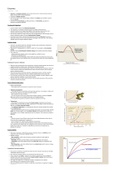
• Enzymes work by decreasing the activation energy of the reaction which they catalyse
• This is done by:
- Holding substrates together at the correct angle for a collision to occur
- Donating or accepting protons
- Or allowing the initial breaking of bonds within the substrate to take place more easily
(by placing a strain on the substrate once it has bound to the active site, thus destabilising
it)
Following the Course of a Reaction:
• Reactions can be measured by the volume/mass of product being produced, eg, volume of
oxygen produced by catalase when it breaks down hydrogen peroxide
• Initially the rate of reaction will be high as there are many substrate molecules. These will
move around in solution and collide with the active site of the enzyme, thus forming an
enzyme substrate complex
• The active site will fit around the substrate, catalysing the reaction, and the resultant
products will be released (as they are no longer complementary to the active site)
• As the reaction proceeds, there will be less substrate available, so fewer collisions, fewer
enzyme substrate complexes, so less product formed
• Therefore the rate of reaction will slow down and eventually stop when all the substrate
has been converted to product
Factors Affecting Enzyme Action
• Enzyme concentration
- Increasing enzyme concentration increases the rate of reaction
• Substrate concentration
- Increasing substrate concentration will mean that substrate is more likely to collide with
the active site, and form an enzyme substrate complex
- This increases the rate of reaction
- This will increase until the point where every enzyme reaches its maximum turnover
rate, every active site is occupied continuously, so the graph plateaus
- At this point the enzyme has reached its maximum possible rate or Vmax
• Temperature
- Increasing the temperature increases the kinetic energy of substrates and enzymes,
therefore they are more likely to collide, substrates are more likely to enter the active site
and form an enzyme substrate complex
- The optimum temperature is the temperature when the enzyme catalyses the reaction
at the maximum rate
- After this point the enzyme has so much energy, that bonds in its structure (eg, H bonds)
break. The enzyme begins to lose its tertiary structure and the shape of the active site
may change so it is no longer complementary to the substrate. The enzyme has started to
denature
• pH
- Different enzymes have different optimum pH values depending upon where they are
found, eg, salivary amylase pH 7, pepsin pH 2
- pH is a measure of H+ (acid) and OH- (alkaline) concentration
- The H+ and OH- can interact with the R groups of amino acids in the enzyme structure.
This could break ionic bonds and thus change the tertiary structure of the enzyme and the
shape of the active site. Therefore a large difference in pH from the optimum can
denature the enzyme
Enzyme Inhibitors
• The action of enzymes is affected by a group of chemicals known as inhibitors, which
reduce the rate of an enzyme catalysed reaction
• Inhibitors may be:
- Non-reversible, in which case the enzyme cannot be made to function again (a
permanent change)
- Reversible, in which case the inhibitor only temporarily binds to the enzyme
- Competitive, where the inhibitor binds to the active site making it unavailable to the
substrate
- Non-competitive, where the inhibitor binds to an allosteric site which induces a change
in shape of the active site
Competitive, Reversible Inhibitors:
• The presence of inhibitor molecules decreases the rate of enzyme reactions by reversible
combination with the enzyme
• This molecule competes with the normal substrate for the active site
• These molecules are similar in shape to the enzyme's substrate and so are capable of
binding to the active site, thus forming an enzyme inhibitor complex, and preventing an
enzyme substrate complex being formed
• The degree of inhibition for competitive inhibitors will depend on the relative
concentrations of the substrates and the inhibitor
• The more inhibitor present in relation to substrate concentration, the greater the degree
of inhibition
16 April 2021 16:32
• Enzymes are biological catalysts; they increase the rate of a chemical reaction without
being used up by the reaction themselves
• Enzymes are globular proteins
• Each enzyme has its own unique shape, enabling it to catalyse one metabolic reaction,
they are specific
• Enzymes can be intracellular, eg, DNA polymerase, or extracellular, eg, lipases or
proteases secreted for digestion
The Induced Fit Hypothesis
• A more modern model is the induced fit hypothesis
• The substrate is not exactly complementary to the shape of the active site
• Instead the active site changes shape slightly as the substrate molecule enters and
interacts with the R groups of the amino acids which form the active site
• This ensures a better fit, so the active site is now complementary to the substrate, thus an
enzyme substrate complex is formed (conformational change)
• As enzymes are proteins, extremes of temperature and pH will denature the enzyme,
altering its tertiary structure and therefore the 3D shape of the active site. This renders it
unable to form an enzyme substrate complex
Activation Energy
• Enzymes only catalyse (speed up) metabolic reactions, they cannot allow a reaction to
take place which would not occur naturally
• The amount of energy given to a reaction in order for it to proceed is called activation
energy
• Enzymes work by decreasing the activation energy of the reaction which they catalyse
• This is done by:
- Holding substrates together at the correct angle for a collision to occur
- Donating or accepting protons
- Or allowing the initial breaking of bonds within the substrate to take place more easily
(by placing a strain on the substrate once it has bound to the active site, thus destabilising
it)
Following the Course of a Reaction:
• Reactions can be measured by the volume/mass of product being produced, eg, volume of
oxygen produced by catalase when it breaks down hydrogen peroxide
• Initially the rate of reaction will be high as there are many substrate molecules. These will
move around in solution and collide with the active site of the enzyme, thus forming an
enzyme substrate complex
• The active site will fit around the substrate, catalysing the reaction, and the resultant
products will be released (as they are no longer complementary to the active site)
• As the reaction proceeds, there will be less substrate available, so fewer collisions, fewer
enzyme substrate complexes, so less product formed
• Therefore the rate of reaction will slow down and eventually stop when all the substrate
has been converted to product
Factors Affecting Enzyme Action
• Enzyme concentration
- Increasing enzyme concentration increases the rate of reaction
• Substrate concentration
- Increasing substrate concentration will mean that substrate is more likely to collide with
the active site, and form an enzyme substrate complex
- This increases the rate of reaction
- This will increase until the point where every enzyme reaches its maximum turnover
rate, every active site is occupied continuously, so the graph plateaus
- At this point the enzyme has reached its maximum possible rate or Vmax
• Temperature
- Increasing the temperature increases the kinetic energy of substrates and enzymes,
therefore they are more likely to collide, substrates are more likely to enter the active site
and form an enzyme substrate complex
- The optimum temperature is the temperature when the enzyme catalyses the reaction
at the maximum rate
- After this point the enzyme has so much energy, that bonds in its structure (eg, H bonds)
break. The enzyme begins to lose its tertiary structure and the shape of the active site
may change so it is no longer complementary to the substrate. The enzyme has started to
denature
• pH
- Different enzymes have different optimum pH values depending upon where they are
found, eg, salivary amylase pH 7, pepsin pH 2
- pH is a measure of H+ (acid) and OH- (alkaline) concentration
- The H+ and OH- can interact with the R groups of amino acids in the enzyme structure.
This could break ionic bonds and thus change the tertiary structure of the enzyme and the
shape of the active site. Therefore a large difference in pH from the optimum can
denature the enzyme
Enzyme Inhibitors
• The action of enzymes is affected by a group of chemicals known as inhibitors, which
reduce the rate of an enzyme catalysed reaction
• Inhibitors may be:
- Non-reversible, in which case the enzyme cannot be made to function again (a
permanent change)
- Reversible, in which case the inhibitor only temporarily binds to the enzyme
- Competitive, where the inhibitor binds to the active site making it unavailable to the
substrate
- Non-competitive, where the inhibitor binds to an allosteric site which induces a change
in shape of the active site
Competitive, Reversible Inhibitors:
• The presence of inhibitor molecules decreases the rate of enzyme reactions by reversible
combination with the enzyme
• This molecule competes with the normal substrate for the active site
• These molecules are similar in shape to the enzyme's substrate and so are capable of
binding to the active site, thus forming an enzyme inhibitor complex, and preventing an
enzyme substrate complex being formed
• The degree of inhibition for competitive inhibitors will depend on the relative
concentrations of the substrates and the inhibitor
• The more inhibitor present in relation to substrate concentration, the greater the degree
of inhibition