

Intracellular proteolysis
Proteases are a class of family that have various enzymes;
● These are all enzymes that cleave peptide bonds.
● There’s lysosomal proteases.
● The other way that they are classified by their catalytic rates.
● Sequence specificity of proteolysis
○ Specific which can be used in protein activation
○ Non-specific proteolysis can be used for protein
degradation [protein digestion]
Example; Activation by proteolysis
● The chymotrypsinogen [family of serine proteases]
is cleaved by trypsin from the inactive form to the
active form. Cleaved at the 15-16 amino acid.
● Π-chymotrypsin is autolysed to form α-chymotrypsin
active.
● The chymotrypsinogen is cleaved at three disulfide
bonds.
● The trypsin itself is activated by the enzyme
enteropeptidase when it cleaves off trypsinogen
inactive.
“Royal Disease” Caused by Mutation in Factor IX Gene (Haemophilia B, Christmas disease)
● This disease is found in the F9.
● The mutation caused a new splice sequence, and because it’s deletion, there’s a frame shift which
forms a non-functional protein.
HIV 1 protease
● This protease generates two proteins gag & pol.
● If the HIV protease isn’t there, then gap & pol can’t be processed and virus
can’t be effective.
● Medicines have been used for blockages of HIV protease which means
that there’s a lot lower deaths for HIV carriers. Started in 1995.
Non-specific protein degradation is compartmentalised
● The ubiquitylation pathway that occurs in two steps is significant for
degradation. Ubiquitin is a small peptide.
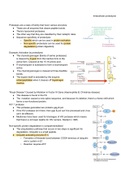
● Ubiquitin-activating enzyme (E1)
○ Formation of thioester bond between COOH terminus of ubiquitin
and a cystein in E1
○ Reaction requires ATP
Proteases are a class of family that have various enzymes;
● These are all enzymes that cleave peptide bonds.
● There’s lysosomal proteases.
● The other way that they are classified by their catalytic rates.
● Sequence specificity of proteolysis
○ Specific which can be used in protein activation
○ Non-specific proteolysis can be used for protein
degradation [protein digestion]
Example; Activation by proteolysis
● The chymotrypsinogen [family of serine proteases]
is cleaved by trypsin from the inactive form to the
active form. Cleaved at the 15-16 amino acid.
● Π-chymotrypsin is autolysed to form α-chymotrypsin
active.
● The chymotrypsinogen is cleaved at three disulfide
bonds.
● The trypsin itself is activated by the enzyme
enteropeptidase when it cleaves off trypsinogen
inactive.
“Royal Disease” Caused by Mutation in Factor IX Gene (Haemophilia B, Christmas disease)
● This disease is found in the F9.
● The mutation caused a new splice sequence, and because it’s deletion, there’s a frame shift which
forms a non-functional protein.
HIV 1 protease
● This protease generates two proteins gag & pol.
● If the HIV protease isn’t there, then gap & pol can’t be processed and virus
can’t be effective.
● Medicines have been used for blockages of HIV protease which means
that there’s a lot lower deaths for HIV carriers. Started in 1995.
Non-specific protein degradation is compartmentalised
● The ubiquitylation pathway that occurs in two steps is significant for
degradation. Ubiquitin is a small peptide.
● Ubiquitin-activating enzyme (E1)
○ Formation of thioester bond between COOH terminus of ubiquitin
and a cystein in E1
○ Reaction requires ATP


