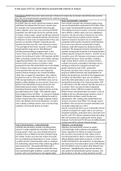
In the years 1947-67, white Britons showed little interest in empire.
Introduction Whilst there were some remnants of interest in empire due to shared cultural links and economic
ties, the era of decolonisation massively led to a decline in interest
Point 1 Popular culture - partially Point 2 Economically - somewhat
Post WW2 that was some cultural ties between empire Post-colonial economic ties remained largely strong
and Britain that allowed for the two to remain close. even as decolonization accelerated in the 1960s. There
For example, the Commonwealth Games brought was a major Commonwealth economic conference in
nations together every four years meaning the British 1952 helping to preserve empire’s economic interest as
population was still closely tied to the sporting events well as Britain’s. Britain status was now a globalised
of empire. Cricket, poker, squash had all been exported economy- the City of London remained as one of the
to empire countries meaning that Britain still had spear world's major financial capitals and the and the
of influence at least in the recreational field. Music also imperial Connexions had given rise to multinational
served as a reminder of Britain’s imperial past and companies with branches around the world therefore
showed how there was still a clear interest in empire – there was a clear interest economically in empire.
‘The Last Night of the Proms’ musical in 1954 notably However, trade with empire was limited as the 60s
played patriotic songs such as ‘Rule Britannia!’ continued. The European Economic Community was a
certainly demonstrating an imperial spirit. In the symbolic turning point for Britain as it showed Europe’s
cinema, there were significant films with a focus on trading capacity compared to empire’s - the EEC was an
empire; the Northwest Frontier 1959 depicted a British economic union 1957 between six European countries
officer protecting a Hindu Prince from Muslim uprising including W.Germany, France and Italy, creating a
suggesting that British rule in India was necessary to single market. Britain’s desire for joining involved a
preserve order and Lawrence of Arabia in 1962 cocktail of economic and political motivations due to
portrayed the hero-like white British man in the Middle wanting to achieve the sustained and rapid econ
East. However mass audiences no longer welcomed growth enjoyed by most of EEC, particularly
overly patriotic films and we're now eclipsed by W.Germany and Italy; there was also concerns about
western dramas showing a rise in Americanisation long term political exclusion and marginalization as
rather than an appeal for imperialism. Also, satirical Britain had already been hard hit by the disappearance
programmes such as ‘That was the week that was’ in of empire and Macmillan’s govt was not willing to
1962 emerged poking fun at old British values such as stand idly whilst global players grew next door. Britain
jingoism-whilst attitudes are not concrete, there was a had joined the European Free Trade Association 1959
general trend that British society had become less an alternative to the EEC however this did not prove as
deferential towards empire. Children stories also successful. There was also the failed Tanganyika
abandoned formerly popular imperial themes and the groundnut scheme 1948 that resulted in declining
groundbreaking comic ‘Eagle’ 1950 explicitly stated British interest and demotivation for empire. It was an
that foreigners were not villain – in contrast to Rudyard ambitious aim to cultivate peanuts however a lack of
Kipling’s infamous jungle book justifying the need for suitable land/machinery meant the plan was
empire. Clearly there was a change in popular culture, abandoned in 1951 costing £49m whilst Britain was
where old attitudes that formed backbones of empire trying to reconstruct post WW2. The damage caused
such as being a civilising mission, were now becoming by Britain in the area led to increased nationalism and
outdated, mirroring the demise of empire. eventually independence in 1961.
Overall, economically there was an undeniable interest
as Britain emerged from empire with a vast overseas
investment portfolio, particularly due to exclusion from
the EEC until 1973. Britain maintained informal trading
links and economic ties replacing the formal empire.
However, by the 60s and 70s this was incredibly limited
as there was shift in interest towards Europe.
Point 3 Decolonisation – underwhelmingly Migration- overwhelmingly
Politically decolonisation marked a declining British Migration increased British interest in empire
interest in empire signified by Macmillan's Winds of overwhelmingly, both positively and negatively.
Change speech. There was some limited interest for Firstly, migration from Britain to empire increased –
example victory in WW2 led to ideas of Britain being this was due to increased war time rations and an
the mother country to protect her empire (ironically increasing demand for labour in dominion countries
the war helped bring independence to many colonies offering British people better prospects. In 1946-47
e.g India) and the Commonwealth acted as a medium 1million left Britain for the dominions, accelerating pre-
for maintaining cultural links whilst reinforcing political war levels and a mass observation survey 1948 showed
and economic ties - the empire left Britain with a that 25% Britain’s were in contact with relatives from
diaspora of c.10 million around the world with many dominions – highlighting the string link and interest
that maintained English traditions, contacts and legal even within the decolonisation period. However, this
systems which used parliaments and wigged judges did slowdown in the 60s as living standards and full
Introduction Whilst there were some remnants of interest in empire due to shared cultural links and economic
ties, the era of decolonisation massively led to a decline in interest
Point 1 Popular culture - partially Point 2 Economically - somewhat
Post WW2 that was some cultural ties between empire Post-colonial economic ties remained largely strong
and Britain that allowed for the two to remain close. even as decolonization accelerated in the 1960s. There
For example, the Commonwealth Games brought was a major Commonwealth economic conference in
nations together every four years meaning the British 1952 helping to preserve empire’s economic interest as
population was still closely tied to the sporting events well as Britain’s. Britain status was now a globalised
of empire. Cricket, poker, squash had all been exported economy- the City of London remained as one of the
to empire countries meaning that Britain still had spear world's major financial capitals and the and the
of influence at least in the recreational field. Music also imperial Connexions had given rise to multinational
served as a reminder of Britain’s imperial past and companies with branches around the world therefore
showed how there was still a clear interest in empire – there was a clear interest economically in empire.
‘The Last Night of the Proms’ musical in 1954 notably However, trade with empire was limited as the 60s
played patriotic songs such as ‘Rule Britannia!’ continued. The European Economic Community was a
certainly demonstrating an imperial spirit. In the symbolic turning point for Britain as it showed Europe’s
cinema, there were significant films with a focus on trading capacity compared to empire’s - the EEC was an
empire; the Northwest Frontier 1959 depicted a British economic union 1957 between six European countries
officer protecting a Hindu Prince from Muslim uprising including W.Germany, France and Italy, creating a
suggesting that British rule in India was necessary to single market. Britain’s desire for joining involved a
preserve order and Lawrence of Arabia in 1962 cocktail of economic and political motivations due to
portrayed the hero-like white British man in the Middle wanting to achieve the sustained and rapid econ
East. However mass audiences no longer welcomed growth enjoyed by most of EEC, particularly
overly patriotic films and we're now eclipsed by W.Germany and Italy; there was also concerns about
western dramas showing a rise in Americanisation long term political exclusion and marginalization as
rather than an appeal for imperialism. Also, satirical Britain had already been hard hit by the disappearance
programmes such as ‘That was the week that was’ in of empire and Macmillan’s govt was not willing to
1962 emerged poking fun at old British values such as stand idly whilst global players grew next door. Britain
jingoism-whilst attitudes are not concrete, there was a had joined the European Free Trade Association 1959
general trend that British society had become less an alternative to the EEC however this did not prove as
deferential towards empire. Children stories also successful. There was also the failed Tanganyika
abandoned formerly popular imperial themes and the groundnut scheme 1948 that resulted in declining
groundbreaking comic ‘Eagle’ 1950 explicitly stated British interest and demotivation for empire. It was an
that foreigners were not villain – in contrast to Rudyard ambitious aim to cultivate peanuts however a lack of
Kipling’s infamous jungle book justifying the need for suitable land/machinery meant the plan was
empire. Clearly there was a change in popular culture, abandoned in 1951 costing £49m whilst Britain was
where old attitudes that formed backbones of empire trying to reconstruct post WW2. The damage caused
such as being a civilising mission, were now becoming by Britain in the area led to increased nationalism and
outdated, mirroring the demise of empire. eventually independence in 1961.
Overall, economically there was an undeniable interest
as Britain emerged from empire with a vast overseas
investment portfolio, particularly due to exclusion from
the EEC until 1973. Britain maintained informal trading
links and economic ties replacing the formal empire.
However, by the 60s and 70s this was incredibly limited
as there was shift in interest towards Europe.
Point 3 Decolonisation – underwhelmingly Migration- overwhelmingly
Politically decolonisation marked a declining British Migration increased British interest in empire
interest in empire signified by Macmillan's Winds of overwhelmingly, both positively and negatively.
Change speech. There was some limited interest for Firstly, migration from Britain to empire increased –
example victory in WW2 led to ideas of Britain being this was due to increased war time rations and an
the mother country to protect her empire (ironically increasing demand for labour in dominion countries
the war helped bring independence to many colonies offering British people better prospects. In 1946-47
e.g India) and the Commonwealth acted as a medium 1million left Britain for the dominions, accelerating pre-
for maintaining cultural links whilst reinforcing political war levels and a mass observation survey 1948 showed
and economic ties - the empire left Britain with a that 25% Britain’s were in contact with relatives from
diaspora of c.10 million around the world with many dominions – highlighting the string link and interest
that maintained English traditions, contacts and legal even within the decolonisation period. However, this
systems which used parliaments and wigged judges did slowdown in the 60s as living standards and full