Plant structure
PLANT CELLS
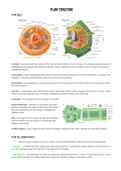
cell wall - surrounds the cell outside of the cell surface membrane and is made of a cellulose polysaccharide. It
strengthens and supports the cell and prevents it from changing shape. Contains pores to allow movement of
substances easily.
chloroplast - small, flattened structure that contains a double membrane. The inner membrane is stacked into
thylakoid. Contains chlorophyll that absorbs light for photosynthesis.
amyloplast - (also plastids) synthesises and stores starch molecules and breaks them down to glucose when
the cell requires it.
vacuole - membranous sac that contains a fluid called sap, which contains sugars and salts for the cell. Allows
cells to become turgid and also to isolate unwanted chemicals from the rest of the cell.
tonoplast - the membrane that surrounds a vacuole.
plasmodesmata - channels of cytoplasm that pass
between adjacent cell walls of plant cells that allows
fast communication and exchange of substances
between cells.
pits - thin regions of the plant cell wall that facilitate
communication and exchange of substances with
adjacent plant cells.
middle lamella - layer made of pectin that lies between adjacent plant cells, sticking the cell walls together.
PLANT CELL CARBOHYDRATES
starch - stores energy in plants and it is a mixture of two polysaccharides called amylose and amylopectin:
• amylose – unbranched chain of glucose molecules joined by 1,4 glycosidic bonds. Amylose is coiled and so it
is a very compact molecule meaning it can store a lot of energy.
• amylopectin – branched and is made up of glucose molecules joined by 1,4 and 1,6 glycosidic bonds. Due to
many side branches it is rapidly digested by enzymes therefore energy is released quickly.
, secondary thickening - a second cell wall formed between the original cell wall and the
cell surface membrane. It only begins to grow once the cell has stopped growing. Its
structure is made of parallel layers of microfibrils of cellulose, with other
polysaccharide additions. The strength and flexibility created by cell walls and their
secondary walls means plants have useful qualities for human use.
cellulose - a component of cell walls in plants and it’s composed of
long, unbranched chains of beta glucose, joined by glycosidic bonds.
Microfibrils are made of long cellulose chains linked together by
hydrogen bonds formed between adjacent chains. These microfibrils
form long threads that provide structural support in plant cells.
SCLERENCHYMA FIBRES, phloem and xylem vessels
Lignin is a polysaccharide that is added to the secondary cell wall of plant cells in the transport vessel xylem
and sclerenchyma fibres. It makes cell walls less flexible and more rigid, adding strength to vascular bundle.
sclerenchyma fibres - made from dead cells, it gives support to the plant.
xylem vessel - made from dead cells, it forms
hollow tubes of dead cells that helps transport
water and inorganic ions from the roots where
they are taken in via root hair cells, and then to
the other parts of the plant.
phloem vessel - made of living cells that form a
sieve tube element with surrounding companion
cells, it transports organic solutes via
translocation.
SUSTAINABILITY
Plants material is renewable and sustainable - its level can be maintained at a constant level.
Plant based products can replace oil-based plastics as oil is running out and plant based products are more
biodegradable so it would rescue waste problems created by non-biodegradable plastics.
Plant fibres have other use for humans, for instance:
- plant fibres are very strong and can be used to make materials such as rope and fabrics
- production of plant fibre is cheaper than oil-based ones
- starch can be used to make bioplastics and bioethanol
- substances derived from plants, such as garlic and cinnamon sticks, have antimicrobial and therapeutic
properties.
WATER AND INORGANIC IONS
WATER is required to keep cells turgid. If cells lose water, the plant wilts. This reduces the surface area of
leaves exposed to sunlight and can reduce the plant’s overall height, so overall reduce the amount they can
photosynthesise, as less sunlight is absorbed by chlorophyll. Photosynthesis and hydrolysis require water as a
reactant.
PLANT CELLS
cell wall - surrounds the cell outside of the cell surface membrane and is made of a cellulose polysaccharide. It
strengthens and supports the cell and prevents it from changing shape. Contains pores to allow movement of
substances easily.
chloroplast - small, flattened structure that contains a double membrane. The inner membrane is stacked into
thylakoid. Contains chlorophyll that absorbs light for photosynthesis.
amyloplast - (also plastids) synthesises and stores starch molecules and breaks them down to glucose when
the cell requires it.
vacuole - membranous sac that contains a fluid called sap, which contains sugars and salts for the cell. Allows
cells to become turgid and also to isolate unwanted chemicals from the rest of the cell.
tonoplast - the membrane that surrounds a vacuole.
plasmodesmata - channels of cytoplasm that pass
between adjacent cell walls of plant cells that allows
fast communication and exchange of substances
between cells.
pits - thin regions of the plant cell wall that facilitate
communication and exchange of substances with
adjacent plant cells.
middle lamella - layer made of pectin that lies between adjacent plant cells, sticking the cell walls together.
PLANT CELL CARBOHYDRATES
starch - stores energy in plants and it is a mixture of two polysaccharides called amylose and amylopectin:
• amylose – unbranched chain of glucose molecules joined by 1,4 glycosidic bonds. Amylose is coiled and so it
is a very compact molecule meaning it can store a lot of energy.
• amylopectin – branched and is made up of glucose molecules joined by 1,4 and 1,6 glycosidic bonds. Due to
many side branches it is rapidly digested by enzymes therefore energy is released quickly.
, secondary thickening - a second cell wall formed between the original cell wall and the
cell surface membrane. It only begins to grow once the cell has stopped growing. Its
structure is made of parallel layers of microfibrils of cellulose, with other
polysaccharide additions. The strength and flexibility created by cell walls and their
secondary walls means plants have useful qualities for human use.
cellulose - a component of cell walls in plants and it’s composed of
long, unbranched chains of beta glucose, joined by glycosidic bonds.
Microfibrils are made of long cellulose chains linked together by
hydrogen bonds formed between adjacent chains. These microfibrils
form long threads that provide structural support in plant cells.
SCLERENCHYMA FIBRES, phloem and xylem vessels
Lignin is a polysaccharide that is added to the secondary cell wall of plant cells in the transport vessel xylem
and sclerenchyma fibres. It makes cell walls less flexible and more rigid, adding strength to vascular bundle.
sclerenchyma fibres - made from dead cells, it gives support to the plant.
xylem vessel - made from dead cells, it forms
hollow tubes of dead cells that helps transport
water and inorganic ions from the roots where
they are taken in via root hair cells, and then to
the other parts of the plant.
phloem vessel - made of living cells that form a
sieve tube element with surrounding companion
cells, it transports organic solutes via
translocation.
SUSTAINABILITY
Plants material is renewable and sustainable - its level can be maintained at a constant level.
Plant based products can replace oil-based plastics as oil is running out and plant based products are more
biodegradable so it would rescue waste problems created by non-biodegradable plastics.
Plant fibres have other use for humans, for instance:
- plant fibres are very strong and can be used to make materials such as rope and fabrics
- production of plant fibre is cheaper than oil-based ones
- starch can be used to make bioplastics and bioethanol
- substances derived from plants, such as garlic and cinnamon sticks, have antimicrobial and therapeutic
properties.
WATER AND INORGANIC IONS
WATER is required to keep cells turgid. If cells lose water, the plant wilts. This reduces the surface area of
leaves exposed to sunlight and can reduce the plant’s overall height, so overall reduce the amount they can
photosynthesise, as less sunlight is absorbed by chlorophyll. Photosynthesis and hydrolysis require water as a
reactant.