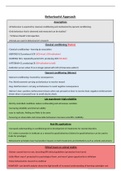
Behaviourist Approach
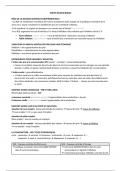
Assumptions
-All behaviour is acquired by classical conditioning and maintained by operant conditioning.
-Only behaviour that is observed and measured can be studied.*
-*Criticises Wundt’s introspection
-Animals are used in behaviourist’s research
Classical conditioning (Pavlov)
-Classical conditioning-> learning by association
-(BEFORE) UCS produces UCR (UCS=food, UCR=salivation)
-(DURING) NS is repeatedly paired UCS, producing UCR (NS=Bell)
-(AFTER)NS=CS, producing CR (CR=salivation to bell)
-Extinction occurs when CS is no longer paired with UCS (CS becomes extinct)
Operant conditioning (Skinner)
-Operant conditioning->learned by consequences
-Pos. Reinforcement-carrying out behaviour to receive reward
-Neg. Reinforcement- carrying out behaviour to avoid negative consequences
-Skinner’s box= positive reinforcement shown when rats pressed on lever to receive food, negative reinforcement
shown when rat pressed lever to avoid electric shock.
Lab experiment= high reliability
-Strictly controlled conditions reduce confounding and extraneous variables
-increasing reliability and internal validity
-easy to replicate, finding are likely to be same
-focussing on observable and measurable behaviours increases scientific credibility
Real life applications
-Increased understanding on conditioning led to development of treatments for mental disorders
-E.G. token economies in institutes as a reward for good behaviour (tokens for good behaviour can be used to
trade for priveliges)
-Behaviourist principles have had positive impacts on both treatments and institutions such as schools and prisons
Ethical issues on animal studies
-Skinner caused harm to rats, breaching BPS ethical guidelines (protection from harm)
-Little Albert wasn’t protected for psychological harm, and wasn’t given opportunity to withdraw
-Many behaviourists research is unethical
HOWEVER- cost benefit analysis shows the high benefit of increased understanding of learning outweighs cost
Assumptions
-All behaviour is acquired by classical conditioning and maintained by operant conditioning.
-Only behaviour that is observed and measured can be studied.*
-*Criticises Wundt’s introspection
-Animals are used in behaviourist’s research
Classical conditioning (Pavlov)
-Classical conditioning-> learning by association
-(BEFORE) UCS produces UCR (UCS=food, UCR=salivation)
-(DURING) NS is repeatedly paired UCS, producing UCR (NS=Bell)
-(AFTER)NS=CS, producing CR (CR=salivation to bell)
-Extinction occurs when CS is no longer paired with UCS (CS becomes extinct)
Operant conditioning (Skinner)
-Operant conditioning->learned by consequences
-Pos. Reinforcement-carrying out behaviour to receive reward
-Neg. Reinforcement- carrying out behaviour to avoid negative consequences
-Skinner’s box= positive reinforcement shown when rats pressed on lever to receive food, negative reinforcement
shown when rat pressed lever to avoid electric shock.
Lab experiment= high reliability
-Strictly controlled conditions reduce confounding and extraneous variables
-increasing reliability and internal validity
-easy to replicate, finding are likely to be same
-focussing on observable and measurable behaviours increases scientific credibility
Real life applications
-Increased understanding on conditioning led to development of treatments for mental disorders
-E.G. token economies in institutes as a reward for good behaviour (tokens for good behaviour can be used to
trade for priveliges)
-Behaviourist principles have had positive impacts on both treatments and institutions such as schools and prisons
Ethical issues on animal studies
-Skinner caused harm to rats, breaching BPS ethical guidelines (protection from harm)
-Little Albert wasn’t protected for psychological harm, and wasn’t given opportunity to withdraw
-Many behaviourists research is unethical
HOWEVER- cost benefit analysis shows the high benefit of increased understanding of learning outweighs cost