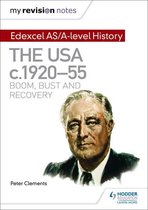
BOOM, BUST, RECOVERY – 1920-55
• 1776 – Declaration of Independence
• 1783 – Treaty of Paris gives independence to the 13 rebel colonies – now the United States
• 1787 - Founding Fathers draw up new constitution for United States of America. Constitution
comes into effect in 1788.
• 1789 - George Washington elected first president of USA.
• 1791 - Bill of Rights guarantees individual freedom.
• 1803 - France sells Louisiana territories to USA.
• 1808 - Atlantic slave trade abolished.
• 1812-15 - War of 1812 between the US and Britain, partly over the effects of British restrictions
on US trade during the Napoleonic Wars.
• 19th century - Residual resistance by indigenous people crushed as immigration from Europe
assumes mass proportions, with settlers moving westwards and claiming "manifest destiny" to
control North America; number of states in the union rises from 17 to 45.
• 1846-48 - US acquires vast tracts of Mexican territory in wake of Mexican War including
California and New Mexico.
• 1854 - Opponents of slavery, or abolitionists, set up Republican Party.
• 1860 - Republican candidate Abraham Lincoln elected president.
• 1860-61 - Eleven pro-slavery southern states secede from Union and form Confederate States
of America under leadership of Jefferson Davis, triggering civil war with abolitionist northern
states.
• 1863 - Lincoln issues Emancipation Proclamation, declaring slaves in Confederate states to be
free.
• 1865 - Confederates defeated; slavery abolished under Thirteenth Amendment. Lincoln is
assassinated.
• 1876 - Sioux Indians defeat US troops at Little Big Horn.
• 1890 - US troops defeat Sioux Indians at Wounded Knee.
• 1890 – Idaho and Wyoming become states, linking the Atlantic and Pacific coasts with fully
organised and recognised states of the Union.
• 1898 - US gains Puerto Rico, Guam, the Philippines and Cuba following the Spanish-American
war. US annexes Hawaii.
• 1905 – Peak year for immigration: nearly 1 million people arrive in the USA
• 1908 – Henry Ford launches Model T motor car
• 1912 – Democrat Woodrow Wilson elected President of USA
• 1916 – Woodrow Wilson re-elected President of USA
• 1917 – USA declares war on Germany and enters WW1
, KEY TERMS:
American Dream- a national ethos of the United States. A set of ideals in which freedom includes the
opportunity for prosperity and success as well as an upward social mobility for the family & children
achieved through hard work in a society with very few barriers.
Manifest Destiny- A widely held belief that the American settlers were destined to expand
throughout the continent
Monroe Doctrine- A statement of U.S foreign policy aimed at European countries in 1823. It stated
that efforts to colonise land or interfere with states in north or south America would be an act of
aggression that required US intervention, it also stated that they would not meddle in the internal
concerns of Europe (isolationism)
Laissez Faire- an approach where the government deliberately avoids getting involved in economic
planning thus allowing free trade to operate
Rugged Individualism – people overcoming problems and succeeding by their own efforts, without
the government help
Isolationism – the policy where the USA detaches itself from the affairs of other states
Mass Production- making large numbers of the same item using machinery and conveyor belts.
Trusts- companies that collude to control manufacture, supplies & prices to ensure other firms
cannot compete thereby guaranteeing maximum profits for themselves
Free Market- A system that allows the economy to run itself without government interference
Monopolies- Where one firm controls a whole market for a product
Native Americans WASPs
Asians
- Indians - White Anglo-
- Worked in construction - Generally lived across North Saxon
- Based on the West coast America protestants
- Majoritvely Chinese & - Most assimilated to white
Japanese
- Old immigrants
society after 1900
- Had good jobs
- Greatly affected by immigration
& were often forced off their & made money
Hispanics - Spread across
land
- All spoke Spanish the mid-west &
- Mexicans were east coast
cowboys in the West
- Worked on cattle
ranches
Southern & Eastern Europeans
Black Americans - Mainly Jewish or Catholic
- Farmers & labourers - They were escaping
in the South persecution & poverty in
- Factory workers in Russia, Poland & Italy
the North industrial
area
,Native Americans in the USA:
1830 – Indian Removal Act
- Native Americans are given land west of Mississippi in exchange for land that is taken from
them
1831- Indian Appropriations Act
- Indians reservation system meant the Native American’s could not leave without permission
- The 1930 removal & appropriation acts had devastating effects on their lifestyles as they
were moved to land that was not beneficial to their farming & agriculture.
1887- Dawes Security Act
- Reversal of the policies that allowed Indian tribes to maintain their traditional practices. The
president now had powers to divide Indian reservations into individual & privately owned
plots of land.
- Men with families received 160 acres of land
- Men received 80 acres of land
- Boys received 40 acres of land
This act is seen as greedy and ignorant towards Native Americans as the government are actively
dismissing their culture and forcing them assimilate to American values. They are also taking their
land and moving it away from them.
WHAT WAS NATIVE AMERICAN ASSIMILATION?
- Assimilation is the forced integration of Native Americans to white European culture.
- Enforcing of white cultures onto native Americans
How did they deal with assimilation?
- Boarding schools were set up to deal with the Indian problem
- Children were removed from families
- Education pushed a new citizen agenda
- Tribal cultures were banned
- Harsh discipline
- Henry Platt- ‘kill the Indian, save the man’
AFRICAN AMERICANS:
- By 1870, slavery had been abolished
- Black people had equal rights
- The 13th amendment ended slavery
- 14th amendment made black people full US citizens
- 15th amendment gave black men voting rights
In the early 1900s, America had different attitudes towards race relations. Racism led to Black
Americans usually having the worst jobs, the ‘Jim Crowe Laws’ were in place in the South, meaning
segregation was now enforced by law.
, THE GREAT MIGRATION 1916-30:
- The Great Migration was the relocation of more than 6 million African Americans
from the rural South to the cities of the North, Midwest and West from about
1916 to 1970.
- Driven from their homes by unsatisfactory economic opportunities and harsh
segregationist laws
- Took advantage of the need for industrial workers that arose during the First
World War.
USA IN THE EARLY 1900s:
The USA had the largest GDP in the world & major economic growth:
- Had natural resources
o Resources were often exploited
o Access to farming, coal & iron
- New technology
- Mass production
o Sped up production process
o Meant a larger work force was needed
o More people had decent wages/ consistent employment
o Goods were cheaper to make and sell
nd
- 2 industrial revolution
o Invention and use of electricity
- Immigration from Europe
o Increase workforce
o Cheap labour
- Railways, steamships & infrastructure development
o Encouraged trade and construction
o Jobs were created
- Growth of corporations
o Economically positive
o Often very corrupt
o Child labour was prominent
HOW IS THE USA GOVERNED?
1. The USA has a federal system of government. This means there is both a federal (central)
government situated in Washington DC and a series of state governments.
2. The USA is a republic, with three arms of the federal government: The Executive, the
Legislature and the Judiciary (separation of powers).
3. The President is the head of the Executive branch and head of state.
4. The Legislature (Congress) is split into two chambers: The House of Representatives and the
Senate.
5. The Judiciary is the courts and judges. The highest court in the land is the Supreme Court,
made up of 9 senior justices appointed by the president.
• 1776 – Declaration of Independence
• 1783 – Treaty of Paris gives independence to the 13 rebel colonies – now the United States
• 1787 - Founding Fathers draw up new constitution for United States of America. Constitution
comes into effect in 1788.
• 1789 - George Washington elected first president of USA.
• 1791 - Bill of Rights guarantees individual freedom.
• 1803 - France sells Louisiana territories to USA.
• 1808 - Atlantic slave trade abolished.
• 1812-15 - War of 1812 between the US and Britain, partly over the effects of British restrictions
on US trade during the Napoleonic Wars.
• 19th century - Residual resistance by indigenous people crushed as immigration from Europe
assumes mass proportions, with settlers moving westwards and claiming "manifest destiny" to
control North America; number of states in the union rises from 17 to 45.
• 1846-48 - US acquires vast tracts of Mexican territory in wake of Mexican War including
California and New Mexico.
• 1854 - Opponents of slavery, or abolitionists, set up Republican Party.
• 1860 - Republican candidate Abraham Lincoln elected president.
• 1860-61 - Eleven pro-slavery southern states secede from Union and form Confederate States
of America under leadership of Jefferson Davis, triggering civil war with abolitionist northern
states.
• 1863 - Lincoln issues Emancipation Proclamation, declaring slaves in Confederate states to be
free.
• 1865 - Confederates defeated; slavery abolished under Thirteenth Amendment. Lincoln is
assassinated.
• 1876 - Sioux Indians defeat US troops at Little Big Horn.
• 1890 - US troops defeat Sioux Indians at Wounded Knee.
• 1890 – Idaho and Wyoming become states, linking the Atlantic and Pacific coasts with fully
organised and recognised states of the Union.
• 1898 - US gains Puerto Rico, Guam, the Philippines and Cuba following the Spanish-American
war. US annexes Hawaii.
• 1905 – Peak year for immigration: nearly 1 million people arrive in the USA
• 1908 – Henry Ford launches Model T motor car
• 1912 – Democrat Woodrow Wilson elected President of USA
• 1916 – Woodrow Wilson re-elected President of USA
• 1917 – USA declares war on Germany and enters WW1
, KEY TERMS:
American Dream- a national ethos of the United States. A set of ideals in which freedom includes the
opportunity for prosperity and success as well as an upward social mobility for the family & children
achieved through hard work in a society with very few barriers.
Manifest Destiny- A widely held belief that the American settlers were destined to expand
throughout the continent
Monroe Doctrine- A statement of U.S foreign policy aimed at European countries in 1823. It stated
that efforts to colonise land or interfere with states in north or south America would be an act of
aggression that required US intervention, it also stated that they would not meddle in the internal
concerns of Europe (isolationism)
Laissez Faire- an approach where the government deliberately avoids getting involved in economic
planning thus allowing free trade to operate
Rugged Individualism – people overcoming problems and succeeding by their own efforts, without
the government help
Isolationism – the policy where the USA detaches itself from the affairs of other states
Mass Production- making large numbers of the same item using machinery and conveyor belts.
Trusts- companies that collude to control manufacture, supplies & prices to ensure other firms
cannot compete thereby guaranteeing maximum profits for themselves
Free Market- A system that allows the economy to run itself without government interference
Monopolies- Where one firm controls a whole market for a product
Native Americans WASPs
Asians
- Indians - White Anglo-
- Worked in construction - Generally lived across North Saxon
- Based on the West coast America protestants
- Majoritvely Chinese & - Most assimilated to white
Japanese
- Old immigrants
society after 1900
- Had good jobs
- Greatly affected by immigration
& were often forced off their & made money
Hispanics - Spread across
land
- All spoke Spanish the mid-west &
- Mexicans were east coast
cowboys in the West
- Worked on cattle
ranches
Southern & Eastern Europeans
Black Americans - Mainly Jewish or Catholic
- Farmers & labourers - They were escaping
in the South persecution & poverty in
- Factory workers in Russia, Poland & Italy
the North industrial
area
,Native Americans in the USA:
1830 – Indian Removal Act
- Native Americans are given land west of Mississippi in exchange for land that is taken from
them
1831- Indian Appropriations Act
- Indians reservation system meant the Native American’s could not leave without permission
- The 1930 removal & appropriation acts had devastating effects on their lifestyles as they
were moved to land that was not beneficial to their farming & agriculture.
1887- Dawes Security Act
- Reversal of the policies that allowed Indian tribes to maintain their traditional practices. The
president now had powers to divide Indian reservations into individual & privately owned
plots of land.
- Men with families received 160 acres of land
- Men received 80 acres of land
- Boys received 40 acres of land
This act is seen as greedy and ignorant towards Native Americans as the government are actively
dismissing their culture and forcing them assimilate to American values. They are also taking their
land and moving it away from them.
WHAT WAS NATIVE AMERICAN ASSIMILATION?
- Assimilation is the forced integration of Native Americans to white European culture.
- Enforcing of white cultures onto native Americans
How did they deal with assimilation?
- Boarding schools were set up to deal with the Indian problem
- Children were removed from families
- Education pushed a new citizen agenda
- Tribal cultures were banned
- Harsh discipline
- Henry Platt- ‘kill the Indian, save the man’
AFRICAN AMERICANS:
- By 1870, slavery had been abolished
- Black people had equal rights
- The 13th amendment ended slavery
- 14th amendment made black people full US citizens
- 15th amendment gave black men voting rights
In the early 1900s, America had different attitudes towards race relations. Racism led to Black
Americans usually having the worst jobs, the ‘Jim Crowe Laws’ were in place in the South, meaning
segregation was now enforced by law.
, THE GREAT MIGRATION 1916-30:
- The Great Migration was the relocation of more than 6 million African Americans
from the rural South to the cities of the North, Midwest and West from about
1916 to 1970.
- Driven from their homes by unsatisfactory economic opportunities and harsh
segregationist laws
- Took advantage of the need for industrial workers that arose during the First
World War.
USA IN THE EARLY 1900s:
The USA had the largest GDP in the world & major economic growth:
- Had natural resources
o Resources were often exploited
o Access to farming, coal & iron
- New technology
- Mass production
o Sped up production process
o Meant a larger work force was needed
o More people had decent wages/ consistent employment
o Goods were cheaper to make and sell
nd
- 2 industrial revolution
o Invention and use of electricity
- Immigration from Europe
o Increase workforce
o Cheap labour
- Railways, steamships & infrastructure development
o Encouraged trade and construction
o Jobs were created
- Growth of corporations
o Economically positive
o Often very corrupt
o Child labour was prominent
HOW IS THE USA GOVERNED?
1. The USA has a federal system of government. This means there is both a federal (central)
government situated in Washington DC and a series of state governments.
2. The USA is a republic, with three arms of the federal government: The Executive, the
Legislature and the Judiciary (separation of powers).
3. The President is the head of the Executive branch and head of state.
4. The Legislature (Congress) is split into two chambers: The House of Representatives and the
Senate.
5. The Judiciary is the courts and judges. The highest court in the land is the Supreme Court,
made up of 9 senior justices appointed by the president.