
C1- Air quality
C1.1 Which chemicals make up air, and which ones are pollutants? How do I make sense of data
about air pollution?
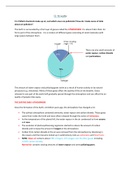
The Earth is surrounded by a thin layer of gasses called the ATMOSPHERE. It is about 15km thick. Air
forms part of the atmosphere - it is a mixture of different gases consisting of small molecules with
large spaces between them.
There are also small amounts of
water vapour, carbon dioxide
and particulates.
The amount of water vapour and polluting gases varies as a result of human activity or by natural
processes (e.g. volcanoes). Many of these gases affect the quality of the air we breathe. Gases
released in one part of the world will gradually spread through the atmosphere and can affect the air
quality of people miles away.
THE EARTHS EARLY ATMOSPHERE
Since the formation of the Earth, 4.6 billion years ago, the atmosphere has changed a lot.
The earliest atmosphere contained ammonia, water vapour and carbon dioxide. These gases
came from inside the Earth and were often released through the action of volcanoes.
As the temperature of the planet fell, the water vapour in the air condensed to form oceans
and seas.
The evolution of photosynthesising organisms started to reduce the amount of carbon
dioxide and increase the amount of oxygen in the atmosphere.
Carbon from carbon dioxide in the air was removed from the atmosphere by dissolving in
the oceans and then became locked up in sedimentary rocks as carbonates and fossil fuels.
NOW: Clean air contains about 78% nitrogen, 21% oxygen and 1% other gasses including
0.035% carbon dioxide.
Normal air contains varying amounts of water vapour and some polluting gases.
,Human activity has changed the composition of the atmosphere by adding small amounts of carbon
monoxide, nitrogen oxides and sulphur dioxide to the atmosphere AND extra carbon dioxide and
small particles of solids (e.g. carbon) to the atmosphere.
POLLUTANTS that harm the environment can also harm humans indirectly. For example:
Acid raid makes the water in rivers and lakes to acidic for plants and animals to survive → This has a
direct impact on our food chain and natural resources like trees.
Pollutant Harmful to … Why?
Traps heat in the Earth’s
Carbon dioxide Environment
atmosphere (a greenhouse gas)
Causes acid rain
Environment
Nitrogen oxides Causes breathing problems and
Humans
can make asthma worse
Sulfur dioxide Environment Causes acid rain
Makes buildings dirty
Particulates (small particles of Environment
Can make asthma worse and
solids e.g. carbon) Humans
lung infections worse if inhaled
Displaces oxygen in the blood,
Carbon monoxide Humans
which can result in death
It is important to MEASURE the CONCENTRATIONS of pollutants in the air as this will make it
possible to assess air quality.
A low concentration of pollutants – A high concentration of pollutants –
There are very few pollutant There is a large number of pollutant
molecules in a certain volume of air. molecules in a certain volume of air.
This is an indication of GOOD air This shows that the air quality POOR
quality
The quality of air where you live depends mostly on nearby sources of air pollutants, and the
weather:
SOURCES: vehicles, power stations and industry are some of the main sources of air pollutants.
WEATHER: pollutants are mixed up and carried around by the winds. Wind can move the pollutants
many miles and even carry them from one country to another.
,C1.2 What chemical reactions produce air pollutants? What happens to these pollutants in the
atmosphere?
Many atmospheric pollutants are made by the burning of fossil fuels. This happens in power stations
and in the engines of vehicles.
POWER STATIONS: Most power stations are fuelled by either coal or natural gas. Fuel and air go into
the furnace and waste chemicals come out of the chimney.
COAL IS MAINLY CARBON
CAR ENGINES: Vehicle engines burn petrol or diesel. Petrol, diesel fuel and fuel oil are mainly
compounds of hydrogen and carbon (HYDROCARBONS).
When fuels burn, atoms of carbon and/or hydrogen from the fuel combine with atoms of oxygen to
produce carbon dioxide and/or water (hydrogen oxide)
Any change that forms a new chemical is called CHEMICAL CHANGE or a CHEMICAL REACTION.
REACTANTS → PRODUCTS
A substance chemically combing with oxygen is an example of OXIDATION
However the loss of oxygen from a substance is an example of REDUCTION
COMBUSTION is a chemical reaction that occurs when fuels burn, releasing energy as heat. For
combustion to take place, oxygen must be present. Combustion is an example of oxidation.
COMPLETE COMBUSTION INCOMPLETE COMBUSTION
• Lots of oxygen • Limited oxygen
• Carbon dioxide and water are made • Carbon monoxide, carbon
jjjjjjjjjjjjjjjjjjjjjjjjjjjjjjjjjjjjjjjjjjjjjjjjjjjjjjjjjjjjjjjjjjjjjjjjjjjjjjjjjjjjjjjjjjjjjjjjjjjjjjjjjjjjjjjjjjjjjjjjjjjjjjjand water are made
*Fuels burn more rapidly in pure oxygen than in air because fire needs four things: fuel, heat,
chemical reaction and OXYGEN. Burning is an oxidation of a material. Pure oxygen = 100% oxygen
however air = 21% oxygen which means there is a faster oxidation rate of reaction.
An example of oxidation is the reaction between nitrogen and oxygen to form nitrogen dioxide:
The number of atoms of each element in the reactants and in the products is the same. As the
atoms are conserved and all atoms have mass, the mass of the reactants will be the same as the
mass of the products. This is known as CONSERVATION OF MASS.
, Incomplete combustion occurs in car engines, so exhaust emissions contain carbon particulates and
carbon monoxide, as well as carbon dioxide. Many samples of coal contain sulfur, so is released into
the atmosphere when fuels that contain sulfur compounds burn to create SULFUR DIOXIDE.
Burning fossil fuels in power stations and for transport pollutes the atmosphere with:
Carbon dioxide and sulfur dioxide
Carbon monoxide and particulate (from incomplete burning)
Nitrogen oxides (from the reaction between atmospheric nitrogen and oxygen at the high
temperatures inside engines)
However atmospheric pollutants cannot just disappear, they have to go somewhere:
Particulate carbon is deposited on surfaces, making them dirty
Sulfur dioxide and nitrogen dioxide react with water and oxygen to produce acid rain which
is harmful to the environment
Carbon dioxide is by plants in photosynthesis
Carbon dioxide dissolves in rain water and in sea water.
C1.3 What choices can we make personally, locally, nationally or globally to improve air quality?
Motor vehicles and power stations that burn fossil fuels are two major sources of atmospheric
pollution, so we need to look at how emissions from these sources can be reduced.
Emissions from power stations can be reduced by:
Using less electricity so fewer fossil fuels need to be burned.
Removing toxic chemicals before they are burned, e.g. removing the sulfur from natural gas
and fuel oil.
Using alternative renewable sources of electricity, e.g. solar energy, wind energy and
hydroelectric energy to replace fossil fuels
Using a filter to remove sulfur dioxide and particulates (carbon and ash) from flue gases
before they leave a coal-burning power stations chimney.
The sulfur dioxide is removed from flue gases by wet scrubbing, using an alkaline slurry or
seawater
Emissions from motor vehicles can be reduced by:
Buying a car with a modern engine that is more efficient and burns less fuel
Buying a hybrid car, which uses electric power in the city centre and can then switch to
running on petrol for longer journeys
Using a low-sulfur (readily available) to reduce the amount of sulfur dioxide released
Converting the engine to run on biodiesel, which is a renewable fuel
Adjusting the balance between public and private transport to reduce the number of
vehicles on the road
Making sure cars are fitted with CATALYTIC CONVERTERS which reduce the amount of
carbon monoxide and nitrogen monoxide emitted.
C1.1 Which chemicals make up air, and which ones are pollutants? How do I make sense of data
about air pollution?
The Earth is surrounded by a thin layer of gasses called the ATMOSPHERE. It is about 15km thick. Air
forms part of the atmosphere - it is a mixture of different gases consisting of small molecules with
large spaces between them.
There are also small amounts of
water vapour, carbon dioxide
and particulates.
The amount of water vapour and polluting gases varies as a result of human activity or by natural
processes (e.g. volcanoes). Many of these gases affect the quality of the air we breathe. Gases
released in one part of the world will gradually spread through the atmosphere and can affect the air
quality of people miles away.
THE EARTHS EARLY ATMOSPHERE
Since the formation of the Earth, 4.6 billion years ago, the atmosphere has changed a lot.
The earliest atmosphere contained ammonia, water vapour and carbon dioxide. These gases
came from inside the Earth and were often released through the action of volcanoes.
As the temperature of the planet fell, the water vapour in the air condensed to form oceans
and seas.
The evolution of photosynthesising organisms started to reduce the amount of carbon
dioxide and increase the amount of oxygen in the atmosphere.
Carbon from carbon dioxide in the air was removed from the atmosphere by dissolving in
the oceans and then became locked up in sedimentary rocks as carbonates and fossil fuels.
NOW: Clean air contains about 78% nitrogen, 21% oxygen and 1% other gasses including
0.035% carbon dioxide.
Normal air contains varying amounts of water vapour and some polluting gases.
,Human activity has changed the composition of the atmosphere by adding small amounts of carbon
monoxide, nitrogen oxides and sulphur dioxide to the atmosphere AND extra carbon dioxide and
small particles of solids (e.g. carbon) to the atmosphere.
POLLUTANTS that harm the environment can also harm humans indirectly. For example:
Acid raid makes the water in rivers and lakes to acidic for plants and animals to survive → This has a
direct impact on our food chain and natural resources like trees.
Pollutant Harmful to … Why?
Traps heat in the Earth’s
Carbon dioxide Environment
atmosphere (a greenhouse gas)
Causes acid rain
Environment
Nitrogen oxides Causes breathing problems and
Humans
can make asthma worse
Sulfur dioxide Environment Causes acid rain
Makes buildings dirty
Particulates (small particles of Environment
Can make asthma worse and
solids e.g. carbon) Humans
lung infections worse if inhaled
Displaces oxygen in the blood,
Carbon monoxide Humans
which can result in death
It is important to MEASURE the CONCENTRATIONS of pollutants in the air as this will make it
possible to assess air quality.
A low concentration of pollutants – A high concentration of pollutants –
There are very few pollutant There is a large number of pollutant
molecules in a certain volume of air. molecules in a certain volume of air.
This is an indication of GOOD air This shows that the air quality POOR
quality
The quality of air where you live depends mostly on nearby sources of air pollutants, and the
weather:
SOURCES: vehicles, power stations and industry are some of the main sources of air pollutants.
WEATHER: pollutants are mixed up and carried around by the winds. Wind can move the pollutants
many miles and even carry them from one country to another.
,C1.2 What chemical reactions produce air pollutants? What happens to these pollutants in the
atmosphere?
Many atmospheric pollutants are made by the burning of fossil fuels. This happens in power stations
and in the engines of vehicles.
POWER STATIONS: Most power stations are fuelled by either coal or natural gas. Fuel and air go into
the furnace and waste chemicals come out of the chimney.
COAL IS MAINLY CARBON
CAR ENGINES: Vehicle engines burn petrol or diesel. Petrol, diesel fuel and fuel oil are mainly
compounds of hydrogen and carbon (HYDROCARBONS).
When fuels burn, atoms of carbon and/or hydrogen from the fuel combine with atoms of oxygen to
produce carbon dioxide and/or water (hydrogen oxide)
Any change that forms a new chemical is called CHEMICAL CHANGE or a CHEMICAL REACTION.
REACTANTS → PRODUCTS
A substance chemically combing with oxygen is an example of OXIDATION
However the loss of oxygen from a substance is an example of REDUCTION
COMBUSTION is a chemical reaction that occurs when fuels burn, releasing energy as heat. For
combustion to take place, oxygen must be present. Combustion is an example of oxidation.
COMPLETE COMBUSTION INCOMPLETE COMBUSTION
• Lots of oxygen • Limited oxygen
• Carbon dioxide and water are made • Carbon monoxide, carbon
jjjjjjjjjjjjjjjjjjjjjjjjjjjjjjjjjjjjjjjjjjjjjjjjjjjjjjjjjjjjjjjjjjjjjjjjjjjjjjjjjjjjjjjjjjjjjjjjjjjjjjjjjjjjjjjjjjjjjjjjjjjjjjjand water are made
*Fuels burn more rapidly in pure oxygen than in air because fire needs four things: fuel, heat,
chemical reaction and OXYGEN. Burning is an oxidation of a material. Pure oxygen = 100% oxygen
however air = 21% oxygen which means there is a faster oxidation rate of reaction.
An example of oxidation is the reaction between nitrogen and oxygen to form nitrogen dioxide:
The number of atoms of each element in the reactants and in the products is the same. As the
atoms are conserved and all atoms have mass, the mass of the reactants will be the same as the
mass of the products. This is known as CONSERVATION OF MASS.
, Incomplete combustion occurs in car engines, so exhaust emissions contain carbon particulates and
carbon monoxide, as well as carbon dioxide. Many samples of coal contain sulfur, so is released into
the atmosphere when fuels that contain sulfur compounds burn to create SULFUR DIOXIDE.
Burning fossil fuels in power stations and for transport pollutes the atmosphere with:
Carbon dioxide and sulfur dioxide
Carbon monoxide and particulate (from incomplete burning)
Nitrogen oxides (from the reaction between atmospheric nitrogen and oxygen at the high
temperatures inside engines)
However atmospheric pollutants cannot just disappear, they have to go somewhere:
Particulate carbon is deposited on surfaces, making them dirty
Sulfur dioxide and nitrogen dioxide react with water and oxygen to produce acid rain which
is harmful to the environment
Carbon dioxide is by plants in photosynthesis
Carbon dioxide dissolves in rain water and in sea water.
C1.3 What choices can we make personally, locally, nationally or globally to improve air quality?
Motor vehicles and power stations that burn fossil fuels are two major sources of atmospheric
pollution, so we need to look at how emissions from these sources can be reduced.
Emissions from power stations can be reduced by:
Using less electricity so fewer fossil fuels need to be burned.
Removing toxic chemicals before they are burned, e.g. removing the sulfur from natural gas
and fuel oil.
Using alternative renewable sources of electricity, e.g. solar energy, wind energy and
hydroelectric energy to replace fossil fuels
Using a filter to remove sulfur dioxide and particulates (carbon and ash) from flue gases
before they leave a coal-burning power stations chimney.
The sulfur dioxide is removed from flue gases by wet scrubbing, using an alkaline slurry or
seawater
Emissions from motor vehicles can be reduced by:
Buying a car with a modern engine that is more efficient and burns less fuel
Buying a hybrid car, which uses electric power in the city centre and can then switch to
running on petrol for longer journeys
Using a low-sulfur (readily available) to reduce the amount of sulfur dioxide released
Converting the engine to run on biodiesel, which is a renewable fuel
Adjusting the balance between public and private transport to reduce the number of
vehicles on the road
Making sure cars are fitted with CATALYTIC CONVERTERS which reduce the amount of
carbon monoxide and nitrogen monoxide emitted.


