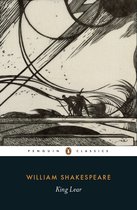
King Lear Contexts
Aristotle
- Joined Plato's Academy from age 17 in Athens and remained there until the age of 37
- Aristotle's ‘Rhetoric’
- Ethos - an appeal to the speaker's character
- Pathos - an appeal to the audience's emotion
- Logos - an appeal to logical reasoning
- Aristotle ‘Poetics’ the Arts (plays poetry and music etc) are acts of imitation
- Aristotle's Poetics was two books; one on tragedy the other on comedy but only tragedy survives
- “A tragedy is the imitation of an action that is serious and also, as having magnitude, complete in itself; in
appropriate and pleasurable language;...in a dramatic rather than narrative form; with incidents arousing pity
and fear, wherewith to accomplish a catharsis of these emotions.”
- 6 elements of tragedy: plot-structure, character, style, thought, spectacle, and lyric poetry
- Plot, not the characters, is the chief focus of tragedy
- Causes and consequences need to be explained in detail so audience can learn from the play’s message.
- Range of emotions which rule the main characters.
- Emotions are fundamental in a tragedy - emotions so strong that the audience identify imaginatively with
each stage of the passion unfolding.
- The audience brought to the realisation justice has been served though this justice may be ‘rough’, and
although there may be (as is the case with Lear)
- Some surprise elements along the way, these heighten the moral evaluations we make.
Hegel
- German philosopher
- Tragic hero is one whose spirit is discordant
- Tragic conflict arises due to the hero’s singular devotion to an ethical principle, stubbornly refusing to
engage with opposing views.
- In King Lear, the conflict begins within set family unit (though it permeates throughout the kingdom). Lear’s
actions and attitude cause order, and balance to be threatened.
- Natural justice is restored. How well does Hegel’s scheme fit Lear? Stubbornness, yes; but can we say that
the selfish and tetchy Lear of Act One is devoted to an ethical principle?
- Lear’s recognition of his error draws pity from the audience. His acceptance of his wrongdoing attempts
to correct his flaws in order to regain a moral balance and his self-judgement and readiness to be punished
are features of a Hegelian tragic hero. By the denouement, Lear has reached a point of reconciliation.
- Despite Cordelia’s death and Lear’s heartfelt grief, the harmony of the parent-child relationship has been
restored. (Matches Aristotle’s trope)
- The element of ethical division, however, cannot be accepted as more an accidental and occasional feature
than a necessary one.
A.C Bradley
- Andrew Cecil Bradley (26 March 1851 – 2 September 1935) was an English literary scholar, best
remembered for his work on Shakespeare.
- Shakespearean tragedy evokes pity, fear and mystery (mystery at how life can be wasted).
- Focus on hero as the hero is in conflict with himself – secondary conflicts with other characters
- Important social status of hero so widespread effects
- Immense suffering contrasts with previous happy or fortunate existence.
- Bradley noted that the tragic hero must die and that the audience should be left in no doubt that death will be
the result.
- Suffering caused by human action (rather than supernatural forces).
- Hope serves to intensify catastrophe when it comes in the final lines of the play.
- The fall of the hero must be catastrophic so that the power of fate is clearly seen, especially when set
beside the impotence of man.
- According to Bradley, seeing punishment in terms of justice is unhelpful (disagrees with Hegel) as suffering is
disproportionate to the initial flaw of the hero
Aristotle
- Joined Plato's Academy from age 17 in Athens and remained there until the age of 37
- Aristotle's ‘Rhetoric’
- Ethos - an appeal to the speaker's character
- Pathos - an appeal to the audience's emotion
- Logos - an appeal to logical reasoning
- Aristotle ‘Poetics’ the Arts (plays poetry and music etc) are acts of imitation
- Aristotle's Poetics was two books; one on tragedy the other on comedy but only tragedy survives
- “A tragedy is the imitation of an action that is serious and also, as having magnitude, complete in itself; in
appropriate and pleasurable language;...in a dramatic rather than narrative form; with incidents arousing pity
and fear, wherewith to accomplish a catharsis of these emotions.”
- 6 elements of tragedy: plot-structure, character, style, thought, spectacle, and lyric poetry
- Plot, not the characters, is the chief focus of tragedy
- Causes and consequences need to be explained in detail so audience can learn from the play’s message.
- Range of emotions which rule the main characters.
- Emotions are fundamental in a tragedy - emotions so strong that the audience identify imaginatively with
each stage of the passion unfolding.
- The audience brought to the realisation justice has been served though this justice may be ‘rough’, and
although there may be (as is the case with Lear)
- Some surprise elements along the way, these heighten the moral evaluations we make.
Hegel
- German philosopher
- Tragic hero is one whose spirit is discordant
- Tragic conflict arises due to the hero’s singular devotion to an ethical principle, stubbornly refusing to
engage with opposing views.
- In King Lear, the conflict begins within set family unit (though it permeates throughout the kingdom). Lear’s
actions and attitude cause order, and balance to be threatened.
- Natural justice is restored. How well does Hegel’s scheme fit Lear? Stubbornness, yes; but can we say that
the selfish and tetchy Lear of Act One is devoted to an ethical principle?
- Lear’s recognition of his error draws pity from the audience. His acceptance of his wrongdoing attempts
to correct his flaws in order to regain a moral balance and his self-judgement and readiness to be punished
are features of a Hegelian tragic hero. By the denouement, Lear has reached a point of reconciliation.
- Despite Cordelia’s death and Lear’s heartfelt grief, the harmony of the parent-child relationship has been
restored. (Matches Aristotle’s trope)
- The element of ethical division, however, cannot be accepted as more an accidental and occasional feature
than a necessary one.
A.C Bradley
- Andrew Cecil Bradley (26 March 1851 – 2 September 1935) was an English literary scholar, best
remembered for his work on Shakespeare.
- Shakespearean tragedy evokes pity, fear and mystery (mystery at how life can be wasted).
- Focus on hero as the hero is in conflict with himself – secondary conflicts with other characters
- Important social status of hero so widespread effects
- Immense suffering contrasts with previous happy or fortunate existence.
- Bradley noted that the tragic hero must die and that the audience should be left in no doubt that death will be
the result.
- Suffering caused by human action (rather than supernatural forces).
- Hope serves to intensify catastrophe when it comes in the final lines of the play.
- The fall of the hero must be catastrophic so that the power of fate is clearly seen, especially when set
beside the impotence of man.
- According to Bradley, seeing punishment in terms of justice is unhelpful (disagrees with Hegel) as suffering is
disproportionate to the initial flaw of the hero