HIGH STALINISM
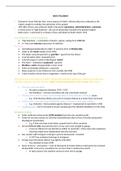
- During the Great Patriotic War, many aspects of Stalin’s dictatorship were softened as the
regime sought to mobilise the patriotism of the people
- BUT after victory was achieved, Stalin returned to repression, authoritarianism + paranoia
- In these years of ‘High Stalinism’, the cult of personality reached even greater heights
- Both rulers + ruled lived in a climate of fear until death of Stalin March 1953
DICTATORSHIP & TOTALITARIANISM:
• ‘high Stalinism’ = culmination of Stalin’s regime, lasting from 1945-53
• It = the most extreme expression of Stalinism
Features:
• Unchallenged leadership by Stalin extreme form of dictatorship
• Stalin as the heroic leader of the GPW
• The Stalin cult portrayed him as god-like + apart from the others
• A secret police state: renewed terror
• Cultural purges in name of ideological ‘purity’
• The Party + institutions weakened / ignored
• Rivalries + plots amongst Stalin’s inner circle
• Stalin increasingly withdrawn + paranoid
• Deep suspicion of any influences from outside the USSR
• A lack of policy reform due to stagnation + inertia at the top of the gov
During the war, some aspects of Stalin’s dictatorship had been relaxed. E.g. religion was tolerated +
churches reopened. But after the war, Stalin’s dictatorship became even stronger than before
• The party was side-lined
o No party congresses between 1939 + 1952
o The Politburo + Central Committee did only what Stalin ordered
• The Red Army and its heroes were downgraded so they wouldn’t challenge Stalin
o E.g. 1946 Marshal Zhukov was sent to faraway Odessa to a lower-level command
• Stalin’s inner circle were kept divided by Stalin’s schemes + their own rivalries
o E.g. Malenkov + Beria plotted against Zhdanov + engineered his downfall in 1948
• Totalitarianism: Terror renewed to ensure people gave the absolute obedience to the state
RENEWED TERROR:
• Stalin ruthlessly enforced the USSR isolation from the non-socialist world
• Partly for security reasons as Cold War intensified but also for fear of Soviets losing their
ideological commitment
o E.g. if they saw how much better people lived in other countries
• Around 15% of 1.8m returned prisoners of war were sent straight to gulags
o It was an offence for any Red Army soldier to surrender + there were also suspicions
that they might have collaborated with the Germans
• Any contact with foreigner could get a person denounced + arrested
o A 1947 law outlawed marriage to foreigners
• Foreign travel by Soviet citizens was tightly controlled
o Few allowed to leave USSR
• Sense of terror = persuasive -> tens of thousands of Soviet citizens continued to be arrested
during Stalin’s last years, sometimes for no more than a careless few words
o In total around 12m wartime survivors were sent to gulags
- During the Great Patriotic War, many aspects of Stalin’s dictatorship were softened as the
regime sought to mobilise the patriotism of the people
- BUT after victory was achieved, Stalin returned to repression, authoritarianism + paranoia
- In these years of ‘High Stalinism’, the cult of personality reached even greater heights
- Both rulers + ruled lived in a climate of fear until death of Stalin March 1953
DICTATORSHIP & TOTALITARIANISM:
• ‘high Stalinism’ = culmination of Stalin’s regime, lasting from 1945-53
• It = the most extreme expression of Stalinism
Features:
• Unchallenged leadership by Stalin extreme form of dictatorship
• Stalin as the heroic leader of the GPW
• The Stalin cult portrayed him as god-like + apart from the others
• A secret police state: renewed terror
• Cultural purges in name of ideological ‘purity’
• The Party + institutions weakened / ignored
• Rivalries + plots amongst Stalin’s inner circle
• Stalin increasingly withdrawn + paranoid
• Deep suspicion of any influences from outside the USSR
• A lack of policy reform due to stagnation + inertia at the top of the gov
During the war, some aspects of Stalin’s dictatorship had been relaxed. E.g. religion was tolerated +
churches reopened. But after the war, Stalin’s dictatorship became even stronger than before
• The party was side-lined
o No party congresses between 1939 + 1952
o The Politburo + Central Committee did only what Stalin ordered
• The Red Army and its heroes were downgraded so they wouldn’t challenge Stalin
o E.g. 1946 Marshal Zhukov was sent to faraway Odessa to a lower-level command
• Stalin’s inner circle were kept divided by Stalin’s schemes + their own rivalries
o E.g. Malenkov + Beria plotted against Zhdanov + engineered his downfall in 1948
• Totalitarianism: Terror renewed to ensure people gave the absolute obedience to the state
RENEWED TERROR:
• Stalin ruthlessly enforced the USSR isolation from the non-socialist world
• Partly for security reasons as Cold War intensified but also for fear of Soviets losing their
ideological commitment
o E.g. if they saw how much better people lived in other countries
• Around 15% of 1.8m returned prisoners of war were sent straight to gulags
o It was an offence for any Red Army soldier to surrender + there were also suspicions
that they might have collaborated with the Germans
• Any contact with foreigner could get a person denounced + arrested
o A 1947 law outlawed marriage to foreigners
• Foreign travel by Soviet citizens was tightly controlled
o Few allowed to leave USSR
• Sense of terror = persuasive -> tens of thousands of Soviet citizens continued to be arrested
during Stalin’s last years, sometimes for no more than a careless few words
o In total around 12m wartime survivors were sent to gulags