

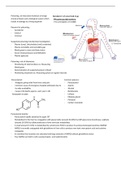
Poisoning: an interaction between a foreign
chemical (toxin) and a biological system which
results in damage to a living organism
Reasons for poisoning:
- Accidental
- Suisical
- Criminal
Suspected poisoning: biochemical investigation:
- Plasma [urea], [electrolytes] and [creatinine]
- Plasma osmolality and osmolality gap
- Blood gases to asses acid-base status
- Serum [transaminases] and [bilirubin]
- Plasma [glucose]
Poisoning: role of laboratory
- Monitoring of vital functions ex. Measuring
blood gases
- Demonstration of suspected poison in blood
- Monitoring treatment ex. Measuring poison at regular intervals
Paracetamol: Common poisons:
- Analgesic giving relief from fever and pain - Paracetamol
- Common cause of emergency hospital admission due to - Aspirin
its wide availability - Alcohol
- Causes 150 deaths approx. each year in UK - Barbiturates
- Lithium
- Ethylene glycol
- Paraquat
- Carbon monoxide
Paracetamol toxicity:
- Paracetamol rapidly absorbed in upper GIT
- Metabolised in the liver by conjugation with glucuronide (around 40-60%) by UDP-glucuronyl transferase, sulphate
(around 20-30%) by sulfotransferase to form non-toxic metabolites
- A small amount (5-10%) is metabolised by cytochrome P450 to produce N-acetyl-p-benzoquinoneimine (NAPQI)
- NAPQI is normally conjugated with glutathione in liver cells to produce non-toxic mercapturic acid and cysteine
conjugates
- In overdose liver enzymes are saturated and large amounts of NAPQI exhaust glutathione stores
- Free NAPQI can bind to cells causing hepato- and nephrotoxicity
, Paracetamol metabolism:
Paracetamol: toxic dose
- Dose of 15g (adults) and 4g (children) can cause hepatotoxicity
- Such doses deplete liver glutathione by 70%
- In some patients doses of 50%+ are not toxic due to variation in metabolism
- [paracetamol] > 300 mg/L 4 hours after ingestion cause serious liver damage but not < 120 mg/L
Paracetamol poisoning: clinical
Paracetamol poisoning: investigation
1. Plasma [paracetamol]
a. Blood samples taken at least 4 hours post dose
b. Probability of developing hepatotoxicity
c. Based as a guide for patient management
2. Plasma [aminotransferases] / [bilirubin]
3. Plasma [creatinine]
Paracetamol measurement: analytical
chemical (toxin) and a biological system which
results in damage to a living organism
Reasons for poisoning:
- Accidental
- Suisical
- Criminal
Suspected poisoning: biochemical investigation:
- Plasma [urea], [electrolytes] and [creatinine]
- Plasma osmolality and osmolality gap
- Blood gases to asses acid-base status
- Serum [transaminases] and [bilirubin]
- Plasma [glucose]
Poisoning: role of laboratory
- Monitoring of vital functions ex. Measuring
blood gases
- Demonstration of suspected poison in blood
- Monitoring treatment ex. Measuring poison at regular intervals
Paracetamol: Common poisons:
- Analgesic giving relief from fever and pain - Paracetamol
- Common cause of emergency hospital admission due to - Aspirin
its wide availability - Alcohol
- Causes 150 deaths approx. each year in UK - Barbiturates
- Lithium
- Ethylene glycol
- Paraquat
- Carbon monoxide
Paracetamol toxicity:
- Paracetamol rapidly absorbed in upper GIT
- Metabolised in the liver by conjugation with glucuronide (around 40-60%) by UDP-glucuronyl transferase, sulphate
(around 20-30%) by sulfotransferase to form non-toxic metabolites
- A small amount (5-10%) is metabolised by cytochrome P450 to produce N-acetyl-p-benzoquinoneimine (NAPQI)
- NAPQI is normally conjugated with glutathione in liver cells to produce non-toxic mercapturic acid and cysteine
conjugates
- In overdose liver enzymes are saturated and large amounts of NAPQI exhaust glutathione stores
- Free NAPQI can bind to cells causing hepato- and nephrotoxicity
, Paracetamol metabolism:
Paracetamol: toxic dose
- Dose of 15g (adults) and 4g (children) can cause hepatotoxicity
- Such doses deplete liver glutathione by 70%
- In some patients doses of 50%+ are not toxic due to variation in metabolism
- [paracetamol] > 300 mg/L 4 hours after ingestion cause serious liver damage but not < 120 mg/L
Paracetamol poisoning: clinical
Paracetamol poisoning: investigation
1. Plasma [paracetamol]
a. Blood samples taken at least 4 hours post dose
b. Probability of developing hepatotoxicity
c. Based as a guide for patient management
2. Plasma [aminotransferases] / [bilirubin]
3. Plasma [creatinine]
Paracetamol measurement: analytical


