BIO 151 (GENERAL BIOLOGY 1)
THE CELL CONCEPT: STRUCTURE AND ORGANIZATION OF BACTERIA
Lecturer: ONUORA V. C.
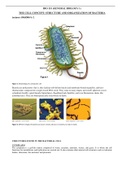
Figure 1: Morphology of a prokaryotic cell
Bacteria are prokaryotes: that is, they lacking well-defined nuclei and membrane-bound organelles, and have
chromosomes composed of a single closed DNA circle. They come in many shapes and sizes—spherical (cocci),
cylindrical (bacilli), spiral threads (Spirochetes), flagellated rods (Spirilla), and even filamentous chains (the
actinomycetes). They are found practically everywhere on Earth.
Figure 2: different shapes of bacteria (a) cocci in chains, (b) cocci in clusters, (c) rods in chains
STRUCTURES FOUND IN THE BACTERIAL CELL
CYTOPLASM
The cytoplasm is a gel-like matrix composed of water, enzymes, nutrients, wastes, and gases. It is where the cell
functions for metabolism, and replication are carried out. It also contains other internal cell structures such as inclusion
bodies, ribosomes, the nucleoid, and plasmids.
THE CELL CONCEPT: STRUCTURE AND ORGANIZATION OF BACTERIA
Lecturer: ONUORA V. C.
Figure 1: Morphology of a prokaryotic cell
Bacteria are prokaryotes: that is, they lacking well-defined nuclei and membrane-bound organelles, and have
chromosomes composed of a single closed DNA circle. They come in many shapes and sizes—spherical (cocci),
cylindrical (bacilli), spiral threads (Spirochetes), flagellated rods (Spirilla), and even filamentous chains (the
actinomycetes). They are found practically everywhere on Earth.
Figure 2: different shapes of bacteria (a) cocci in chains, (b) cocci in clusters, (c) rods in chains
STRUCTURES FOUND IN THE BACTERIAL CELL
CYTOPLASM
The cytoplasm is a gel-like matrix composed of water, enzymes, nutrients, wastes, and gases. It is where the cell
functions for metabolism, and replication are carried out. It also contains other internal cell structures such as inclusion
bodies, ribosomes, the nucleoid, and plasmids.