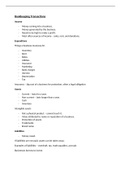
Bookkeeping Transactions
Income
- Money coming into a business.
- Money generated by the business.
- Needs to be high to make a profit.
- Most often sources of income – sales, rent, and donations.
Expenditure
Things a business must pay for
- Inventory
- Rent
- Rates
- Utilities
- Insurance
- Marketing
- Bank charges
- Interest
- Depreciation
- Tax
Insurance – big cost of a business for protection, often a legal obligation
Assets
- Current – lasts for a year.
- Non-current – lasts longer than a year.
- Cash
- Inventory
Intangible assets
- Not a physical product – cannot touch it.
- Value attributed to name or reputation of a business.
- Protection of assets
- Trademarks
- Brand name
Liabilities
- Money owed.
If liabilities are not paid, assets can be taken away.
Examples of liabilities – overdraft, tax, trade payables, accruals
Businesses borrow to invest.
, Debt is bad only if you are unable to pay it off.
Capital
- Money put into the business by the owner.
Drawings
- Assets being taken out of the business for personal use by owner.
Cash sales
Cash sales Credit sales
Action The sale and payment The seller provides goods,
happened at the same time. but payment is not made
straight away.
Payment Cash, debit, or credit card Usually, 30-90 days after
sale
Cash, cheque, or automated
payment
Usage Minority of business sales The majority of business
(except for in retail)
Business document Till receipt Invoices
Credit sales
Stage Process Document
1 Business tells customer Quotation
about the product.
2 Order is place. Customer order
3 Goods are dispatched. Delivery note
4 Payment requested. Invoice
5 Goods (maybe) returned. Credit note
6 Payment is made. Remittance advice note.
Step 1 – quotation should clearly state:
- Good/service being provided.
- All features
- Price
- Terms and conditions
- Discounts available
Step 2 – customer order should state:
- A unique code for the customer
- Addresses