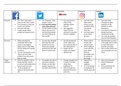
Facebook Twitter YouTube Instagram LinkedIn
Features Can “Like” each other’s Can “Retweet” other Can comment on Can host a live Can send voice
posts via the “Like” button people’s tweets videos if the video where messages to other
Can comment on the post Can customise twitter uploader allows others can ask members of the
to give your opinion alerts (Discontinued) them to questions while business or other
Can share the post Can pin tweets so they Get suggested you answer businesses
Create groups where stay at the top so it’s videos that are them live Can view the amount of
people can request to join the first thing people relevant to what the Can heart posts people that have
see when they go on person’s watched if you enjoys viewed your profile
their profile the post Can state the position
you are in the business
Structure When searching for Can see who tweeted See the thumbnails Works well for The feed takes up most
somebody their profile and what they said of the videos and brands with of the page and are able
picture is the biggest Mainly text as and then read the title of strong visuals to read what other
object and it is most likely links due to people the video below it More emphasis business are doing
the first thing you‘re going posting how they feel Images for the is put onto the Has a section where you
to look at about a certain topic videos are large to post, rather can see people you may
Can see who posted a post attracts eyes than the know
and can go onto their description and
profile to see other posts the poster of
they’ve made the image
Target More for people to talk to For people who like to Younger people tend Appeals to a More for businesses
Audience family members and to voice their opinions to watch YouTube younger Meet Professional
reconnect with people they People can see other rather than audience people
haven’t seen for years people’s opinions to traditional TV 43.1% of people 61% are between 30
75.6% of people are see what others think 82% of people are are between 18 and 64 years old
between 18 and 34 years between 18 and 29 and 34 years old
old years old