
BTEC Level 3 National Extended Diploma In Health and Social Care: UNIT 3
The structure, function and main disorders of the cardio-vascular system
DISORDERS:
Coronary Heart disease: Narrowing or blockage of the coronary arteries
caused by plaque buildup.
There are 7 stages in the cardiac cycle: Stroke: a medical emergency that happens when blood flow to part of the
Phase 1: Atrial Contraction brain is cut off or disrupted (normally due to blood clot), causing brain
Phase 2: Isovolumetric Contraction cells to be deprived of oxygen.
Phase 3: Rapid Ejection Anaemia: a medical condition where your body lacks enough healthy red
Phase 4: Reduced Ejection blood cells or hemoglobin
Phase 5: Isovolumetric Relaxation Hypertension: a chronic medical condition in which blood pressure is
Phase 6: Rapid Filling consistently too high, forcing your heart to work harder to pump blood
Phase 7: Reduced Filling
Blood pressure: The force exerted by blood on the walls of the arteries, made of two
numbers Systolic (heart contracting) over diastolic (heart relaxed). Normal blood
pressure is 120/80 mmHg.
Stroke Volume: The amount of blood ejected by left ventricle during each heartbeat.
Arteries: carry oxygen-rich blood away from the heart to all of the body's tissues. They
branch several times, becoming smaller and smaller as they carry blood farther from
the heart. The aorta is the largest artery that leaves the heart. Step-by-Step Order of Blood Flow:
Veins: These blood vessels take blood back to the heart; this blood is deoxygenated and 1.Superior and Inferior Vena Cava – Deoxygenated blood from the body enters the heart.
is rich in waste products that are to be excreted or removed from the body. Veins
2.Right Atrium – The upper right chamber receives the blood.
become larger and larger as they get closer to the heart. The superior vena cava is the
large vein that brings blood from the head and arms to the heart, and the inferior vena 3.Tricuspid Valve – Blood passes through this one-way valve into the lower chamber.
cava brings blood from the abdomen and legs to the heart 4.Right Ventricle – The lower right chamber pumps the blood out.
Capillaries: These are small, thin blood vessels that connect the arteries and the veins. 5.Pulmonary Valve – Blood flows through this valve as it leaves the heart.
Their thin walls allow oxygen, nutrients, carbon dioxide, and other waste products to 6.Pulmonary Artery – Carries the deoxygenated blood to the lungs to pick up oxygen and release carbon dioxide.
pass to and from our organ's cells.
7.Lungs – Blood trades carbon dioxide for fresh oxygen.
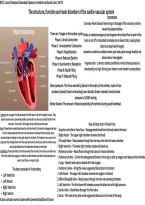
The heart consists of 4 chambers; 8.Pulmonary Veins – Bring the newly oxygenated blood back to the heart.
Left Ventricle 9.Left Atrium – The upper left chamber receives the oxygen-rich blood.
10.Mitral (Bicuspid) Valve – Blood passes through into the main pumping chamber.
Left Atrium
11.Left Ventricle – The thick lower left chamber pumps the blood out with high pressure.
Right Ventricle
12.Aortic Valve – Blood flows through this final valve.
Right atrium 13.Aorta – The main artery that sends oxygenated blood out to the rest of the body
It also contains several valves which prevent backflow of blood


