Kenocia Fernandes
Unit 22: D1
Dilip Desai
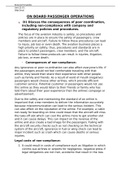
ON BOARD PASSENGER OPERATIONS
D1 Discuss the consequences of poor coordination,
including non-compliance with company and
regulatory policies and procedures.
The focus of the aviation industry is safety, so procedures and
policies are in place to ensure the safety of passengers, crew
members and aircraft. Failure to follow these procedures can lead
to injury, job loss or even death. The aviation business places a
high priority on safety; thus, procedures and standards are in
place to protect passengers, crew members, and the aircraft.
Failure to follow these protocols can result in injuries, litigation,
job loss, or even death.
Consequences of non-compliance:
Any ignorance or poor co-ordination can also affect everyone’s life. If
the passengers would not feel comfortable traveling with that
airline, they would then share their experience with other people
such as family and friends. As a result of word of mouth (negative)
passengers would choose other airlines, which provide efficient
customer service. Potential customer or passengers would not use
this airline as they would listen to their friends or family who has
told them about their poor experience than the airlines campaign or
advertisement.
Due to the safety and maintaining the standard of an airline is
important that crew members to deliver the information accurately
because miscommunication can lead to the serious incident. This
can also effect on the reputation of the airline. For example, a cabin
not ready for boarding on time could mean that the aircraft will miss
the take-off slot which can cost the airline more to get another slot
and it can cause delays. This can impact on the revenue of the
airline and also create a bad image for the passengers. Failing with
the aircraft security checks such as not checking on the technical
system of the aircraft, ignorance in fuel or wing check can lead to
major incident such as crash which can cause deaths or serious
injuries.
Legal costs of non-compliance:
1. It could result in costs of compliance such as litigation in which
victims sue airlines or airports for negligence, negative press if
legal obligations are not met, accidents that result in the loss
Unit 22: D1
Dilip Desai
ON BOARD PASSENGER OPERATIONS
D1 Discuss the consequences of poor coordination,
including non-compliance with company and
regulatory policies and procedures.
The focus of the aviation industry is safety, so procedures and
policies are in place to ensure the safety of passengers, crew
members and aircraft. Failure to follow these procedures can lead
to injury, job loss or even death. The aviation business places a
high priority on safety; thus, procedures and standards are in
place to protect passengers, crew members, and the aircraft.
Failure to follow these protocols can result in injuries, litigation,
job loss, or even death.
Consequences of non-compliance:
Any ignorance or poor co-ordination can also affect everyone’s life. If
the passengers would not feel comfortable traveling with that
airline, they would then share their experience with other people
such as family and friends. As a result of word of mouth (negative)
passengers would choose other airlines, which provide efficient
customer service. Potential customer or passengers would not use
this airline as they would listen to their friends or family who has
told them about their poor experience than the airlines campaign or
advertisement.
Due to the safety and maintaining the standard of an airline is
important that crew members to deliver the information accurately
because miscommunication can lead to the serious incident. This
can also effect on the reputation of the airline. For example, a cabin
not ready for boarding on time could mean that the aircraft will miss
the take-off slot which can cost the airline more to get another slot
and it can cause delays. This can impact on the revenue of the
airline and also create a bad image for the passengers. Failing with
the aircraft security checks such as not checking on the technical
system of the aircraft, ignorance in fuel or wing check can lead to
major incident such as crash which can cause deaths or serious
injuries.
Legal costs of non-compliance:
1. It could result in costs of compliance such as litigation in which
victims sue airlines or airports for negligence, negative press if
legal obligations are not met, accidents that result in the loss