
NHA PCT PRACTICE TEST UPDATED ACTUAL
QUESTIONS WITH CORRECT ANSWERS
Question 1.
D) premature atrial complexes
ANSWER
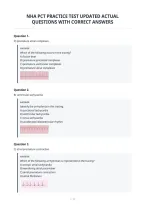
Which of the following occurs in the tracing?
A) fusion beat
B) premature junctional complexes
C) premature ventricular complexes
D) premature atrial complexes
Question 2.
B) ventricular tachycardia
ANSWER
Identify the arrhythmia in this tracing:
A) junctional tachycardia
B) ventricular tachycardia
C) sinus tachycardia
D) accelerated idioventricular rhythm
Question 3.
C) atrial premature contraction
ANSWER
Which of the following arrhythmias is represented in the tracing?
A) ectopic atrial tachycardia
B) wandering atrial pacemaker
C) atrial premature contraction
D) atrial fibrillation
,Question 4.
B) to guarantee the identification and integrity of samples
ANSWER
A CPCT should recognize that a chain of custody is sued for which of the following reasons?
A) to follow methods of collection with samples and data
B) to guarantee the identification and integrity of samples
C) to ensure the samples are being disposed of using correct operating procedures
D) to track the location of samples and data
Question 5.
B) check with the nurse
ANSWER
A CPCT is caring for a patient who has an order for tobramycin (Tobrex) level to be drawn up
one hour after dose. The medication has been ordered for 1100. Which of the following actions
should the CPCT take?
A) draw the blood at 1100
B) check with the nurse
C) contact the laboratory
D) ask the patient
Question 6.
A) a 1-year-old patient who has a pulse race of 50 BPM
ANSWER
Which of the following findings should a CPCT report to a nurse?
A) a 1-year-old patient who has a pulse race of 50 BPM
B) a 12-year-old patient who has a pulse rate of 76 BPM
C) a 40-year-old patient who has a pulse rate of 88 BPM
D) a 89-year-old patient who has a pulse rate of 85 BPM
Question 7.
C) apply more pressure to the site
ANSWER
A CPCT is drawing blood from a patient and observes red spots. Which of the following is an
appropriate action to take?
A) stop the draw immediately
B) apply ice to the site
C) apply more pressure to the site
D) release the tourniquet immediately
,Question 8.
B) swellings in the patient's legs and feet
ANSWER
A CPCT is caring for a patient with congestive heart failure. Which of the following findings
should be reported to the nurse immediately?
A) changes in appetite and food preference
B) swellings in the patient's legs and feet
C) weight loss of 1 lb. in 3 weeks
D) increased urinary output
Question 9.
C) catheter infiltration
ANSWER
A CPCT informs the nurse concerning swelling at the peripheral I.V. site. The CPCT should
recognize that which of the following is most likely the cause of this?
A) medication reaction
B) improper positioning
C) catheter infiltration
D) constrictive dressing
Question 10.
B) the ST segment elevation
ANSWER
Which of the findings on the tracing below should the CPCT be most concerned with?
A) irregular rhythm
B) the ST segment elevation
C) the QT interval
D) variable shape of P waves
, Question 11.
A) locate the radial artery, feel for the pulse with the index and middle fingers, and count pulses felt
for one full minute
ANSWER
A CPCT is instructed to measure a patient's pulse manually. Which of the following actions
should the CPCT take?
A) locate the radial artery, feel for the pulse with the index and middle fingers, and count
pulses felt for one full minute
B) locate the radial artery, and use the thumb to count each pulse felt for one full minute
C) locate the brachial pulse using the thumb, and count pulses felt for 30 seconds and multiply
by 2
D) place the center of the palm over the patient's chest and count each beat felt for two
minutes
Question 12.
A) pacemaker spikes
ANSWER
The atypical vertical projections in the EKG tracing are like the result of which of the following?
A) pacemaker spikes
B) intrinsic R waves
C) intrinsic vertical anomaly
D) defibrillator spikes
Question 13.
B) release all air before retesting
ANSWER
A CPCT makes a mistake while measuring a patient's blood pressure. What action should the
CPCT take?
A) partially deflate the cuff and then re-inflate it
B) release all air before retesting
C) measure blood pressure using a different arm
D) measure blood pressure using a different cuff


