
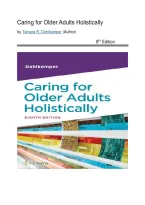
Caring for Older Adults Holistically
by Tamara R. Dahlkemper (Author)
8th Edition
,TABLE OF CONTENTS
I.Foundations of Care for the Older Adult
1.Holistic Caring
2.The Aging Experience
3.Promoting Wellness
4.Supporting Life Transitions and Spirituality
5.The Use of the Nursing Process and Nursing Diagnosis
6.Legal, Ethical, and Financial Considerations
7.Safety
8.Nutrition
9.Palliative and End-of-Life Care
10.Environments of Care
11.Management and Leadership Role of the Licensed Practical/Vocational Nurse
II.Clinical Practice and the Older Adult
12.Infection
13.Common Medical Diagnoses
14.Physiological Assessment
15.Common Clinical Problems: Physiological
16.Psychological Assessment
17.Common Clinical Problems: Psychological
18.Rehabilitation and Restorative Care
19.Pharmacology
20.Laboratory Values
,TEST BANK
Caring for Older Adults Holistically, 8th Edition (Dahlkemper, 2025)
Chapters 1–20
UNIT I: FOUNDATIONS OF CARE FOR THE OLDER ADULT
CHAPTER 1: HOLISTIC CARING
Multiple Choice
1. A nurse is caring for an 82-year-old resident in a long-term care facility. Which action best
demonstrates holistic care?
A. Administering medications on schedule
B. Assessing the resident's physical, emotional, social, and spiritual needs
C. Completing the morning vital signs assessment
D. Ensuring the resident's dietary tray is delivered on time
Answer: B
Rationale: Holistic care addresses the whole person—body, mind, spirit, and social connections—not just
isolated physical tasks. While A, C, and D are important nursing tasks, only B reflects the comprehensive,
multidimensional approach central to holistic caring.
2. Which term describes the belief that older adults are frail, dependent, and unable to contribute to
society?
A. Gerontology
B. Ageism
C. Holism
D. Geriatrics
Answer: B
Rationale: Ageism is a form of discrimination or stereotyping based on age. It negatively affects the
quality of care older adults receive and can lead to diminished self-esteem in the older adult.
Gerontology is the study of aging, geriatrics is the medical specialty, and holism refers to the whole-
person approach.
3. A 78-year-old client tells the nurse, "I don't want to be a burden to my family." The nurse recognizes
this statement as reflecting which dimension of holistic health?
, A. Physical
B. Intellectual
C. Emotional
D. Environmental
Answer: C
Rationale: The client's concern about being a burden reflects emotional and psychological well-being.
The nurse should explore these feelings further to provide holistic, person-centered care.
4. When providing culturally competent care to an older adult from a different cultural background, the
nurse should first:
A. Assume the client follows all traditional practices of their culture
B. Ask the client about their personal health beliefs and practices
C. Provide care based on the dominant culture's standards
D. Consult the family before speaking with the client
Answer: B
Rationale: Cultural competence requires individualized assessment. The nurse should ask the client
directly about personal beliefs and preferences rather than making assumptions based on cultural
stereotypes. While family input may be valuable, the client's own voice should be prioritized.
5. Person-centered care for older adults emphasizes which of the following?
A. Strict adherence to facility schedules
B. The healthcare team's priorities over the client's wishes
C. Individual preferences, values, and life history
D. Uniform care plans for all residents on a unit
Answer: C
Rationale: Person-centered care focuses on the individual's unique preferences, values, goals, and life
story. It shifts the focus from institutional convenience to the person receiving care.
Select All That Apply
6. Which of the following are dimensions of holistic health? (Select all that apply.)
A. Physical
B. Spiritual
C. Financial
D. Social
E. Intellectual
F. Emotional
Answer: A, B, D, E, F
Rationale: The commonly recognized dimensions of holistic health include physical, emotional, social,
by Tamara R. Dahlkemper (Author)
8th Edition
,TABLE OF CONTENTS
I.Foundations of Care for the Older Adult
1.Holistic Caring
2.The Aging Experience
3.Promoting Wellness
4.Supporting Life Transitions and Spirituality
5.The Use of the Nursing Process and Nursing Diagnosis
6.Legal, Ethical, and Financial Considerations
7.Safety
8.Nutrition
9.Palliative and End-of-Life Care
10.Environments of Care
11.Management and Leadership Role of the Licensed Practical/Vocational Nurse
II.Clinical Practice and the Older Adult
12.Infection
13.Common Medical Diagnoses
14.Physiological Assessment
15.Common Clinical Problems: Physiological
16.Psychological Assessment
17.Common Clinical Problems: Psychological
18.Rehabilitation and Restorative Care
19.Pharmacology
20.Laboratory Values
,TEST BANK
Caring for Older Adults Holistically, 8th Edition (Dahlkemper, 2025)
Chapters 1–20
UNIT I: FOUNDATIONS OF CARE FOR THE OLDER ADULT
CHAPTER 1: HOLISTIC CARING
Multiple Choice
1. A nurse is caring for an 82-year-old resident in a long-term care facility. Which action best
demonstrates holistic care?
A. Administering medications on schedule
B. Assessing the resident's physical, emotional, social, and spiritual needs
C. Completing the morning vital signs assessment
D. Ensuring the resident's dietary tray is delivered on time
Answer: B
Rationale: Holistic care addresses the whole person—body, mind, spirit, and social connections—not just
isolated physical tasks. While A, C, and D are important nursing tasks, only B reflects the comprehensive,
multidimensional approach central to holistic caring.
2. Which term describes the belief that older adults are frail, dependent, and unable to contribute to
society?
A. Gerontology
B. Ageism
C. Holism
D. Geriatrics
Answer: B
Rationale: Ageism is a form of discrimination or stereotyping based on age. It negatively affects the
quality of care older adults receive and can lead to diminished self-esteem in the older adult.
Gerontology is the study of aging, geriatrics is the medical specialty, and holism refers to the whole-
person approach.
3. A 78-year-old client tells the nurse, "I don't want to be a burden to my family." The nurse recognizes
this statement as reflecting which dimension of holistic health?
, A. Physical
B. Intellectual
C. Emotional
D. Environmental
Answer: C
Rationale: The client's concern about being a burden reflects emotional and psychological well-being.
The nurse should explore these feelings further to provide holistic, person-centered care.
4. When providing culturally competent care to an older adult from a different cultural background, the
nurse should first:
A. Assume the client follows all traditional practices of their culture
B. Ask the client about their personal health beliefs and practices
C. Provide care based on the dominant culture's standards
D. Consult the family before speaking with the client
Answer: B
Rationale: Cultural competence requires individualized assessment. The nurse should ask the client
directly about personal beliefs and preferences rather than making assumptions based on cultural
stereotypes. While family input may be valuable, the client's own voice should be prioritized.
5. Person-centered care for older adults emphasizes which of the following?
A. Strict adherence to facility schedules
B. The healthcare team's priorities over the client's wishes
C. Individual preferences, values, and life history
D. Uniform care plans for all residents on a unit
Answer: C
Rationale: Person-centered care focuses on the individual's unique preferences, values, goals, and life
story. It shifts the focus from institutional convenience to the person receiving care.
Select All That Apply
6. Which of the following are dimensions of holistic health? (Select all that apply.)
A. Physical
B. Spiritual
C. Financial
D. Social
E. Intellectual
F. Emotional
Answer: A, B, D, E, F
Rationale: The commonly recognized dimensions of holistic health include physical, emotional, social,


