TEST BANK
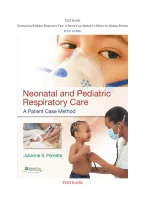
Neonatal and Pediatric Respiratory Care: A Patient Case Method 1st Edition by Julianne Perretta
FULL GUIDE
TEST BANK
,Chapter 1 Making Sense of Caring for Kids: A Different Approach to Respiratory Care
Multiple Choice
1. When utilizing bag-mask ventilation on an unconscious child, what airway should initially be
considered the first choice to use?
A. Nasal pharyngeal airway
B. Oral airway
C. Endotracheal tube
D. Nasal trumpet
ANS: B
2. What is the smallest portion of a child’s airway?
A. Epiglottis
B. Laryngeal opening
C. Cricoid ring
D. Glottis
ANS: C
3. What may lead to the collapse of the extrathoracic trachea?
A. Increased work of breathing
B. Increased inflammation
C. Increased inspiratory pressure
D. Increased negative pressure
ANS: D
4. Which is the best position for keeping the airway open in both children and adults?
A. Sniffing
B. Jaw-thrust maneuver
C. Head lift–chin tilt maneuver
,D. Combination of jaw-thrust and head-tilt maneuvers
ANS: A
5. In newborns, what interalveolar connections are responsible for the lack of collateral air circulation?
A. Septum
B. Pores of Kohn
C. Lung parenchyma
D. Functional residual capacity
ANS: B
6. Which of the following options explain why infants and children have a lower pulmonary reserve than
adults do?
A. Smaller hearts, more elastic recoil in the lung, chest wall noncompliant
B. Larger hearts, less elastic recoil in the lung, chest wall noncompliant
C. Smaller hearts, more elastic recoil in the lung, chest wall more compliant
D. Larger hearts, less elastic recoil in the lung, chest wall more compliant
ANS: D
7. Why would cricoid pressure (Sellick maneuver) be applied to a patient?
A. To aid in intubation for visualization
B. To decrease gastric insufflation and aspiration
C. To increase ability to swallow
D. It is never helpful and should not be performed.
ANS: B
8. What data are imperative to obtain to make a patient assessment?
A. Chief complaint, vital signs, and blood gases
B. Subjective and objective information
C. Patient history and chief complaint
D. Vital signs and subjective and objective information
ANS: C
, 9. The preverbal scale for preterm infants, known as FLACC, is used to quantify pain. What does this
acronym stand for?
A. Fear, Listless, Anxious, Conscious, Crying
B. Fever, Limb movement, Anxiety, Crying, Conscious
C. Facial expression, Leg movement, Activity, Cry, Consolability
D. Flaccid, Listless, Awake, Conscious, Crying
ANS: C
10. What is the purpose of transcutaneous monitoring?
A. Industry standard for assessment of pH, PaO2, PaCO2, and HCO3
B. Accurate, simple, and noninvasive method of measuring SaO2
C. Electrochemically measures the skin-surface PO 2 and PCO2 by heating localized area of the skin to
induce hyperperfusion
D. Is of no clinical use and used in lieu of arterial blood gases
ANS: C
11. What does BPCA stand for?
A. Best Practice Children’s Act
B. Best Pharmacological Children’s Act
C. Best Practice Child Act
D. Best Pharmaceuticals for Children Act
ANS: D
12. What laryngoscope blade is recommended for children younger than 3 years old?
A. Macintosh blade
B. Fiberoptic blade
C. Miller blade
D. Stylet blade
ANS: C
Neonatal and Pediatric Respiratory Care: A Patient Case Method 1st Edition by Julianne Perretta
FULL GUIDE
TEST BANK
,Chapter 1 Making Sense of Caring for Kids: A Different Approach to Respiratory Care
Multiple Choice
1. When utilizing bag-mask ventilation on an unconscious child, what airway should initially be
considered the first choice to use?
A. Nasal pharyngeal airway
B. Oral airway
C. Endotracheal tube
D. Nasal trumpet
ANS: B
2. What is the smallest portion of a child’s airway?
A. Epiglottis
B. Laryngeal opening
C. Cricoid ring
D. Glottis
ANS: C
3. What may lead to the collapse of the extrathoracic trachea?
A. Increased work of breathing
B. Increased inflammation
C. Increased inspiratory pressure
D. Increased negative pressure
ANS: D
4. Which is the best position for keeping the airway open in both children and adults?
A. Sniffing
B. Jaw-thrust maneuver
C. Head lift–chin tilt maneuver
,D. Combination of jaw-thrust and head-tilt maneuvers
ANS: A
5. In newborns, what interalveolar connections are responsible for the lack of collateral air circulation?
A. Septum
B. Pores of Kohn
C. Lung parenchyma
D. Functional residual capacity
ANS: B
6. Which of the following options explain why infants and children have a lower pulmonary reserve than
adults do?
A. Smaller hearts, more elastic recoil in the lung, chest wall noncompliant
B. Larger hearts, less elastic recoil in the lung, chest wall noncompliant
C. Smaller hearts, more elastic recoil in the lung, chest wall more compliant
D. Larger hearts, less elastic recoil in the lung, chest wall more compliant
ANS: D
7. Why would cricoid pressure (Sellick maneuver) be applied to a patient?
A. To aid in intubation for visualization
B. To decrease gastric insufflation and aspiration
C. To increase ability to swallow
D. It is never helpful and should not be performed.
ANS: B
8. What data are imperative to obtain to make a patient assessment?
A. Chief complaint, vital signs, and blood gases
B. Subjective and objective information
C. Patient history and chief complaint
D. Vital signs and subjective and objective information
ANS: C
, 9. The preverbal scale for preterm infants, known as FLACC, is used to quantify pain. What does this
acronym stand for?
A. Fear, Listless, Anxious, Conscious, Crying
B. Fever, Limb movement, Anxiety, Crying, Conscious
C. Facial expression, Leg movement, Activity, Cry, Consolability
D. Flaccid, Listless, Awake, Conscious, Crying
ANS: C
10. What is the purpose of transcutaneous monitoring?
A. Industry standard for assessment of pH, PaO2, PaCO2, and HCO3
B. Accurate, simple, and noninvasive method of measuring SaO2
C. Electrochemically measures the skin-surface PO 2 and PCO2 by heating localized area of the skin to
induce hyperperfusion
D. Is of no clinical use and used in lieu of arterial blood gases
ANS: C
11. What does BPCA stand for?
A. Best Practice Children’s Act
B. Best Pharmacological Children’s Act
C. Best Practice Child Act
D. Best Pharmaceuticals for Children Act
ANS: D
12. What laryngoscope blade is recommended for children younger than 3 years old?
A. Macintosh blade
B. Fiberoptic blade
C. Miller blade
D. Stylet blade
ANS: C