
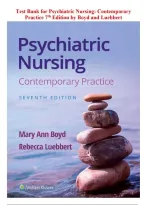
Psychiatric Nursing
Psychiatric Nursing Psychiatric Nursing is a comprehensive educational resource designed to introduce students and healthcare learners to the principles, concepts, and practices of psychiatric and mental health nursing. The book provides a foundation for understanding mental health, psychiatric disorders, therapeutic communication, patient assessment, nursing interventions, treatment approaches, patient safety, and holistic care. Psychiatric nursing is an important area of professional nursing because mental health concerns can affect people across all ages, backgrounds, and healthcare settings. Nurses may care for patients experiencing depression, anxiety, psychosis, substance-use problems, trauma-related symptoms, cognitive changes, behavioral difficulties, or emotional distress. A strong understanding of mental health nursing enables healthcare professionals to communicate effectively, assess patients appropriately, promote safety, provide education, and participate in coordinated care. This textbook introduces the relationship between mental health and illness and explores biological, psychological, social, environmental, cultural, and developmental factors that may influence an individual's mental well-being. By considering the whole person, students can develop a broader understanding of mental health and the importance of individualized, patient-centered nursing care. One of the central areas of psychiatric nursing is therapeutic communication. The book provides educational coverage of communication techniques that nurses can use to establish professional relationships with patients. Topics may include active listening, empathy, therapeutic questioning, appropriate boundaries, observation, validation, and effective verbal and nonverbal communication. These skills are important when caring for individuals who may have difficulty expressing their thoughts, emotions, or needs. Psychiatric assessment is another essential component of mental health nursing. Students can learn about collecting relevant histories, observing behavior, assessing mood and affect, identifying changes in thought processes and perception, evaluating cognitive function, and recognizing factors that may influence mental health. A structured assessment helps nurses contribute meaningful information to the healthcare team and develop appropriate nursing care plans. The book also provides educational coverage of common psychiatric and behavioral health conditions. Depending on the specific edition, topics may include depressive disorders, bipolar disorders, anxiety disorders, psychotic disorders, schizophrenia, personality disorders, trauma-related conditions, substance-related disorders, eating disorders, neurocognitive disorders, and other mental health concerns. Understanding these conditions involves more than learning diagnostic terminology. Psychiatric nursing requires an appreciation of how symptoms can affect a person's daily functioning, relationships, communication, safety, treatment participation, and quality of life. The textbook supports this broader perspective by connecting mental health concepts with nursing assessment and patient care. Psychopharmacology is another important area of psychiatric nursing education. Students can learn about major categories of psychiatric medications and the nursing considerations associated with their use. This may include understanding therapeutic purposes, monitoring patients for adverse effects, medication adherence, patient education, and communication with the healthcare team. Medication information should always be used alongside current prescribing information, clinical guidelines, and local healthcare policies. Patient safety is a major responsibility in psychiatric nursing. Nurses may need to recognize and respond to risks involving self-harm, suicide, aggression, neglect, substance use, impaired judgment, or other behavioral concerns. The textbook provides a foundation for understanding risk assessment, observation, therapeutic communication, crisis intervention, documentation, and appropriate escalation of concerns within professional practice. Crisis management and mental health emergencies are also important components of psychiatric nursing. Students can develop an understanding of how nurses support patients experiencing acute emotional or behavioral crises while maintaining safety, dignity, and professional boundaries. Effective communication and appropriate assessment are particularly important during these situations. Family involvement and patient education are also emphasized in mental health care. Families and caregivers may play an important role in supporting treatment, recognizing changes in behavior, encouraging healthy routines, and helping patients access community resources. Nurses can contribute by providing appropriate education, supporting communication, and helping patients and families understand available services. Community mental health is another significant area of psychiatric nursing. Mental healthcare may take place in hospitals, outpatient clinics, community programs, rehabilitation services, primary care environments, schools, residential facilities, and other settings. Understanding community-based care helps students appreciate that mental health nursing extends beyond traditional psychiatric hospitals. The textbook can also support learning about recovery-oriented and patient-centered approaches to mental healthcare. These approaches recognize the importance of individual goals, dignity, participation in care, social support, health promotion, and access to appropriate services. Nurses can play an important role in helping patients understand their treatment options and participate actively in their care. Key Features Comprehensive introduction to psychiatric and mental health nursing Covers mental health assessment and patient care Explores therapeutic communication and professional relationships Introduces common psychiatric and behavioral health conditions Discusses psychiatric nursing interventions Provides educational coverage of psychopharmacology Addresses patient safety and risk assessment Introduces crisis intervention and mental health emergencies Covers family support and patient education Includes community mental health concepts Supports patient-centered and recovery-oriented care Useful for nursing education, clinical preparation, and examination review Major Areas of Study Students can use this textbook to explore mental health concepts, psychiatric assessment, therapeutic communication, nursing diagnoses, care planning, psychiatric interventions, medication-related nursing considerations, behavioral health, crisis management, safety, family education, community mental health, and professional responsibilities. It may also provide educational coverage of conditions affecting mood, thought, perception, cognition, behavior, relationships, and substance use. These concepts help learners understand the diverse ways mental health challenges can present in clinical practice. Ideal For Psychiatric Nursing can be useful for: Nursing students Psychiatric nursing students Mental health nursing students BSN and BSc Nursing students Diploma nursing students Advanced practice nursing students Nursing educators Clinical nursing instructors Healthcare students Mental health professionals Psychiatric healthcare learners Nursing examination candidates Academic and Clinical Use The book can be used for classroom learning, assignments, clinical preparation, care-plan development, examination revision, and general reference. Students can use the material to prepare for psychiatric and mental health clinical placements while developing foundational knowledge of assessment, communication, safety, and patient care. Psychiatric nursing knowledge is valuable across many healthcare environments, not only dedicated mental health facilities. Patients receiving medical or surgical care may also experience anxiety, depression, substance-use concerns, confusion, behavioral changes, or other mental health needs. For this reason, psychiatric nursing principles can complement broader nursing knowledge and support holistic patient care. A strong foundation in psychiatric nursing can help learners develop professional communication skills, recognize important changes in mental health status, contribute to patient safety, provide appropriate education, and collaborate with multidisciplinary healthcare teams. Whether used as a primary course textbook, supplementary study resource, or clinical reference, Psychiatric Nursing provides a useful foundation for students developing knowledge and skills in mental health and behavioral healthcare. Product note: Edition, author, publisher, publication year, ISBN, page count, binding, cover design, and supplementary materials may vary depending on the specific version. Buyers should verify the exact edition and condition of the copy listed before purchasing.
Document information
- Uploaded on
- October 2, 2026
- Number of pages
- 165
- Written in
- 2026/2027
- Type
- Exam (elaborations)
- Contains
- Questions & answers


